Cuomo’s “Upstate” Uber Bill Could Flood NYC With Illegal Ride-Hail Traffic
Don’t call it an “upstate” Uber bill.
Lax rules laid out in Governor Andrew Cuomo’s bill enabling companies like Uber and Lyft to operate outside the five boroughs could end up flooding New York City with illegal ride-hail trips, according to an industry expert who served as the top taxi regulator under Mayor Michael Bloomberg.
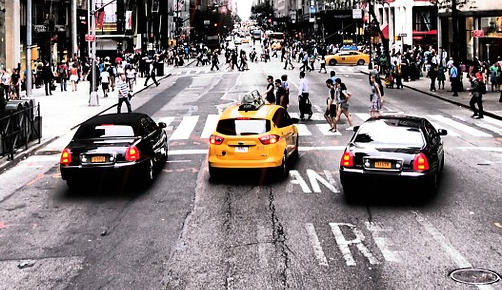
The legislation lacks key mechanisms that the Taxi and Limousine Commission uses to regulate the livery industry in New York City. Without changes to the bill, warns former TLC commissioner Matthew Daus, vehicles affiliated with livery bases outside the city could easily make pick-ups inside NYC, increasing traffic and undermining a recently-enacted rule to open up data on ride-hail trips.
The bill, which Cuomo tried and failed to rush into law in December, is now a centerpiece of his 2017 agenda [PDF]. While the bill is being framed as legalizing ride-hailing services in the 57 counties outside of New York City, its effect within the city could be substantial.
Taxi regulators in New York City, Nassau, and Westchester currently allow livery drivers to travel between jurisdictions as long as trips are pre-arranged and start or end where the vehicle is based. As a result, an impossible-to-enforce e-hail “black market” flourishes in Nassau and Westchester, where the services are technically still illegal.
A good regulatory regime would legalize ride-hailing outside New York City while applying a consistent set of rules and enforcement practices throughout the state. But Cuomo’s bill fails to complement NYC’s existing rules and threatens to weaken the city’s current regulatory framework.
Once Uber and Lyft can be legally based in Nassau and Westchester, for instance, it will be difficult to prevent them from picking up passengers in the city, especially since unlike their NYC counterparts, who have special TLC plates, upstate ride-hail drivers would only be required to have a removable decal on their windshield.
That would thwart the city’s ability to enforce illegal pick-ups and regulate the number of for-hire vehicles on NYC streets, says Daus, a former TLC commissioner who is currently a partner at the law firm Windels Marx. (Daus says his firm has no ties to the taxi industry and is not lobbying for or against any livery bills.)
An Uber spokesperson emphasized that the bill does not allow ride-hailing companies licensed by the state DMV to do pick-ups in the city. Rules enabling pre-arranged trip providers in the counties to pick up and drop off in the city, and vice versa, would not apply to upstate ride-hailing drivers. But the letter of the law is not in dispute. What’s lacking is an adequate system to make sure the companies and their drivers comply with the law.
“The reality is that the Ubers and Lyfts are going to pick up in NYC and nobody is going to stop them,” Daus warned. “They’ve done this on purpose, they do not want there to be any enforcement.”
The TLC employs 175 enforcement agents but would need more to handle an influx of cars coming from outside the city.
In Cuomo’s bill, the agency tasked with enforcement is the DMV, which has much less capacity to regulate ride-hailing companies than the TLC. The bill doesn’t change that. “They did this on purpose so [the ride-hail industry] won’t be regulated,” Daus said. “It’s de-regulation and self-regulation in disguise.”
The bill has several other troubling provisions. Trip data, which the TLC recently required for ride-hail vehicles based in the city, would not have to be disclosed in Cuomo’s bill. Instead, the state DMV could only “visually inspect” a “sample” of ride-hail companies’ data at a physical location.
And the records that companies do give over, including those pertaining to criminal investigations, would be exempt from the state’s Freedom of Information Law.
Some parts of the bill have drawn criticism from upstate lawmakers, who worry that the insurance mandate is insufficient. Upstate taxi industry groups have also criticized the bill’s scant background check requirements, which do not include fingerprints.
What’s drawn less attention is the effect on New York City’s transportation system. Just as the city is poised to get a better understanding of how the burgeoning ride-hail industry is affecting streets and traffic, Cuomo’s bill could deliver a major setback.
Correction: This post originally stated that the bill only requires insurance coverage while a passenger is in a TNC vehicle. The bill in fact requires coverage “while the TNC driver is logged onto the TNC’s digital network” and “while the TNC driver is engaged in a TNC prearranged trip.” The copy has been removed from the post.

Read More:
Streetsblog has migrated to a new comment system. New commenters can register directly in the comments section of any article. Returning commenters: your previous comments and display name have been preserved, but you'll need to reclaim your account by clicking "Forgot your password?" on the sign-in form, entering your email, and following the verification link to set a new password — this is required because passwords could not be carried over during the migration. For questions, contact tips@streetsblog.org.