Ithaca Eyes A New Zoning Map That Keeps Its Character
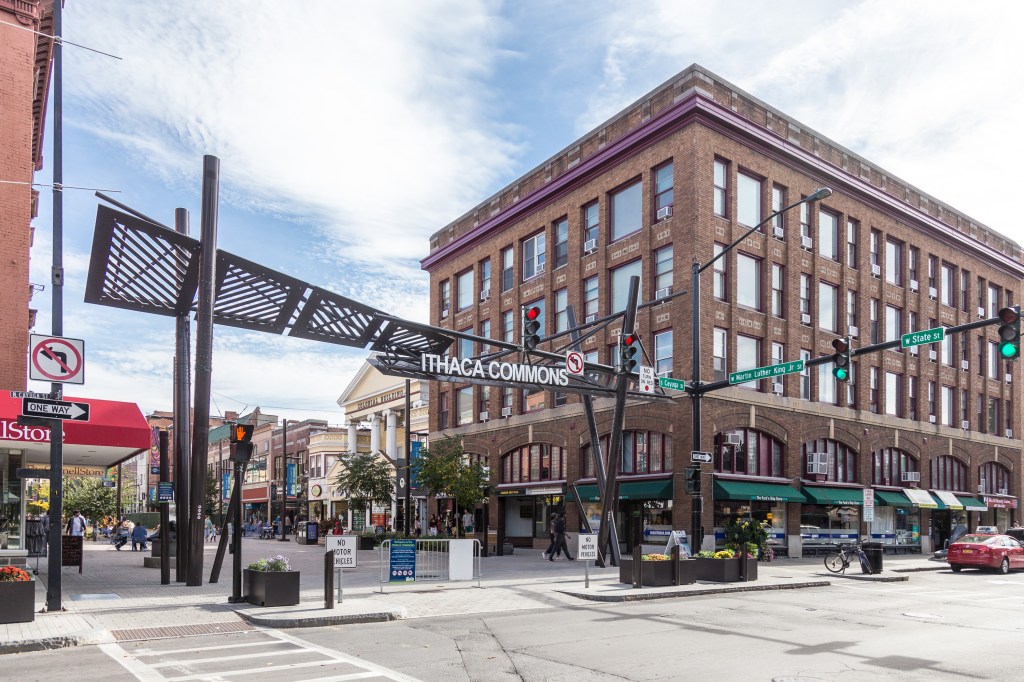
Mo’ people, no problem.
Ithaca Mayor Robert Cantelmo believes one of upstate New York’s fastest-growing cities doesn’t have to sacrifice the qualities that make it attractive even as its population rises.
Instead, he wants the city to accommodate more residents by making it easier to build housing, relaxing zoning rules that limit density and eliminating parking requirements that consume land and drive up construction costs. If the strategy succeeds, he says, more people would support the neighborhood grocery stores, pharmacies and small businesses that make living without a car surprisingly practical in an upstate town.
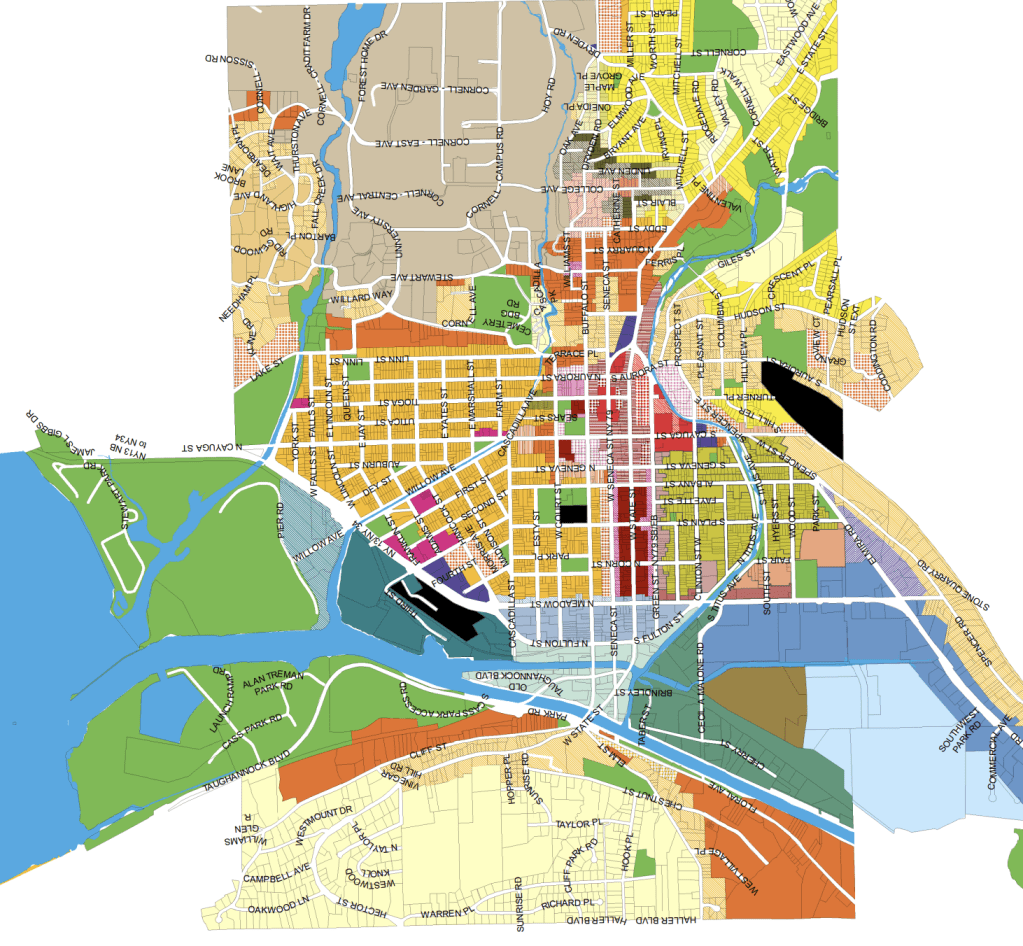
That vision is at the center of Zone Ithaca, the city’s once-in-a-generation effort to rewrite its zoning code. The overhaul, expected to conclude in 2027 after an extensive public engagement process, aims to modernize decades-old land-use regulations as Ithaca grapples with a persistent housing shortage, rising housing costs and continued population growth.
“Some folks might have fallen in love with a particular vision of Ithaca that maybe doesn’t match the current reality of the city,” Cantelmo told Streetsblog, “We have the choice to either be intentional about that adjustment, or we could stick our heads in the sand and let the change happen to us.”
The rewrite is about far more than where apartment buildings can be constructed.
It reflects a growing understanding facing growing cities across the country: adding thousands of new residents can make neighborhoods more walkable — so long as it’s not done in the way it always has been done, with “growth” meaning more cars, more traffic, more parking and greater dependence on automobiles.
Cantelmo is betting on the former.
Tompkins County has been one of the fastest-growing counties in upstate New York over the last two decades, fueled largely by Cornell University and Ithaca College. Yet housing production has struggled to keep pace, pushing rents and home prices steadily upward and leaving vacancy rates among the lowest in the region. City officials say the zoning overhaul is intended to remove many of the regulatory barriers that have made new housing difficult to build.
One of the biggest targets is parking.
Ithaca eliminated the requirement that developers build off-street parking in several downtown districts in 2023, joining a growing number of cities that have concluded mandatory parking increases housing costs while reducing the amount of land available for homes. Cantelmo wants the next zoning code to extend that policy citywide.
“I want a full citywide repeal of parking minimum requirements,” he said. “They’re an outmoded recommendation from planning associations. They’re not based on good data and good theory.”
Instead of requiring every development to include a predetermined number of parking spaces, Cantelmo would prefer to let developers decide whether the market demands parking at all.
“If the market dictates that parking is necessary, I have no doubt developers will pursue that,” he said. “But it is not the city’s role to dictate the number of parking spaces … if we’re going to be serious about addressing the housing crisis.”
The approach mirrors a broader national shift in planning philosophy. Cities including Minneapolis, Buffalo, San Jose and Austin have rolled back or eliminated parking minimums after researchers found the mandates frequently inflate development costs while encouraging more driving. Structured parking can cost tens of thousands of dollars per space to build, expenses that often end up reflected in rents.
For Cantelmo, the question ultimately comes down to priorities.
“It is more important that all of our residents have a dignified, safe place to lay their head at night than it is for us to ensure that our cars are being able to safely be stored during the 16 to 20 hours a day when we’re not driving them,” he said.
The mayor doesn’t dismiss concerns that adding thousands of new homes could strain neighborhoods. Instead, he believes additional residents could create the customer base needed to support businesses that many neighborhoods currently lack.
He recalled living in Cornell Heights, where even one of Ithaca’s most established neighborhoods sits more than a half-hour walk from the nearest grocery store.
As density increases, he said, those economics begin to change.
“Now it makes sense to drop a couple of grocery stores or bodegas in neighborhoods that otherwise can’t support them,” Cantelmo added.
That logic extends beyond food.
The recent closure of Kinney Drugs in Fall Creek left many residents without a neighborhood pharmacy, highlighting how difficult it can be for smaller commercial establishments to survive without sufficient nearby customers.
Rather than viewing density simply as additional housing, Cantelmo sees it as a way to restore neighborhood services while reducing the need to drive across town for everyday errands.
“We’re talking about coffee shops, pharmacies, grocery stores — all these things that people need to survive,” he said. “That makes the quality of life in your neighborhood better.”
The rent is not too damn high
Housing advocates say the city has already begun moving in that direction.
Katie Sims, the former co-chair of the Ithaca Tenants Union, said conditions for renters have improved noticeably since she moved to the city in 2020. New apartment construction, slower enrollment growth at Cornell and stronger tenant protections have combined to create a housing market that feels less desperate than it did only a few years ago.
She experienced that shift herself while searching for housing this year.
“I personally was able to negotiate for a rent decrease,” Sims said. “I can’t imagine having done that a couple of years ago with how intense it was to try to find a place.”
For someone who has spent years helping tenants navigate housing disputes through organizing and a tenant-rights hotline, she said the difference has been noticeable.
“I’ve definitely seen Ithaca get better for tenants over that time,” she said. “There is more housing flexibility and space in the market.”
Sims also believes the zoning rewrite reflects where much of the community already stands.
“Ithaca actually has had a pretty progressive consensus around increasing density, increasing walkability and bikeability, decreasing the amount of parking downtown and generally providing more housing,” she said.
That attitude, she suspects, is partly rooted in Ithaca’s identity as a college town, where walking among campus, downtown and nearby neighborhoods has long been part of daily life. While traveling for work, she has found many communities with similar progressive politics remain far more protective of parking than Ithaca residents.
“People really value being close to neighbors and getting around on foot,” she said. “There is a community value around wanting to have those random interactions that only happen when you have a neighborhood that people can move around easily.”
The mayor sees those same values extending to transportation policy.
As more housing is built in walkable neighborhoods, he expects demand for Tompkins Consolidated Area Transit’s bus service, cycling and other forms of micromobility to continue growing. TCAT ridership has rebounded to nearly pre-pandemic levels, while Ithaca’s bike-share system has expanded transportation options for residents who might otherwise rely on private vehicles.
Dense neighborhoods also align with the city’s climate goals. Attached housing typically requires less energy to heat and cool than detached homes, while neighborhoods designed around transit and walking reduce vehicle emissions.
Not everyone is likely to embrace those changes. Cantelmo expects the zoning rewrite to generate significant debate as residents weigh concerns about “neighborhood character,” parking and growth over the next year and a half.
Still, he believes the greater risk is failing to build enough housing to keep pace with demand.
“I think the worst-case scenario would be not addressing the supply piece of this,” he said, warning that continued shortages could drive up housing costs and property taxes, making it increasingly difficult for lower-income residents and seniors to remain in the city.

Read More:
Streetsblog has migrated to a new comment system. New commenters can register directly in the comments section of any article. Returning commenters: your previous comments and display name have been preserved, but you'll need to reclaim your account by clicking "Forgot your password?" on the sign-in form, entering your email, and following the verification link to set a new password — this is required because passwords could not be carried over during the migration. For questions, contact tips@streetsblog.org.