Comptroller: Thanks to Hochul’s Congestion Pricing ‘Pause,’ MTA Needs Up to $107B For Repairs
The gridlock governor is saddling the MTA with over $100 billion in capital needs over the next five years, thanks to her congestion pricing pause, according to new math out of the state comptroller’s office.
Later this month, the MTA will unveil its 2025-2029 five-year capital plan, which agency heads have hinted will cost even more than the record $55 billion 2019-2024 plan. But in a new analysis of the MTA’s existing and future needs, state Comptroller Tom DiNapoli pegs the cost of the next capital plan at $57 billion to $92 billion — so the MTA would need up to $107 billion thanks to the $15-billion hole in the current capital plan created by the toll troll in the Executive suite.
“The most critical aspect of state funding remains the $15-billion hole in the 2020-2024 capital program from the pause of congestion pricing, which must be addressed prior to answering funding questions in the 2025-2029 capital program,” DiNapoli wrote. “The governor has suggested that a replacement will be found, but the source and composition of the funds remain unidentified.”
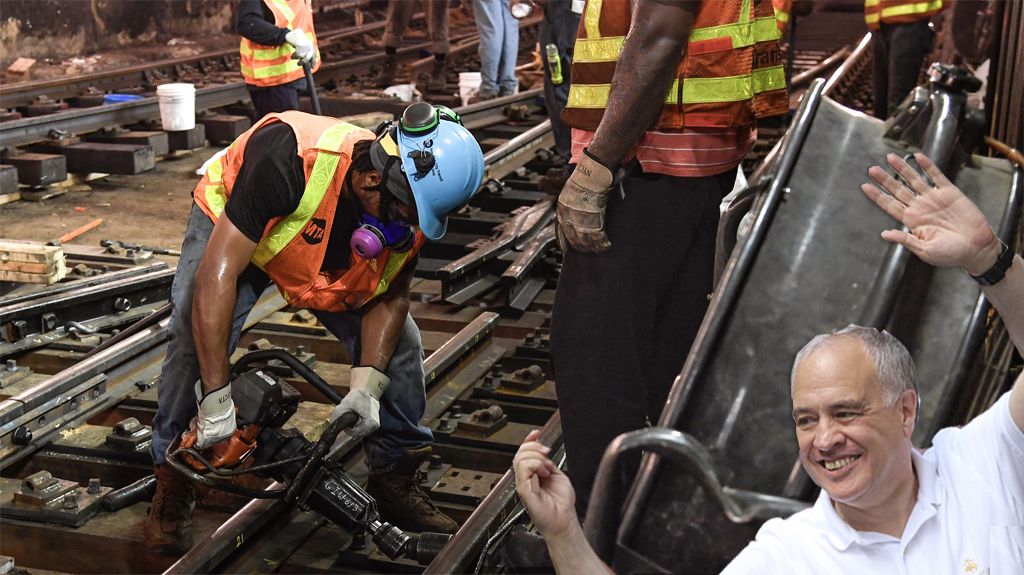
DiNapoli’s report lays out what the next capital plan could cost by working off of the MTA’s most recent 20-Year Needs Assessment, in which the agency made a stark case that a lot of the unseen pieces of the system are rotting from the inside: dozens of power substations, multiple maintenance yards, hundreds of miles of fiber optic cable, more than 200 track switches, signals, trains and buses all need replacing, to say nothing of any possible increase in service.
DiNapoli’s report offers a range of cost because it takes into account how much state-of-good-repair and normal replacement work the agency wants to do, but also choices like how much and what type of new rolling stock it buys, and how much it spends on expansion projects like the Interborough Express and the Second Avenue Subway.
For instance, there’s a $1-billion difference in the rolling stock procurement depending on whether the MTA still buys some natural gas buses ($3.5 billion) or moves to buying only electric buses this time around ($4.5 billion).
The cherry on top of the MTA’s very pressing future capital needs is that the agency has also explained how it’s had to stop work on billions of dollars of capital projects because the congestion pricing pause robbed it of $15 billion. So far, the governor’s plan to replace that money has been to demand that people trust her, the legislature bail her out and with some word-shaped air about her previous support for the MTA. In DiNapoli’s eyes, that is not a plan, which is why, he says, the MTA needs to include the $15-billion funding gap into the next capital plan.
“Given the … renewed questions about how the MTA will fund $15 billion in projects already identified in the 2020-2024 capital program, a summary of current capital funding needs at the Authority must also include this funding gap as part of the total unidentified sources. These projects have already been identified and if replacement funding cannot be identified, the MTA will need to replace projects in the next plan or future plans or be canceled,” DiNapoli wrote.
Where will the money come from?
The comptroller also looked at the money available to the agency through the usual combination of sources, like debt servicing, federal, state and city support and dedicated tax revenue. DiNapoli’s assumptions found that the agency can expect anywhere between $30 billion and $71 billion in funding for its next capital plan, which means the agency needs to carefully select what it can reasonably do.
“The MTA continues to have greater needs than it will have funding. Work on system enhancements and expansion will have to be carefully selected to leverage external funding and boost ridership,” the report says.
In terms of dedicated tax funding, the comptroller looked at a series of taxes legislators could tap for the agency and how much it could bond out if levies like the payroll mobility tax, corporate franchise surcharge and the sales tax were raised and dedicated to the capital plan.
The taxes could raise enough money to raise $12 billion through bonds, but these taxes would need to go to the next capital plan instead of being used to backfill the hole created by Hochul. DiNapoli’s ultimate conclusion is similar, that the hard choices in front of the MTA are being made that much more difficult when no one knows when or if the remaining money for the current capital plan will ever show up.
“In sum, the many basic needs and enhancements the MTA could include in this plan, along with updated cost considerations and mandates, would require substantial investment, made more difficult by the current uncertainty over capital revenue sources assumed in the 2020 2024 capital program,” he wrote.

Read More:
Streetsblog has migrated to a new comment system. New commenters can register directly in the comments section of any article. Returning commenters: your previous comments and display name have been preserved, but you'll need to reclaim your account by clicking "Forgot your password?" on the sign-in form, entering your email, and following the verification link to set a new password — this is required because passwords could not be carried over during the migration. For questions, contact tips@streetsblog.org.