Cuomo Moves to Tear Down the Sheridan Expressway Starting in 2018
Yesterday, Governor Andrew Cuomo announced that he’s moving forward with the removal of the Sheridan Expressway, a 1.25-mile Moses-era highway that cuts off South Bronx neighborhoods from the Bronx River waterfront. Construction is scheduled to start next year, according to the governor’s office.
Cuomo’s decision marks the most significant victory yet in the long neighborhood advocacy campaign to tear down the Sheridan and replace it with housing and parks. The highway removal is really going to happen, it seems — the major question is what will replace it.
“Building the Sheridan Expressway was a mistake,” Cuomo said in a statement. “[The] Sheridan Expressway blocked people off from getting to the river, and isolated [the] community.”
The state says it will replace the Sheridan north of Westchester Avenue “with a boulevard design that is both pedestrian and cyclist friendly,” and build new ramps connecting to the Hunts Point Market to keep truck traffic off local streets. The cost is pegged at $1.8 billion — more than ten times the estimate in a 2013 city study that put the cost of the boulevard and ramps at $117 million. It’s not clear if the scope of the project is significantly larger than that study.
Several neighborhood organizations and citywide advocates have been making the case to remove the Sheridan for nearly two decades, working under the banner of the Southern Bronx River Watershed Alliance. At first it seemed like a longshot campaign, but after a dramatic tug-of-war with the state DOT, advocates are on the verge of a huge victory.
In 2010, after the state DOT rejected the idea on flimsy pretenses, the teardown seemed like it might be slipping out of the realm of possibility. But advocates turned to the city, which got federal funding to study the concept and two years later endorsed converting the highway to a walkable boulevard, freeing up land for housing and waterfront parks. Then the project languished for years, with neither the city nor the state advancing it.
Advocates had a champion in Assembly Member Marcos Crespo, however, and they kept trying to make headway in the state budget. Last year, with the Bronx’s Carl Heastie leading the Assembly Democrats, Cuomo committed $97 million to the project.
“We believe this project has the potential to undo decades of hazard that the community has endured as a result of an ineffective transportation system,” the alliance said in a statement yesterday. “It is our sincere hope that this project addresses longstanding community needs including lifting the physical barrier between our neighborhoods and the Bronx River, and alleviating truck traffic off local streets, along with maximizing community benefits overall.”
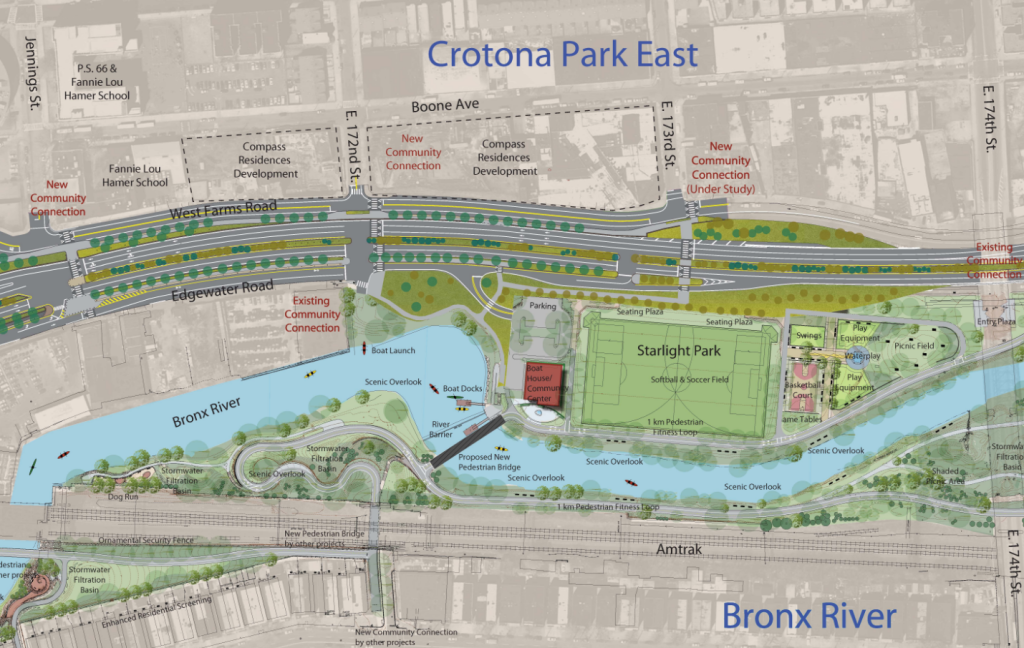
The conceptual design unveiled yesterday (above) is far from ideal. It maintains the same number of travel lanes as the Sheridan, and omits bikes lanes and crosswalks included in the city’s 2013 proposal (below).
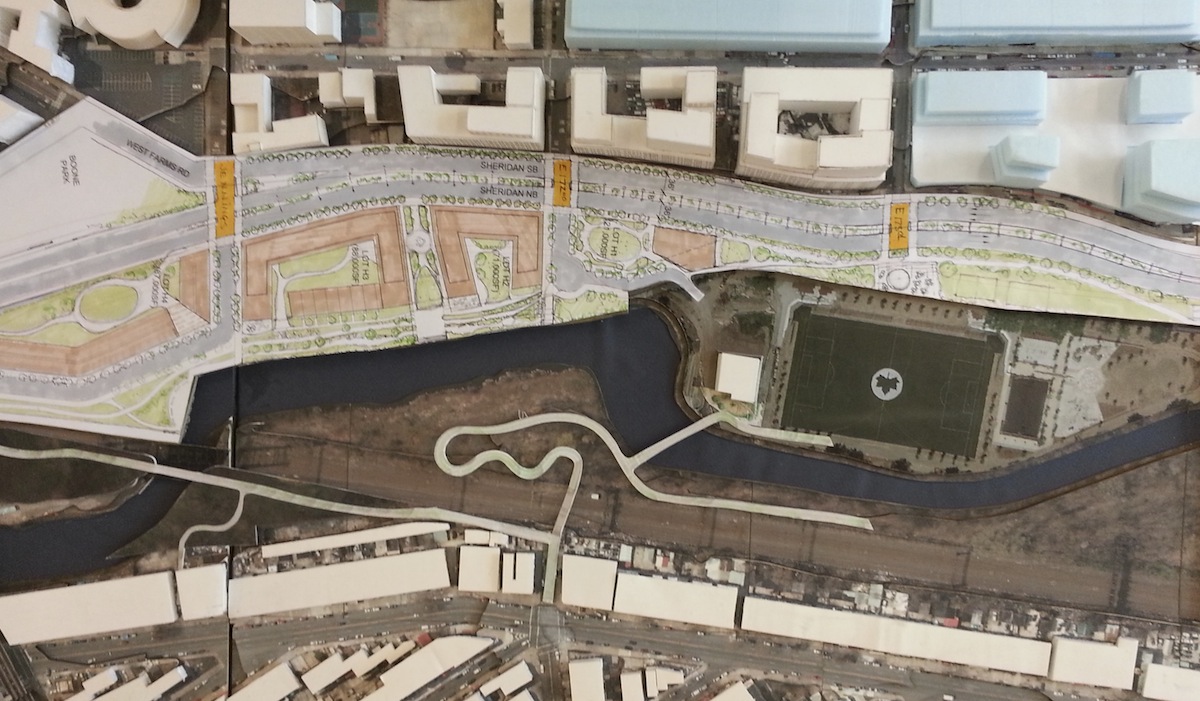
The governor’s office told Streetsblog that the design is subject to change. To get it right, the next few months will be critical.
Construction will begin next year and wrap up in 2019, forgoing a full environmental impact study, according to the governor’s office. A “lower level” environmental study is already underway, part of which includes “working with the community to achieve the right solution.”
“For us it’s absolutely critical that we engage in this process, and that we mobilize our local community stakeholders to share their concerns and any opinions they have about the plan as it’s laid out,” said Angela Tovar, community development director at The Point, one of the alliance members.

Read More:
Streetsblog has migrated to a new comment system. New commenters can register directly in the comments section of any article. Returning commenters: your previous comments and display name have been preserved, but you'll need to reclaim your account by clicking "Forgot your password?" on the sign-in form, entering your email, and following the verification link to set a new password — this is required because passwords could not be carried over during the migration. For questions, contact tips@streetsblog.org.