Exclusive: Cops Writing 15% of Their Red Light Tix to Cyclists, Who are Just 2% of Road Users
Stop — in the name of … wha?
Riders of bicycles and e-bikes take fewer than 2 percent of the trips on city streets, and cause a similarly tiny share of injuries to pedestrians, yet they receive 15 percent of the tickets handed out by NYPD officers for running red lights — a shocking disproportion that raises questions about police priorities as car drivers kill and maim tens of thousands of people per year.
Over the first three-quarters of 2024, car drivers received the fewest red-light tickets, as a percentage of all cop-issued red-light tickets, than they have in at least five years, according to data finally delivered to Streetsblog by the NYPD under a five-month-old Freedom of Information Law request.
Only 70 percent of cop-written red-light tickets were handed out to car or truck drivers, the data show. The rest went to the riders of bikes, e-bikes, mopeds and motorcycles.
The number of tickets issued to bike riders has dropped as an overall share of the tickets since the pandemic, as mopeds, some of them illegally operated, have proliferated. But the portion of tickets issued to slower-moving bike riders is still sizable:
The large percentage of red-light tickets doled out to riders of un-powered or low-powered bicycles shocked activists, who have long called for more efforts to rein in the operators of 3,000-plus-pound vehicles racing through red lights at killing speeds of 30 miles per hour or more.
“Red lights exist because cars and trucks are deadly,” said Corey Hannigan of the Tri-State Transportation Campaign. “Bikes and e-bikes weigh an order of magnitude less, have far better sightlines and maneuverability, and are speed limited (unlike motor vehicles). They are far, far more likely to be the victims in a traffic crash than to cause injury to someone else.”
The new data is likely to traumatize people who have been injured by car or truck drivers only to learn that cops are increasingly deprioritizing those vehicle operators when issuing these $190 tickets (the same violation for a bike or a car).
“This ticketing data is a really clear example of windshield bias because police, judges and others in law enforcement are all drivers who see cyclists going through reds as an act of public disorder but drivers going through reds as an ‘accident’ that isn’t worth reacting to. It’s completely at odds with the relative risk a cyclist or e bike versus vehicle poses to other road users,” said Kate Brockwehl, who sustained permanent damage to her knee and both wrists when she was run over by a car driver who ran a red light on Houston Street on New Year’s Eve in 2017.
Brockwehl was in a crosswalk and was hit by a driver at relatively low speed, but the sheer weight of the 4,000-pound plus BMW5 delivered enough force to sever ligaments in both wrists and rip apart her knee, forcing doctors to remove part of her meniscus. That’s why she’s astounded that cops put such an emphasis on ticketing bike riders.
“A cyclist has maybe 175 to 300 pounds going 10 to 25 miles per hour, which is nothing compared to a car at 3,000 pounds at a minimum, running a red at 30 mph or more,” she said. “The former is almost never fatal and causes maybe a thousand minor injuries a year. But even at very low speed, a car or truck does serious harm: drivers kill hundreds and seriously injures tens of thousands of New Yorkers per year.”
A cyclist who received a red-light ticket in 2023 also slammed the NYPD for its disproportionate use of police resources.
“It’s unjust,” said Lee, the cyclist who only gave his first name out of fear of reprisal by police. “They are ticketing those who are least dangerous. If they were giving out tickets in proportion to the actual danger, cyclists would get dramatically fewer tickets.”
Pressed repeatedly by Streetsblog to explain the policy behind the statistics, the NYPD declined to respond. In response to our most recent last email seeking an explanation, the NYPD merely sent over its definitions for each vehicle. It did not respond again.
In that vacuum, safe streets activists argued that the NYPD is violating what it has long said is a data-driven approach to policing.
“We wish the NYPD would ticket based on actual data,” said Sara Lind of Open Plans, the public space advocacy group that shares a parent company with Streetsblog, referring to mode-share data showing that only 1.67 percent of all trips in New York City are on bikes or e-bikes. “This ticketing is extremely out of proportion to the number of these vehicles on the street and the crash data. The vast majority of crashes on our streets are caused by motor vehicle drivers and that’s where enforcement should be targeted.”
It’s not the first time a brief revelation of internal NYPD practices has sparked controversy. In 2019, amid a stark increase in cyclist deaths, then-Transportation Bureau Chief Thomas Chan mentioned as part of some Council testimony on street safety that 22 percent of police-issued red-light tickets were being given to cyclists. Then-Mayor Bill de Blasio publicly stood by his bureau chief, though he was soon replaced.
One solution ignored
For years, the Department of Transportation has proposed making it legal for cyclists to stop at red lights and then proceed through if no pedestrians are present. The “Idaho Stop,” as the practice is called, is legal in several states, but the DOT’s proposed rule change has been blocked every year by City Hall.
Most recently, the agency said the Idaho Stop would become legal sometime between July and October of 2024, but that didn’t happen (just as it did not happen in 2021 and 2023).
Streetsblog has repeatedly asked the DOT for an explanation for why its rule change never seems to take affect, but the agency has declined to comment.
Cyclist John Surico is one bike rider who definitely wished the rule had taken effect as scheduled. He got a red-light ticket in a police sting on First Avenue in March, but he had stopped before proceeding through the intersection.
“I was with a group of cyclists and the cop jumped out from between two cars and got me and a delivery worker while the others kept going,” Surico told Streetsblog. “I said, ‘What are you doing? There’s no pedestrian and I came to a full stop.’ And as he was writing me up, three cars went through the same red light. I showed him and he said, ‘I don’t see anything.'”
Surico has a court date coming this June — and he’ll be fighting the ticket. But win or lose, he wishes the NYPD would alter its priorities.
“The fact that they give out like 35,000 red-light tickets to drivers is such an undercount,” he said. “A car runs a red at practically every single light cycle — and that’s gunning it on the yellow or turning at high speed. A person on a bike who has slowed down or stopped at the red before going can’t do even a fraction of the damage.”
Cyclist George Calderaro, who received thousands of dollars in NYPD red-light camera stings said that most of the red-light tickets are similarly the result of coordinated police enforcement rather than a response to actual safety concerns.
“Yes, there are some reckless cyclists and e-bikers, but others — like me for example — are simply caught in traps,” he said. “In my case, I assume the officer was working to meet his ticket quota as I posed no danger.”
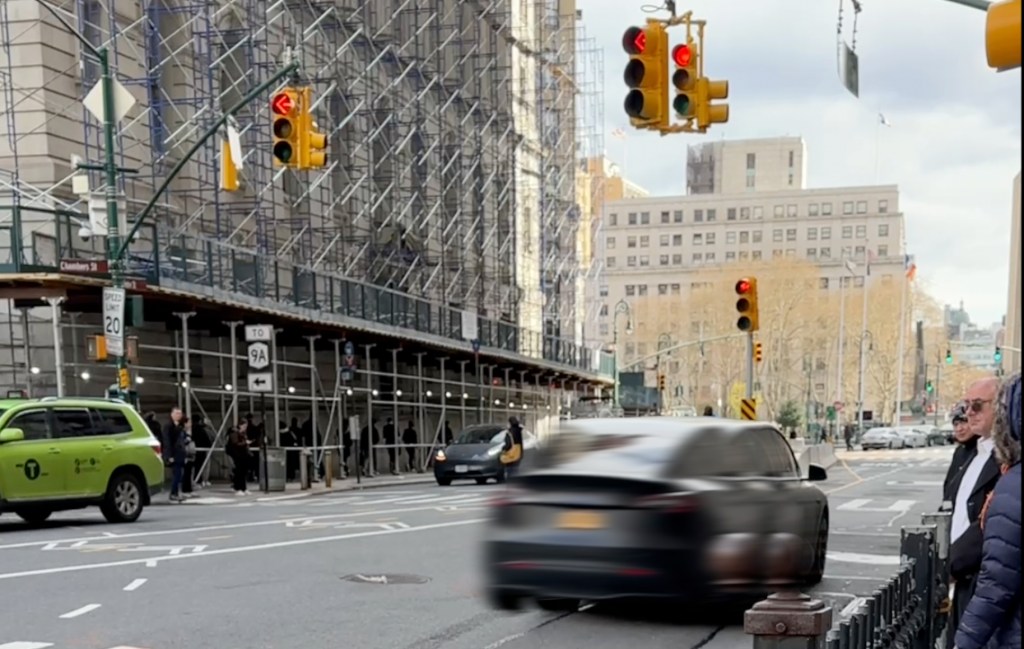
But here’s something that does pose a danger (interestingly, the car in this video received two tickets last year, and has received eight overall, from red-light cameras, which are not subject to the whims of policing strategies):

Read More:
Streetsblog has migrated to a new comment system. New commenters can register directly in the comments section of any article. Returning commenters: your previous comments and display name have been preserved, but you'll need to reclaim your account by clicking "Forgot your password?" on the sign-in form, entering your email, and following the verification link to set a new password — this is required because passwords could not be carried over during the migration. For questions, contact tips@streetsblog.org.