Hail Niagara! Buffalo Mayor Seeks To Make A Real Public Square Downtown
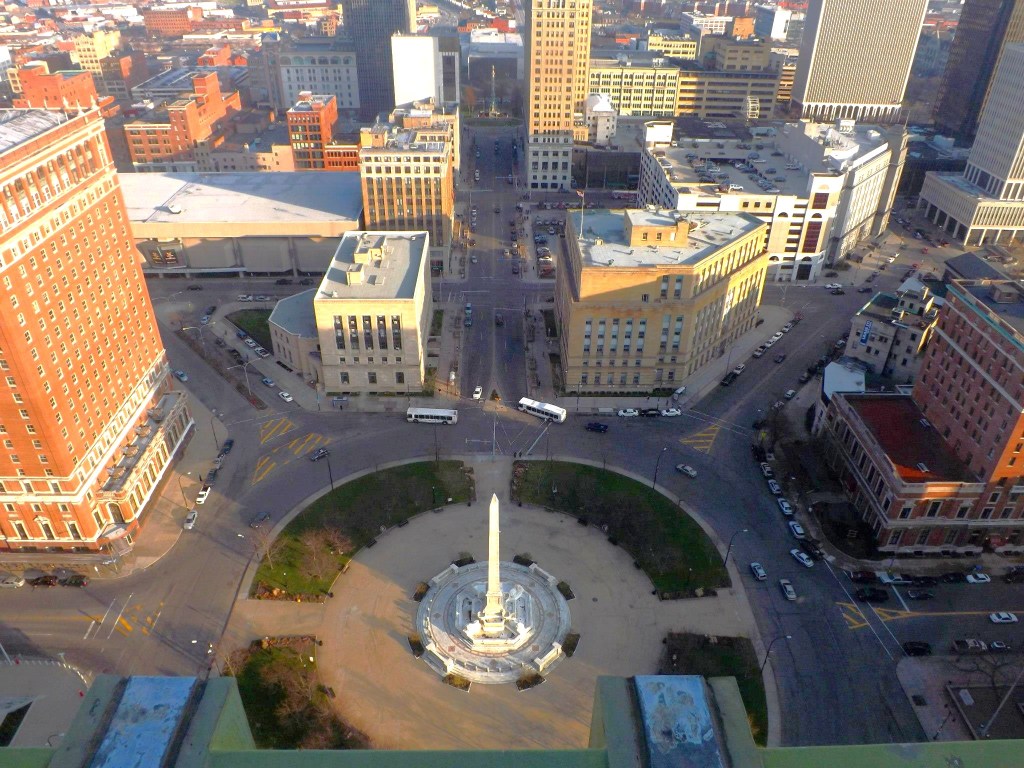
Can Buffalo Mayor Sean Ryan make a roundabout pockmarked by illegally parked cars and dreaded by every type of traveler a functional public space that’s safe for all?
Niagara Square sits in front of Buffalo City Hall, and the Ryan administration — which has to look at it every day — announced last week that it planned to crack down on illegal parking (some of it by his own cops) and reduce the number of lanes to make traffic less chaotic and improve safety for pedestrians, cyclists, motorists and transit users.
The current traffic pattern in the roundabout, with its unclear number of lanes, blocked sightlines and helter-skelter traffic patterns, makes it notorious far beyond the Queen City.
Ryan’s announcement of interim changes to the multipurpose public square comes after a public survey that found broad agreement about its poor conditions. The city received 562 responses from June 21 to July 1. Seventy-one percent said Niagara Square was unsafe for pedestrians, 75 percent said it was unsafe for cyclists and 42 percent said it was unsafe for drivers.
Ryan told reporters July 16 that the responses were “remarkably consistent.”
“We want to make it welcoming, and we want to make it easy to navigate,” he said. “This has not been easy to navigate for a long time, and from my window, I can look out every day and watch people beep, almost run into each other, cut across three lanes of traffic, and then I watch the pedestrians trying to enter the square, and they’re playing a bit of a game of Frogger. So we needed to make some changes.”
The city’s first step is relatively simple: paint.
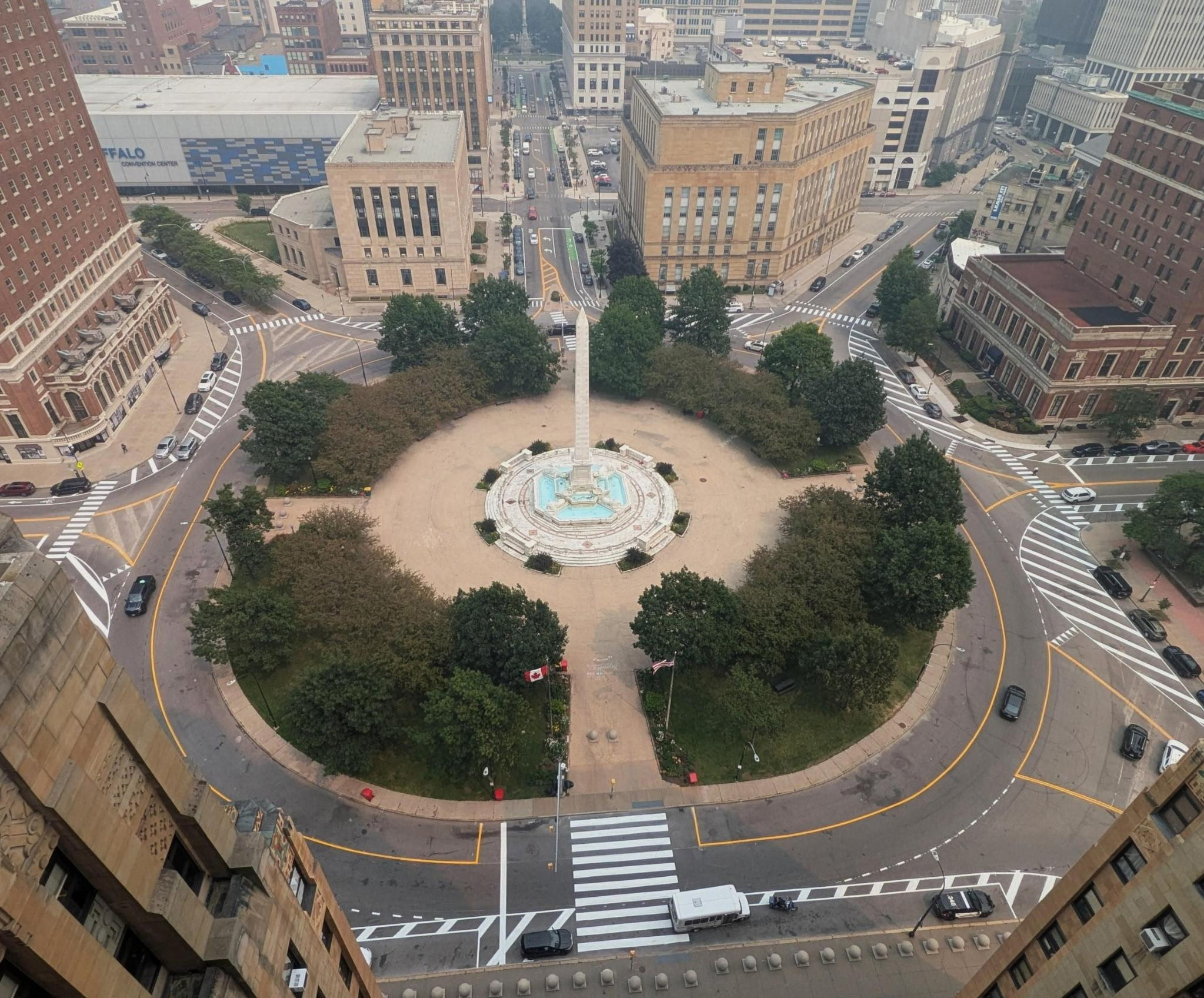
New striping has defined a single travel lane around the square, replacing what Buffalo Parking Commissioner Justin Booth described as a “willy-nilly” traffic pattern that drivers could interpret as a two- or three-lane free-for-all. The city is also defining legal parking areas and warning illegally parked motorists before beginning active enforcement in August.
The redesign creates more space for people. Crossings are shorter, and new pedestrian areas will eventually be protected by bollards and planters. The city plans to add aesthetic pavement markings later this summer and install an audible pedestrian signal at Niagara Square and Court Street.
The striping and signal work is expected to cost about $150,000, according to Buffalo Department of Public Works Commissioner Nolan Skipper, with much of the work covered through existing contracts.
But the administration is pitching the project as an experiment, not a final design.
Booth said the city plans to survey the public again in September, after people have had roughly six to eight weeks to adjust to the new traffic patterns. Officials will also track traffic volumes and crashes. That data will help inform a longer-term capital investment.
That could eventually mean more substantial changes, including green space and bioswales (vegetation designed to handle stormwater runoff) in areas previously treated as parking.
“I think nothing’s off the table at this point,” Booth said when asked whether the square could someday become car-free. But the city’s plans must account for police and fire headquarters, City Hall visitors and heavy trucks involved in international trade that pass through the area, he added.
For GObike Buffalo Interim Executive Director Kevin Heffernan, the changes are already making a difference.
“It was basically a 2-3 lane free-for-all before, and now a very structured single-lane circle,” Heffernan said, calling the change “much more becoming of the most beautiful city halls in the country.”
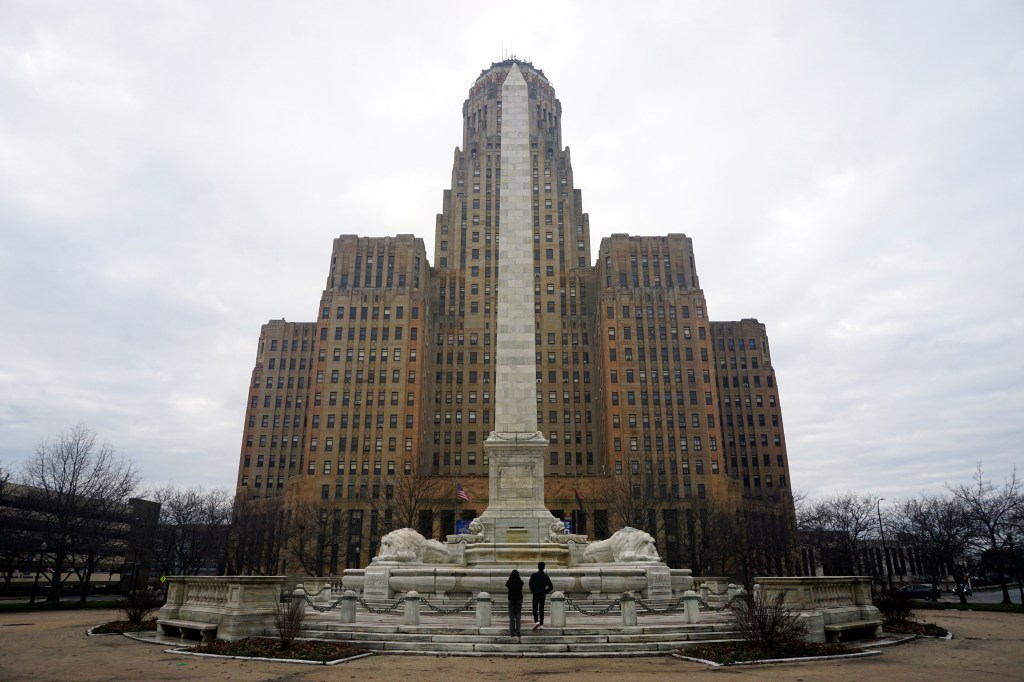
The goal is to make Niagara Square feel less like a traffic island and more like the civic gathering place that Buffalonians already treat it as.
The city has restored the fountain, added music and expanded seating around Food Truck Thursdays. Food trucks are being moved toward the perimeter, encouraging visitors to spend time in the square’s grassy, shaded center.
Heffernan said the changes have helped make the square more welcoming.
“Every city needs a place where people can gather for protests or parties by default,” he said, “and these changes have solidified Niagara Square as one of those places.”
For Ryan, that’s the ultimate test. The paint, bollards and enforcement are temporary measures. The larger question is whether Buffalo can turn its most prominent civic space into somewhere people want to be — not just somewhere they have to survive.
So far, Buffalonians are hopeful.

Read More:
Streetsblog has migrated to a new comment system. New commenters can register directly in the comments section of any article. Returning commenters: your previous comments and display name have been preserved, but you'll need to reclaim your account by clicking "Forgot your password?" on the sign-in form, entering your email, and following the verification link to set a new password — this is required because passwords could not be carried over during the migration. For questions, contact tips@streetsblog.org.