MTA Workgroup’s Recommendations Give Albany No Excuse for Inaction

There’s officially a roadmap to save the MTA. Now it’s on Governor Cuomo and state legislators in Albany to follow it — or else.
Um, what’s Plan B again?
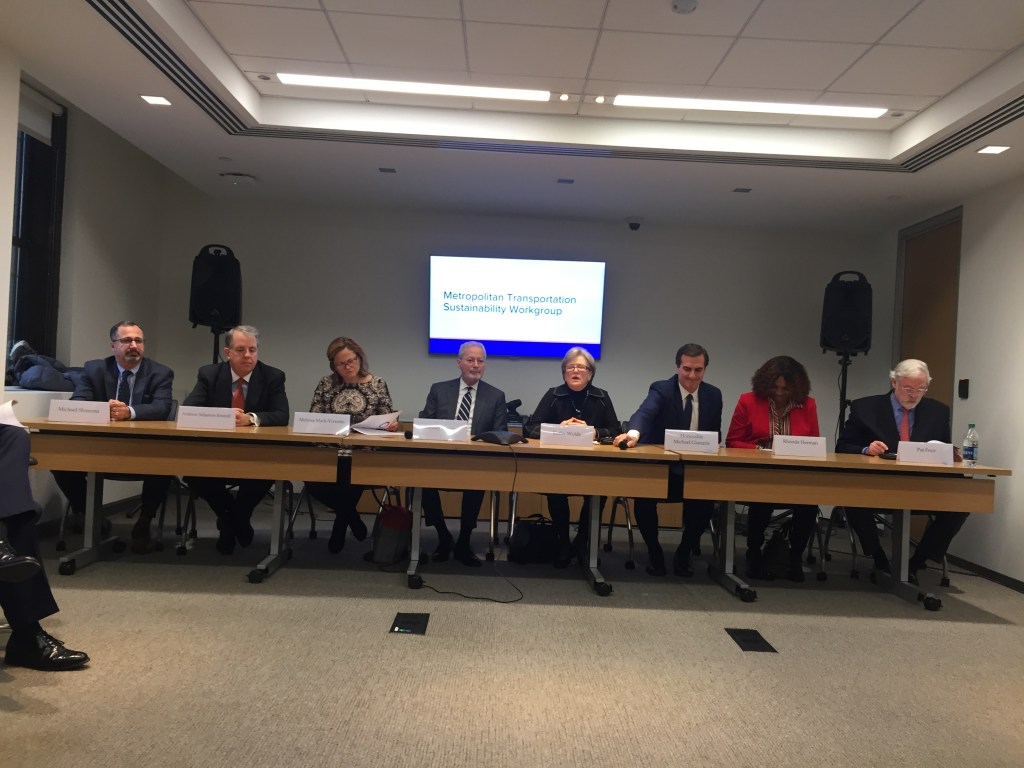
On Tuesday, as a key state workgroup championed congestion pricing as one of 23 ways to fix the MTA [PDF], two state legislators who support the toll plan warned that it may be dead on arrival again.
Two members of the workgroup, State Senator Michael Gianaris and Assembly Member Amy Paulin, Democrats from Queens and Westchester respectively, said their caucuses currently don’t have enough votes to pass it.
“We personally support congestion pricing, but our appointing body is not there yet,” Paulin said of herself and her Assembly colleague Michael Benedetto, who is also one of the city and state officials on the workgroup.
“We have not done a head count,” Gianaris added. “There are skeptics about congestion pricing, I think, in both houses.”
Insert sigh emoji here.
Still, the workgroup offered many other long-term solutions to the region’s ongoing transportation crisis. Developed over a series of meetings this fall, the report paints a broad but detailed picture of the MTA’s myriad challenges and how the agency is already working to address them — and proposes nearly two dozen ways to move forward.
If legislators — who apparently believe congestion pricing is a losing issue for them — don’t act on the report’s recommendations, the city’s transportation system will continue to collapse.
“Inaction leaves [the system] like it is today, and probably getting worse because you’re still not replacing the old stuff or the not-so-old stuff that’s been there since the 1980s,” said Transit Center Advocacy and Communications Director Jon Orcutt. “You start to kill New York City.”
By and large, the workgroup’s report rehashes many of the things elected officials and other transit experts have been saying for the last two years: A majority of the panel backed congestion pricing as the optimal way to both raise funding for transit while speeding up traffic, including the city’s cratering bus system. Other congestion-tackling policies, such as reining in placard abuse and traffic caused by sightseeing buses and the importance of giving the city more authority to deploy bus lane cameras, are also mentioned.
Unlike Gov. Cuomo’s Fix NYC panel, whose January report focused almost entirely on congestion, the workgroup delved into the huge challenges facing the MTA internally: operating and capital cost overruns, a lack of trust among both its riders and workforce, how the authority is structured, and the need to get creative about finding revenue.
“We thought of all of [the recommendations] as immediate, and that it should form an agenda — for the MTA board, for the governor’s office, for the legislators, for the transportation agencies — going into 2019,” said Kathryn Wylde of the Partnership for NYC, who chaired the workgroup.
With such a clear blueprint, Cuomo and his colleagues in Albany have no excuse to not act, advocates said.
“In the coming months, the Riders Alliance will be redoubling our efforts to organize riders to demand accountability from our elected officials,” said Riders Alliance Executive Director John Raskin. “We’ll be judging them not by what they say but by what they do to fund and fix our broken transit system.”
Ultimately, full-fledged 24/7 congestion pricing would raise over $1.5 billion annually, according to the report, allowing the agency to borrow around $15 billion over time. That’s a far cry from the $41 to $60 billion the agency thinks it needs for its next five-year capital plan.
The report suggests a number of other revenue sources, including tax increment financing and a “cruising charge” for for-hire vehicles not carrying passengers. In terms of cost cutting, the report points to negotiations for the MTA’s largest union contract, with TWU Local 100, which expires in May. A key part of those negotiations should be finding mutually beneficial ways to cut healthcare costs, the report says.
Still, members of the panel emphasized that congestion pricing is not just a matter of raising much-needed funding, but an essential tool for improving bus service and traffic more generally.
“The speed of buses getting from Point A to Point B is a big problem for us,” said Interim MTA Chairman Fernando Ferrer, who was appointed to the workgroup by his predecessor Joe Lhota. “There’s no god given right to create traffic jams on Third Avenue.”
Even if Albany isn’t sold on congestion pricing, the panel’s efforts could turn a new leaf in the pricing debate, according to Orcutt, who served as city DOT’s Deputy Commissioner for Policy during the Bloomberg administration. A roadmap effectively laying out steps the MTA is taking and will take to rein in spending and improve service allows legislators to assure to their constituents that pricing revenue will be well spent.
“This report may prove very useful in giving legislators a direction to point to in terms of why money that will be raised will be used better,” Orcutt said. “These recommendations create that rhetorical piece of the puzzle that allows legislators to say, yes, this is how we’re going to reform the MTA.”

Read More:
Streetsblog has migrated to a new comment system. New commenters can register directly in the comments section of any article. Returning commenters: your previous comments and display name have been preserved, but you'll need to reclaim your account by clicking "Forgot your password?" on the sign-in form, entering your email, and following the verification link to set a new password — this is required because passwords could not be carried over during the migration. For questions, contact tips@streetsblog.org.