Nassau County Police Are Enforcing an E-Bike Ban That Doesn’t Actually Exist
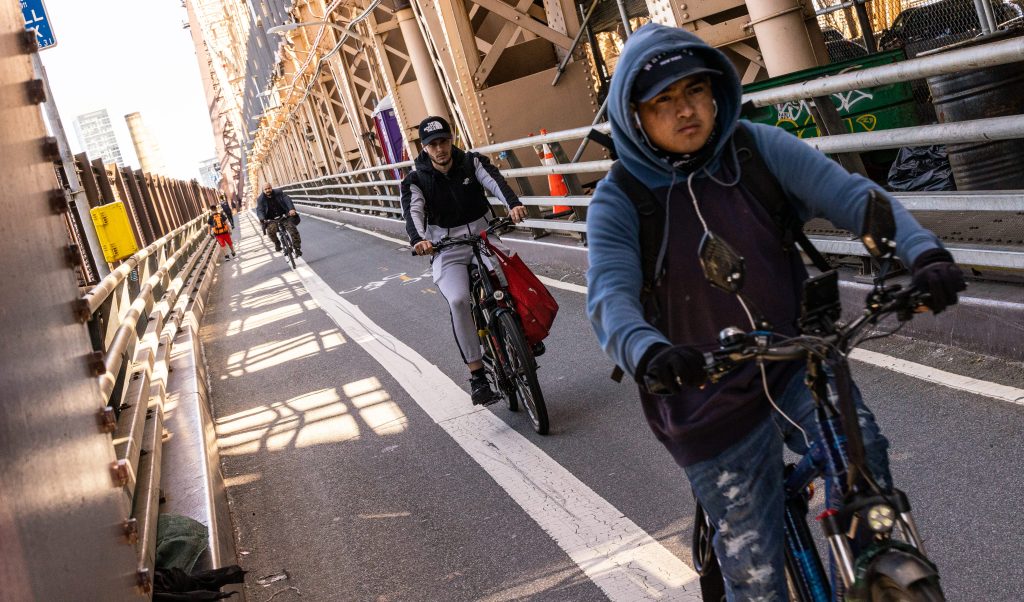
Nassau County Police are misinterpreting state law and misapplying local restrictions to “ban” e-bikes in the populous New York City suburb — even though no such ban exists.
In a March 5 Facebook post, the Nassau Police Department cited state and local laws that, the post claimed, “prohibit the use of motorized scooters and Class II and III e-bikes on any Nassau County roadway or property.” Riders were told that these could be impounded, with fines reaching $700.
The laws the post cited — Nassau County Misc. Law Title 6 and state Vehicle and Traffic Law Article 34 — don’t actually do what the department claims, however. The county law, from 2010, bans illegal all-terrain vehicles and other devices, including “motorized scooters, off-highway motorcycles and pocket bikes,” which are basically motorcycles.
The 2020 state law, meanwhile, legalizes e-bikes by establishing a three-class system and allowing villages and towns — not counties — to regulate their use. The law does not empower Nassau or any other county to ban Class II or Class III e-bikes, which differ mainly in top speed up to 25 miles per hour. Members of the public, politicians and even cops often willfully confuse legal e-bikes with illegal “e-motos” that weigh more and have higher maximum speeds.
Nassau County, in the process of concocting this ban, is threatening to confiscate some residents’ livelihoods and primary methods of travel.
There were at least five cases in Nassau County of a car driver hitting an e-bike rider in 2025. In three cases, the motorist killed the e-bike rider. Nassau County Police did not provide a list of crashes involving an e-bike rider hurting a driver or pedestrians, and these figures were drawn from a mix of local news and older announcements from the Nassau County Police Department.
Meanwhile, Long Island pedestrians and cyclists are increasingly the victims of road violence. Newsday reported that in 2025, 28 Nassau County pedestrians and three cyclists were killed in crashes, and in Suffolk County, 34 pedestrians and one cyclist were killed.
A spokesperson for Nassau PD, who declined to provide a name to Streetsblog despite serving the public, declined to discuss the legality of the Nassau ban. The spokesperson did not provide the number of tickets Nassau cops have issued under its new e-bike ban, or if they have impounded any e-bikes.
The misapplication of the law has potentially devastating consequences for the mostly immigrant population that relies on them. Indeed, when they legalized e-bikes in 2020, state lawmakers cited a need to reduce interactions between law enforcement and delivery workers, many of whom are immigrants. Nassau County Executive Bruce Blakeman’s collaboration with federal immigration enforcement, a ticket could mean detention and deportation for immigrant riders.
“Given the [Bruce] Blakeman style, I understand how he can possibly use this as a way to make it harder for immigrants and working-class people to get around,” said state Sen. Jessica Ramos, the Queens Democrat who authored the e-bike legalization law. (Blakeman’s office did not respond to requests for comment.)
A lawyer who represents crash victims said Nassau County was wrongly interpreting what existing laws say to apply to devices not covered by those laws.
“You can’t interpret. ‘E-scooter’ and ‘e-bikes’ are defined in the Vehicle Traffic Law,” said lawyer Daniel Flanzig. “You can’t interpret it. It’s not open to interpretation. There’s definitions of these devices.”
Class I e-bikes have an electric assist that is only activated by pedaling and have a maximum speed of 20 miles per hour. Class II e-bikes have an electric motor that can be controlled with a throttle rather than pedaling and have a maximum speed of 20 miles per hour. Class III e-bikes are strictly pedal-assist and have a maximum speed of 25 miles per hour.
At a February Assembly hearing on the topic, state lawmakers revealed that they don’t know the difference among the classes, and law enforcement officials raised concerns about the level of education among the public and officials.
“Technology in e-bikes and e-scooters has often outpaced education and many times the law,” David Regina, deputy chief of the Suffolk County Police Department, told legislators. “There is widespread confusion, especially among families, regarding classifications, speed restrictions, where these devices may be operated, age requirements and proper equipment, including helmets.”
State lawmakers have discussed potential new regulations as neighboring states and localities have passed laws with the intention of creating more accountability for e-bike users.
New Jersey now requires registration, as well as license plates, treating legal e-bikes like it treats cars. There is a similar bill pending in Albany — though it was inspired by the 2023 death of a New York City pedestrian after she was struck by the rider of an electric Citi Bike. That rider’s bike was already registered with the bike share company and he remained on the scene.
Like other state anti-bike legislation, this one also is inspired by the perception of danger that politicians, who drive or are driven everywhere, believe is caused by e-bikes, but is actually caused by super-fast illegal e-motos that people sometimes buy online. Such legislation doesn’t cover the dangerous electric devices, but merely the existing legal ones that happen to be the device of choice for delivery workers or people who can’t afford or choose not to use the most dangerous vehicle on the road today: cars.
“In my years of dealing with lawmakers, sometimes they don’t have a clear understanding when you’re explaining what, to us, is a simple concept,” said Joe De Palma of the Long Island Bicycle Coalition. “Whether it be what roads are safe and what roads aren’t safe for cyclists, it would take a really good educating effort, and I can definitely see that with the bikes, because even we’re even confused.”

Read More:
Streetsblog has migrated to a new comment system. New commenters can register directly in the comments section of any article. Returning commenters: your previous comments and display name have been preserved, but you'll need to reclaim your account by clicking "Forgot your password?" on the sign-in form, entering your email, and following the verification link to set a new password — this is required because passwords could not be carried over during the migration. For questions, contact tips@streetsblog.org.