State Pols Could Regulate E-Bikes Despite Not Knowing What They Are
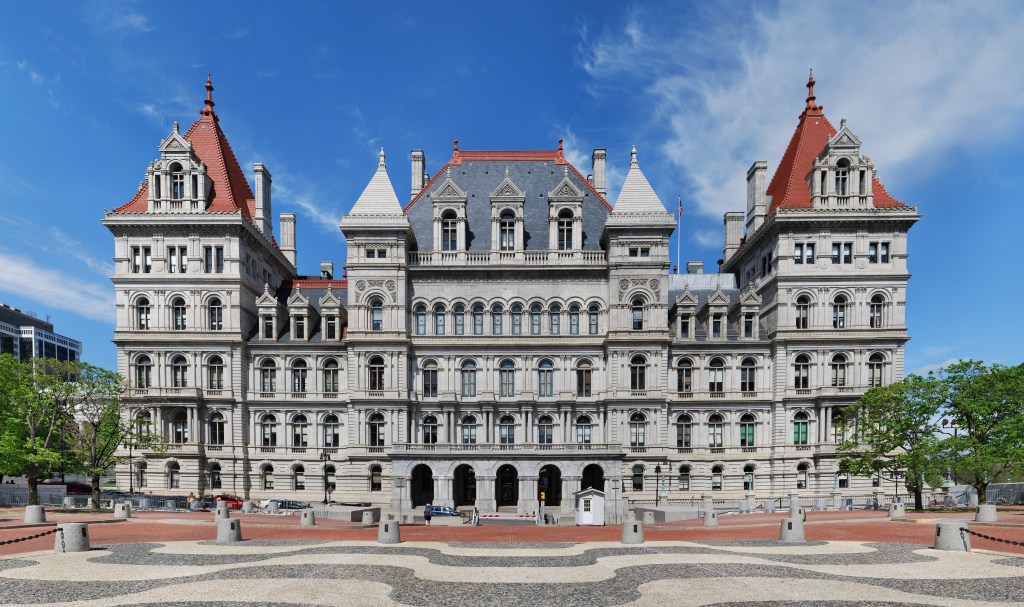
ALBANY — Members of the Assembly Transportation Committee are very interested in regulating e-bikes, but don’t fully grasp what the devices are, let alone understand existing legislation that already governs their use.
Advocates for micro-mobility aren’t sure why well-educated and well-staffed politicians aren’t able to educate themselves on a widely used product that has been regulated by the state since 2020.
“That gap in knowledge is what worries a lot of bicycle advocates,” Noah Miterko, senior manager of state and local policy at People for Bikes told Streetsblog after an extraordinary hearing on e-bikes on Thursday. “We just saw an incredibly reactive bill in New Jersey that won’t do anything to address the concerns that the sponsor was trying to address. … They basically just lumped all low-speed electric bicycles into a vehicle category requiring license, registration (and) insurance, and I think that’s an example of what can go wrong.”
Thursday’s hearing on e-bike had elements of tragicomedy and farce, as state lawmakers went in unsure, in some cases, what e-bikes even are. Assembly Member Marcela Mitaynes (D-Brooklyn) asked representatives from the Department of Motor Vehicles to walk members through the state’s existing e-bike definitions themselves.
“It’s still not clear to me what the differences are between e-bikes and motorcycles,” Mitaynes said.
Streetsblog has explained the nuances of the class system before:
Class I: These are “pedal assist” e-bike without a motorcycle-like throttle. They cannot legally exceed 20 miles per hour. Electric Citi Bikes are Class I, which are now limited to 15 miles per hour under New York City law.
Class II: These bikes have a throttle, but also cannot legally exceed 20 miles per hour.
Class III: These are the same as Class II, but can go up to 25 miles per hour (and these are only legal in New York City).
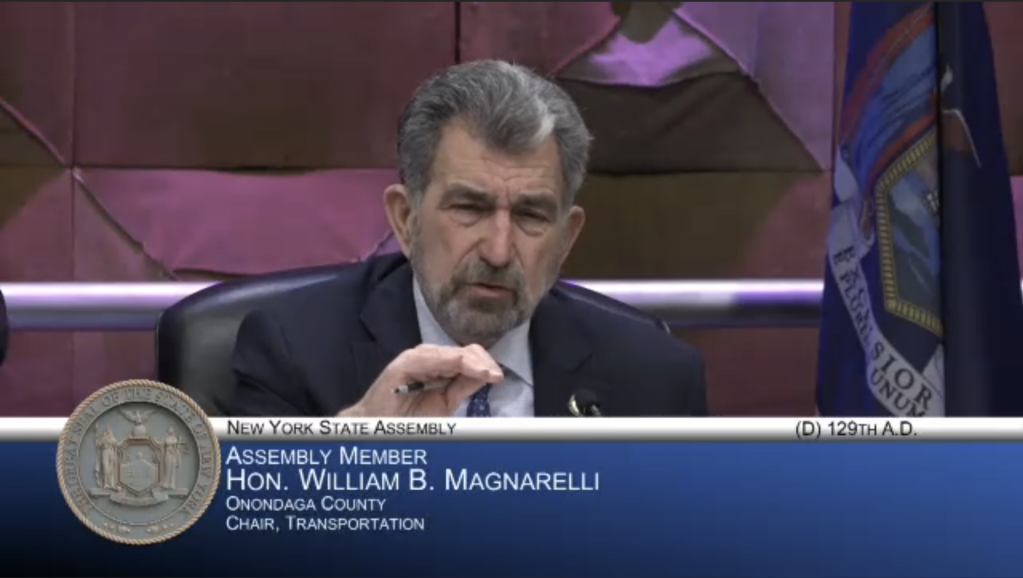
Lawmakers such as Transportation Committee Chairman William Magnarelli (D-Syracuse) frequently paint e-bikes as a plague on state streets, but they are mostly referring to e-motos, which are widely available online and often have settings that allow them to exceed 30 miles per hour.
The problems don’t end there. Assembly Member Carl Eachus (D-Orange and Rockland counties) asked Edward Brennan, president of the Albany Bicycle Coalition, to explain what speed e-bikes could go on bike paths, a regulation, Brennan explained, that is set by localities.
The farce continued.
Assembly Member Larinda Hooks (D-Queens) suggested that in her district, more people are struck by e-bike riders than by cars.
“The actuality is, my constituents are being run over by bikes and e-bikes more than they are cars,” Hooks said, adding that e-bikes are not being punished fairly for crashes when compared with cars.
But Hooks’s claim was flat out false. According to city crash data, in 2025, there were just 24 crashes in her district involving e-bikes — and not a single pedestrian was injured. Meanwhile, over the same 12-month period, there were 1,132 crashes involving cars, trucks, SUVs and vans, injuring 50 cyclists and 80 pedestrians.
It’s almost like someone should testify that cars are the leading danger in Hooks’s district.
Streetsblog caught up with Magnarelli after the hearing, but his motivation for regulation remained a bit unclear.
“There’s three classes of e-bikes, OK?” he said. “And then you get into mopeds and other things, motorcycles, which are motor vehicles — those things already have to be registered, licensed, etc. So now there are some vehicles on the edges, like the Class III e-bike, which goes up to 30 or 40 miles an hour, right?” (Wrong.)
In the end, Magnarelli admitted there isn’t much chance that any legislation is passed that will further regulate e-bike usage in New York, but insisted that his committee would be focused on the issue.
“I think we’re going to look at it now, whether or not there’s legislation that passes both houses and gets signed by the governor, that’s a different story,” Magnarelli said. “I don’t know if that’ll happen now, but I think we’re going to be looking at it now.”

Read More:
Streetsblog has migrated to a new comment system. New commenters can register directly in the comments section of any article. Returning commenters: your previous comments and display name have been preserved, but you'll need to reclaim your account by clicking "Forgot your password?" on the sign-in form, entering your email, and following the verification link to set a new password — this is required because passwords could not be carried over during the migration. For questions, contact tips@streetsblog.org.