OPINION: Gov. Hochul’s Penn Station Plan is Flawed from a Transit Perspective

Tri-State Transportation Campaign recently introduced a proposal to modernize Penn Station, and increase train capacity by more than 65 percent on an accelerated timeline. Apparently our plan arrived just in time.
The Board of the Empire State Development Corporation approved its problematic Empire Station Complex plan in a vote last week. The plan calls for facelifting the transportation hub, which will be funded — in small part — by financing against estimated future tax revenue generated from building 10 new massive towers around Penn Station — a proposal that we think could end up clashing with a better transit plan for riders. It now moves to the Public Authorities Control Board for a vote on Wednesday, although its ability to provide a check on the state’s plan was significantly weakened by then-Gov. Cuomo after the PACB rejected the Long Island City Amazon headquarters proposal in 2019.
Ideally, train capacity can be increased without expanding Penn Station by running all trains through the station, thus simplifying and speeding up service. If an independent and thorough feasibility study, including a cost-benefit analysis, concludes that an expansion is absolutely necessary to increase capacity, TSTC proposes an alternative solution to the massive stub-end terminal expansion proposed by Amtrak. Our plan, what we call the Tri-State Solution, calls for a one-platform, two-track expansion of Penn Station. This will increase capacity and allow for continued operations while the station’s central platforms are widened and tracks are reconfigured.
Contrary to the state’s current plan to redevelop Penn Station, the best transit option for the region does not maintain Penn Station as a terminal for commuter rail service, and it does not require the demolition of several blocks around the hub. Additionally, removing, or at least scaling back, that piece of the proposal would also be a significantly less expensive and safer option than the state’s current expansion plan.
The tri-state region would be best served instead by “through-running” New Jersey Transit, Metro-North and Long Island Rail Road service through the station rather than having it dead-end at Penn. Other major cities around the world, like London and Paris, do this with their transit systems, connecting their commuter rail and subways into one seamless system. The ESD plan will prevent that from becoming a reality in the foreseeable future — not until 2080 in fact, by NJ Transit’s estimate.
By unifying and streamlining our regional transit, we would also unlock new travel and economic opportunities, such as creating a one-seat ride from Jamaica, Queens to Newark Airport.
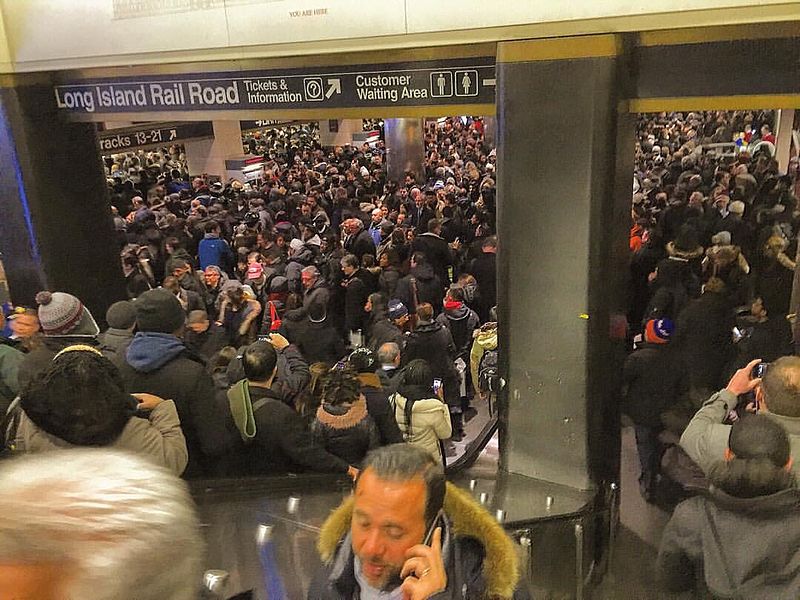
Our plan also creates wider platforms for improved safety and reduced congestion as well as modernizing the tracks to improve performance. The current Master Plan doesn’t even touch Penn Station’s tracks and platforms — the root cause of many of the station’s problems.
Our region’s existing commuter rail system operates primarily as a shuttle system for suburban commuters, who tend to be wealthier, traveling to and from Midtown Manhattan. Instead, through-running would expand access to jobs and affordable housing throughout the region.
For example, a person living in Long Island City or New Rochelle would have a seamless trip to a job in Newark, or a class in New Brunswick. This also helps take cars off the roads to ease congestion, reduce pollution and cut greenhouse gas emissions.
Even more important, our plan is about the long-term growth of the regional economy and equity. Why would we pass up this incredible opportunity to connect more people to jobs, housing and opportunity in a way that all other major cities that put transit first have done?
The state has pushed the Penn Station plan through with no guarantee for transit improvements. One sole developer will be the primary beneficiary, raking in big profits at the expense of New Yorkers, everyday commuters, visitors, and the millions who travel through the largest transit hub in the Western Hemisphere every year.
The state should change course on its current plan. There’s already a better transit solution for Penn Station — and we urge lawmakers and the PACB to stop this runaway train before it’s too late.
Liam Blank is Policy and Communications Manager for the Tri-State Transportation Campaign.

Streetsblog has migrated to a new comment system. New commenters can register directly in the comments section of any article. Returning commenters: your previous comments and display name have been preserved, but you'll need to reclaim your account by clicking "Forgot your password?" on the sign-in form, entering your email, and following the verification link to set a new password — this is required because passwords could not be carried over during the migration. For questions, contact tips@streetsblog.org.