OPINION: New Mayor Must Champion Safety of West Side Greenway

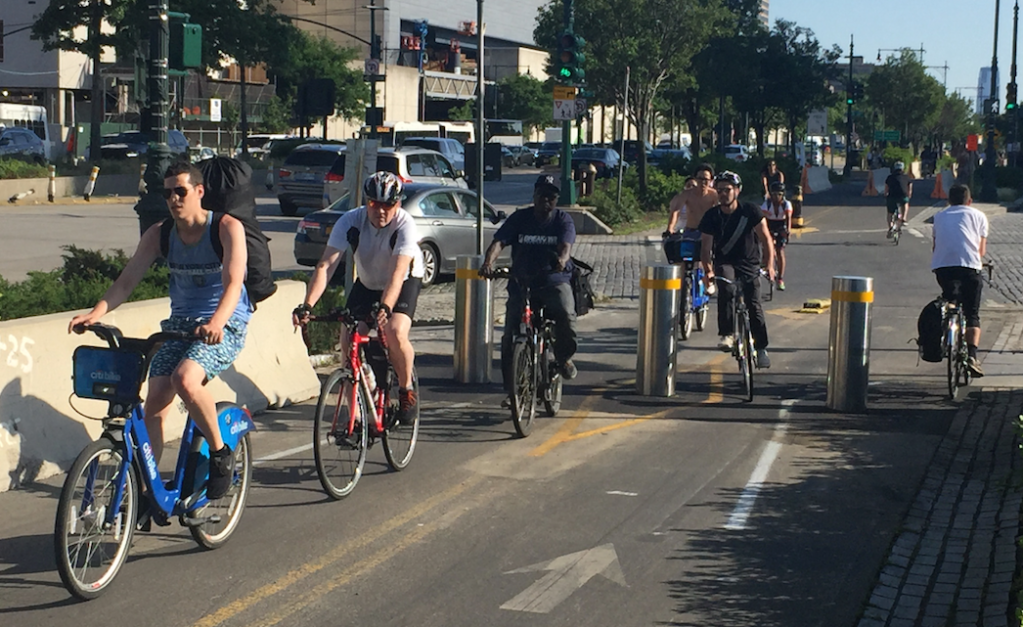

Tens of thousands of New Yorkers depend on Hudson River Greenway — the mixed-use, bike-pedestrian path along Manhattan’s West Side, which was resuscitated by the Bloomberg administration — for transportation, recreation, exercise, and respite. Yet the current administration often has bungled its management in a way that provides several teachable moments for our next mayor.
Now that we know who has won the Democratic mayoral primary, we can reflect on how we might promote safety and fairness on the greenway, and how we might ensure that the various government agencies work together for those purposes.
The de Blasio administration’s Vision Zero plan has relied too heavily on law enforcement and failed to leverage the value of America’s busiest bicycle route in providing safe, sustainable transportation infrastructure.
Under the next mayor, the greenway and its management must be wholly reimagined. An administration genuinely committed to safe, sustainable transportation would recognize that the Hudson River Greenway and other routes through our park network, away from streets clogged with multi-ton cars and trucks, are essential arteries. It would acknowledge that long bicycle routes from affordable neighborhoods on the city’s edges should be prioritized over the loud demands of wealthy NIMBY areas.
First and foremost, it would work with the state Department of Transportation to alleviate the crowded, dangerous conditions on the main greenway segment from the Battery to the Upper West Side. The greenway should be widened into the West Side Highway, by removing the westernmost lane of cars, as nine elected officials and three community boards urge. Moreover, the city must work with the state to remove the ban on pedal-assist bikes on that route — an artifact of the legislation authorizing e-bikes which unfairly hampers delivery cyclists.
The mayor also must direct the Parks Department to involve the state DOT in a safe construction detour in Washington Heights. On a mile-long section that needs resurfacing, pothole repair, and a strengthened retaining wall, Parks has proposed a lengthy closure with an as-yet-unspecified detour.
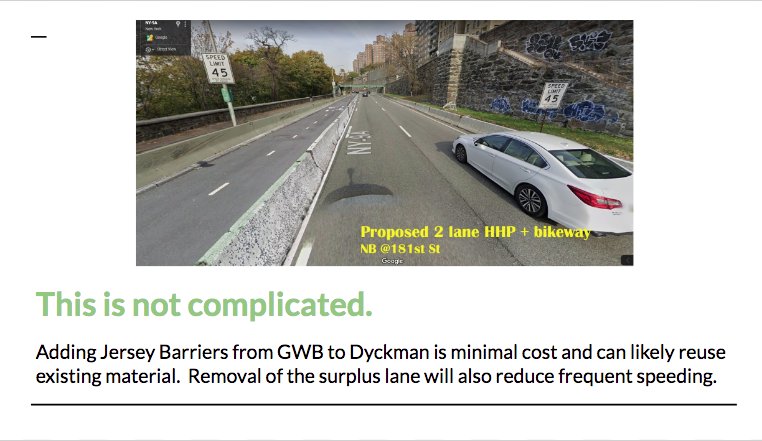
Judging by Parks’s previous construction detours, this one is likely to endanger and inconvenience all users, some more than others, especially because the neighborhood is so hilly. Parks should ask State DOT to borrow an underused lane of the Henry Hudson Parkway, as grassroots activists and Community Board 12 have recommended. But the department inexplicably has failed to explore what is by far the safest and most convenient detour option.
Prior instances of greenway mismanagement abound. Parks closed the heavily used Cherry Walk section between West 100th and 125th streets for several months last year for repairs to damage caused by Hurricane Sandy eight years earlier. The agency also addressed some other lingering issues, but the same section will close again for a longer period in a year or two because of a failure to combine maintenance items into a single project.
Again, the detour was a lapse of planning and coordination. Here, Parks should have worked with the city Department of Transportation to dedicate a lane of lightly used Riverside Drive to cyclists, and should have properly signed routes between the greenway and Riverside. It failed on both counts. For several weeks, a detour sign at the north end of the closure in West Harlem Piers Park directed cyclists and pedestrians to make a right turn — into the Hudson River.
The Harlem and Washington Heights construction detour failures can be chalked up to laziness or incompetence, but not so the Boat Basin detour on the Upper West Side. Local Parks officials who live in the neighborhood relentlessly pushed to exclude cyclists from all five boroughs and beyond off of the waterfront path and onto a poorly lit series of steep hills and sharp turns from West 72nd to 82nd streets.
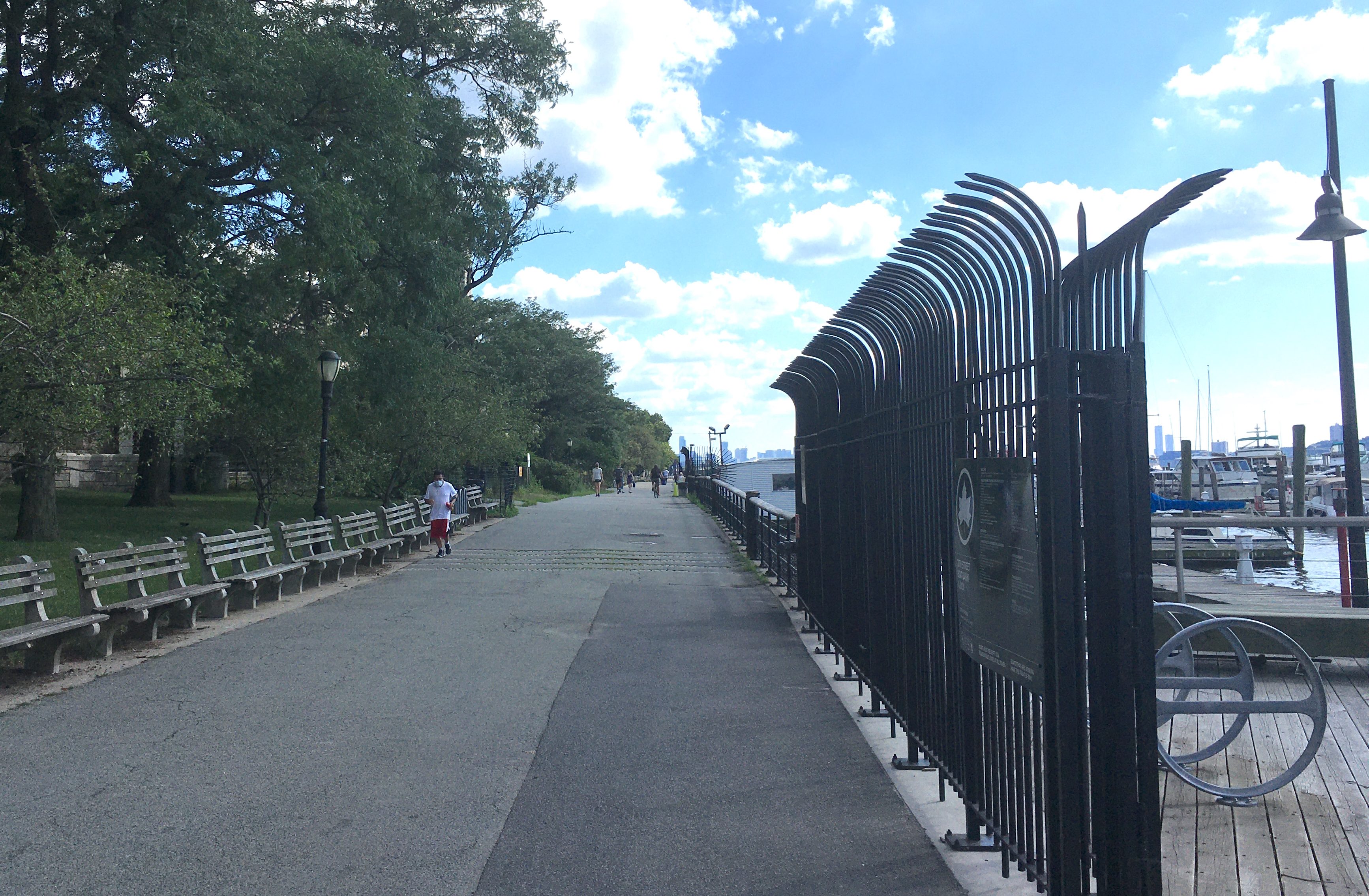
The vehicle for this policy change was participatory budgeting, where only Upper West Siders were asked to decide whether to create an optional, bikes-only route for all of their fellow park goers. They voted “yes” but, even then, the result was a bait and switch, with a mandatory combined path to reach the waterfront and a prohibition on waterfront cycling. The inequitable ban remains in place, even during the night and the majority of the year when the waterfront route is too cold for all but the hardiest promenaders, and the safe, flat route becomes the exclusive domain of Parks Enforcement Patrol vehicles.
The lackadaisical attitude of city agencies toward the greenway must change. A strong City Hall must communicate a consistent vision and effectively oversee its execution in and among its agencies — and not shirk coordination with the state, if necessary. Here’s hoping the greenway and all of us who depend on it get that in our new mayor.
Danny Pearlstein is the policy and communications director of Riders Alliance. Follow him on Twitter @dannypearlstein.

Danny Pearlstein is Policy & Communications Director at the Riders Alliance.
Read More:
Streetsblog has migrated to a new comment system. New commenters can register directly in the comments section of any article. Returning commenters: your previous comments and display name have been preserved, but you'll need to reclaim your account by clicking "Forgot your password?" on the sign-in form, entering your email, and following the verification link to set a new password — this is required because passwords could not be carried over during the migration. For questions, contact tips@streetsblog.org.