OPINION: Use Speed Cameras to Change Drivers’ Behavior

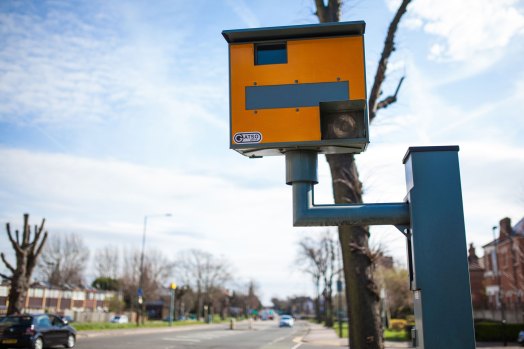
New York City’s network of school-zone speed-enforcement cameras — which now operate 24/7 — is a good start for reducing the epidemic of traffic deaths of the last 20 years.
But enlarging the network of cameras and combining it with other traffic-calming measures could make the cameras more effective in curtailing the surge of traffic violence, which has worsened because of the lack of enforcement during the height of the Covid-19 pandemic.

More cameras in different places — along with lower speed limits, road diets, speed humps, and pedestrian infrastructure such as islands and car-free plazas — could help reshape motorists’ behaviors in ways that would save even more lives and yield even more public-health benefits, research suggests.
That is, if our lawmakers stopped thinking of the cameras simply as a way of generating revenue and embraced them as a tool for changing driver behavior.
How’s that? From a public-health point of view, good behavior is contagious.
When aggressive drivers slow down and obey the laws, drivers around them tend to slow down and obey the laws, too. Thus, enforcement cameras not only save lives and reduce injuries, they also tend to improve the behavior of otherwise law-abiding citizens. In doing so, they may reduce our chances of getting “real” tickets issued by human police — because, knowing that cameras may catch speeding, drivers become habituated to driving slower.
Conversely, just as good behavior is contagious, so is bad behavior. When Covid-19 struck the city, traffic enforcement loosened (and hasn’t returned to pre-pandemic levels despite the resurgence of motoring). Drivers learned that they could run red lights and speed without much risk of tickets — normalizing such recklessness. Today, violations remain more common than before the pandemic, and injuries and deaths from crashes remain high.
It doesn’t have to be this way, however. We can reshape this dangerous behavior with the right tools.
Research shows that behavioral changes can produce dramatic public-health effects over time. Our team at Columbia University estimated that doubling the number of speed-enforcement cameras in New York City would save more than $1 billion, hundreds of lives, and enormous human suffering relative to the status quo over the lifetime of the average New Yorker. This $1 billion in savings comes from reduced health-system costs and worker productivity — not revenue from tickets.
Albany listened, and in 2019 doubled the number of cameras. This year, legislation passed to keep the cameras running 24/7 rather than during school hours alone — allowing them to operate at night and on weekends, when reckless behavior and crashes are more common.
We can do better. Speed limits are set based on the likelihood of an injury or death during a crash, but each additional mile-per-hour of speed increases the risk of serious injury or death exponentially. The current speed limits around the cameras may not slow traffic to speeds that align with public-health needs.
Installing cameras in school zones was an effective political strategy that turned apolitical parents into traffic-safety advocates. There was a time when politicians in Albany attempted to sunset school-zone cameras, but parents of children who had died in traffic crashes made sure that the cameras stayed put. Many dangerous roads are (thankfully) far from schools, however. Putting cameras on those roads could do a lot more to change motorists’ behaviors citywide than cameras in school zones alone.
Our study found that it isn’t necessary to have a camera at every intersection. There is a critical mass of cameras at which motorists just begin to obey the law. When we computed where cameras should be placed and how many would be needed in order to change driver behaviors, the answer was, surprisingly, that it doesn’t take many, and that installing them would save lives and money. So we get a double return on the investment.
Enforcement cameras come with widespread advantages. They almost quadruple ticketing relative to enforcement by police officers but come at a small fraction of the cost of cops’ salaries and pensions. They focus on license plates and not on the color of the driver’s skin, potentially increasing fairness. The police cannot be relied upon to enforce traffic violations; there are simply too many people driving dangerously and too few police tasked with enforcement. We get a massive return on every dollar that we spend on traffic cameras. Just try to find an investment like that in the market today.
Yes, enforcement cameras also come with disadvantages. Because cameras do not identify drivers, car owners only receive a small fine and no points for a violation — as they would for a police-issued ticket. Wealthier drivers can rack up violations with little concern for the law. One solution: Share fine information with insurers to make sure that drivers pay a higher price for multiple violations.
If we broaden the use of cameras — and install traffic calming infrastructure, especially in underserved areas, which sometimes even lack the basics, such as sidewalks or crosswalks — all pieces of the traffic puzzle can combine for safer roads.
Dr. Peter Muennig (is a professor of health policy and management at Columbia University’s Mailman School of Public Health.

Streetsblog has migrated to a new comment system. New commenters can register directly in the comments section of any article. Returning commenters: your previous comments and display name have been preserved, but you'll need to reclaim your account by clicking "Forgot your password?" on the sign-in form, entering your email, and following the verification link to set a new password — this is required because passwords could not be carried over during the migration. For questions, contact tips@streetsblog.org.