Report: Ending Federal Commuter Tax Benefit Would Put Thousands More Cars in Manhattan
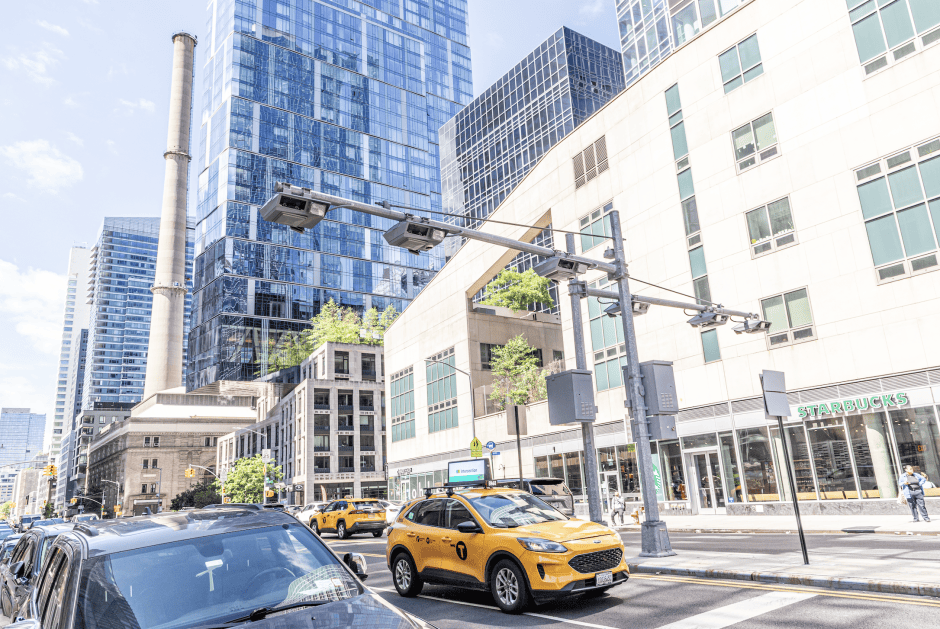
Proposals to end the federal tax break that lets Americans pay for transit with pre-tax income would send as many as 11,100 more vehicles into Manhattan’s central business district every weekday, according to a new analysis from the Regional Plan Association.
Under federal law, employers can let workers set aside up to $340 a month in pre-tax income for transit costs, which lowers their taxable income and contributes to employees’ fares tax-free. More than 5.5 million workers in the region have access to the benefit, about 30 percent of whom work in Manhattan’s core, where 84 percent of morning peak entries are by transit.
The report, published Sept. 28 by RPA Vice President Rachel Weinberger and consulting economist Charles Komanoff models what would happen if the benefit disappeared. It estimates daily vehicle entries would rise by 6,200 to 11,100, or 1 percent to 2 percent.
In New York City, employers with 20 or more full-time, non-union employees must offer the benefit under a law that took effect in 2016.
Republicans in Congress proposed eliminating the benefit last year as part of budget-cutting efforts, according to the Association for Commuter Transportation, but ultimately kept it in their “One Big Beautiful Bill” Act while scrapping a separate bicycle commuter benefit.
The report models what would happen if the proposal had gone through.
That extra traffic would cost drivers across the region 2.2 million to 3.8 million hours a year in delay, or $110 million to $190 million, the authors estimate — enough to wipe out 16 percent to 28 percent of the travel speed gains congestion tolls have delivered in the core. (Congestion pricing, which began in January 2025 with a $9 peak toll for cars entering Manhattan below 60th Street, has cut traffic substantially: 27 million fewer vehicles entered the zone in its first year, an 11 percent drop.)
Worse yet, transit agencies would lose $15 million to $25.7 million a year in fare revenue, the report says, including up to $20.3 million at the MTA. And riders would also pay more: The benefit saves New York and New Jersey commuters to the core an estimated $380 million a year, with those from suburban areas saving the most — an average of $1,300 to $1,500 a year, versus about $400 for urban riders.
By Streetsblog’s calculation from the report’s tables, about $303 million of that goes to commuters from the report’s northern and eastern zones, which cover the five boroughs, Long Island and Westchester County.
The report arrives as transit demand increases. Nearly 4.7 million people rode the subway on Sept. 23, the MTA said, its busiest day since before the pandemic, during United Nations General Assembly week.
The authors caution that their estimates rest on assumptions, including that 45 percent of eligible commuters use the benefit, and likely understate the impact because they cover only trips to the Manhattan core.
The report also points to a larger imbalance: Port Authority research found that 54 percent of peak-period drivers heading to the core through the Lincoln and Holland tunnels and the George Washington Bridge receive employer-provided or subsidized parking.
The authors describe the transit benefit as an imperfect offset to those perks and say it is “time to address that head on.”
“There’s really urgency for everyone, and I think the biggest hit is to the individual pocketbook,” Weinberger told Streetsblog.

Read More:
Streetsblog has migrated to a new comment system. New commenters can register directly in the comments section of any article. Returning commenters: your previous comments and display name have been preserved, but you'll need to reclaim your account by clicking "Forgot your password?" on the sign-in form, entering your email, and following the verification link to set a new password — this is required because passwords could not be carried over during the migration. For questions, contact tips@streetsblog.org.