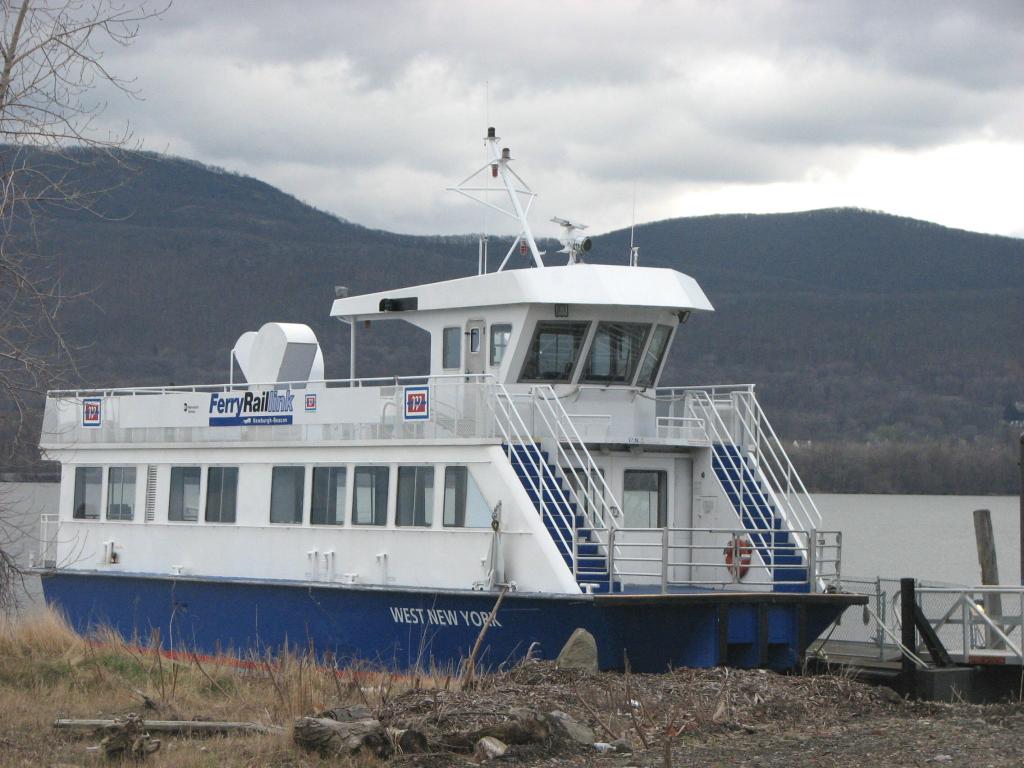
Newburgh-Beacon Ferry Nixed By MTA Returns For Two Weekend Pilot
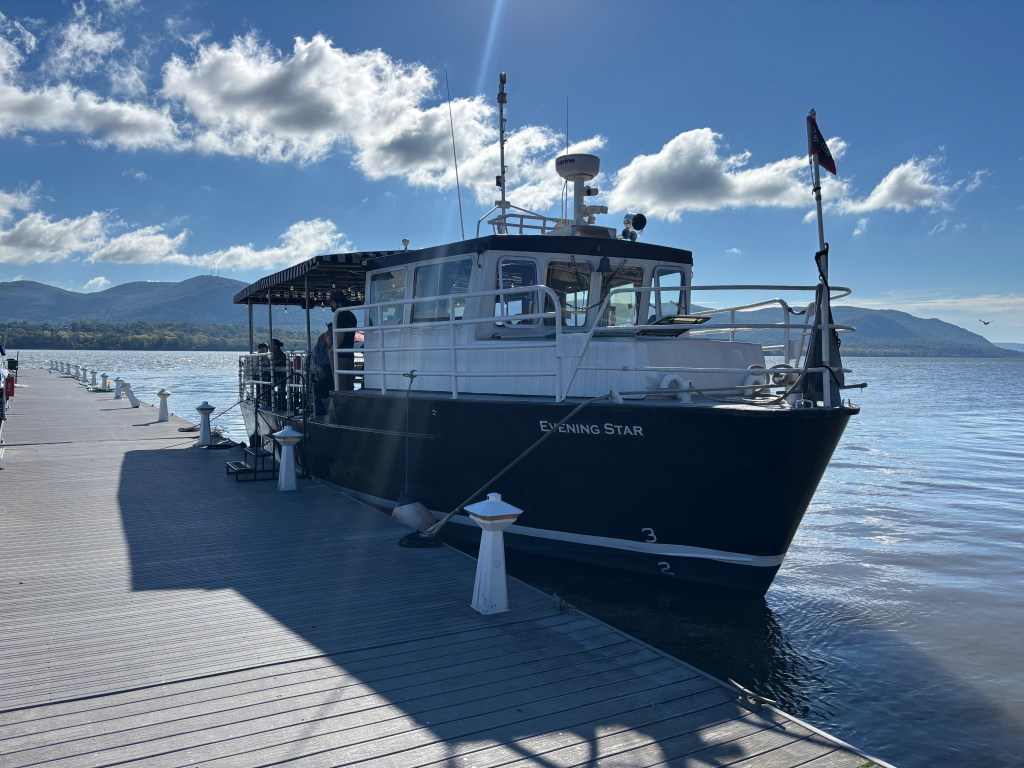
The Newburgh-Beacon Ferry has returned for two weekends only, and supporters of the former Metro-North commuter connection hope data and public sentiment can plant the seed for a more permanent comeback.
The Save the Ferry coalition, which organized the four-day trans-Hudson pilot, said tickets for both weekends sold out. Organizers are now collecting passenger counts, testimonials and feedback from local businesses to take to Gov. Hochul, the MTA and state and local lawmakers.
But a ferry needs somewhere to tie up. The pilot is running on private docks, and the city of Newburgh’s long-planned public replacement at Newburgh Landing is stuck in a state permit review that the city and the state describe very differently — leaving any potential permanent service without anywhere to land on the west side of the river.
The pilot ran last Saturday and Sunday and returns this weekend, Oct. 11 and 12 with 14 crossings a day between 10 a.m. and 6 p.m. for $1 a ticket. The New York Boat Company charter vessel holds 39 passengers, so the most it can carry is about 546 riders a day.
Organizers timed the crossings around roughly a dozen events in both cities, including Newburgh Porchfest, Spirit of Beacon and the Beacon Music and Flow Festival. Newburgh Mayor Torrance Harvey rode across on Oct. 3 with Beacon Mayor Lee Kyriacou, and the river cooperated. Harvey is already looking past this month.
“The weather is beautiful. The fall foliage is out. The Hudson is calm. It was a great experience,” Harvey told Streetsblog. “I think this is potentially going to be a permanent thing, especially in the warm weather months.”
Kyriacou, for his part, said there’s already had boat operators reach out about providing weekend service, but that a commuter ferry like the one the MTA ran until 2025 “was a lot tougher economically.”
The MTA ended the commuter ferry citing low ridership and an annual operating cost of about $2.1 million. Metro-North has said the ferry averaged just 62 riders a day in 2024.
Naomi Hersson-Ringskog, a Save the Ferry organizer arguing for the ferry’s return, said ridership was never the right yardstick.
“I understand that MTA cited ridership, but I don’t think ridership is the main point of this,” she said on the pilot’s first day.
The coalition’s survey will look at who is crossing, why they’re crossing and what that means for the local economy and culture, which Hersson-Ringskog said “carries a bit more weight.”
Organizers also hope attractions like the art museum Dia Beacon, which offers free admission to Newburgh and Beacon residents, can share figures on how many Newburgh visitors came through its doors on the sold-out ferry days.
The coalition has acknowledged the state’s efforts to fill the gap with an expanded Newburgh-Beacon Bridge Shuttle, which got weekend and holiday service in July. But in a press release, organizers said a bus “cannot fully replicate the benefits of a direct ferry connection,” citing bridge traffic that they said can stretch a crossing to 45 minutes, compared to about 10 minutes by boat.
Hersson-Ringskog said she would like to see lawmakers and the MTA meet the coalition part-way.
“If the MTA or Hochul would come to the table to start listening, I think we could implement something incrementally,” she said, suggesting state legislators put money toward weekend service in summer and fall.
If no one does, she expects a repeat of this year’s experiment in the future.
“I imagine that next year we will have another sort of charter boat to continue to build the data and to build the participation,” she said.
A dockless ferry, for now
That word — charter — is part of the problem: the infrastructure for a full-time public ferry doesn’t currently exist.
“We’re now operating on a private dock because this is technically sort of like a charter boat,” Hersson-Ringskog said. A permanent public service would require Newburgh Landing, the city boat launch or a retrofitted pier, she said, and the pilot “just sort of highlights the deferred attention to maritime infrastructure.”
On the Beacon side, Kyriacou said the fix is a “spud dock,” a floating dock that attaches to a long stationary dock. He said boat operators have their own and are talking about installing it.
Newburgh’s big challenges, on the other hand, is an elusive state permit. The city completed reconstruction designs of the Newburgh Landing dock and even identified cruise lines interested in operating out of the river city, Harvey said, but it can’t move forward without the state Department of Environmental Conservation’s approval.
DEC appears unconvinced of the city’s pitch. The agency told Streetsblog it received an application for the “proposed dock expansion” on April 10, 2025, and that the project required permits for docks, moorings and platforms as well as excavation and fill. DEC then sent the city a “Notice of Incomplete Application.” The city resubmitted its application, but a second notice in February 2026 asked for more justification of the project’s scale. DEC pointed to Milton Landing Park Pier, Ossining Pier and the Haverstraw Ferry Terminal as comparable facilities that meet its standards.
Supporters will get at least one high-profile rider on Saturday. U.S. Rep. Pat Ryan (D-Gardiner), whom the coalition calls one of the campaign’s earliest backers, is expected to cross.
Whether sold-out boats and a November survey are enough to bring the MTA to the table remains open question. For now, at least, the boats are full.

Read More:
Streetsblog has migrated to a new comment system. New commenters can register directly in the comments section of any article. Returning commenters: your previous comments and display name have been preserved, but you'll need to reclaim your account by clicking "Forgot your password?" on the sign-in form, entering your email, and following the verification link to set a new password — this is required because passwords could not be carried over during the migration. For questions, contact tips@streetsblog.org.