OPINION: The Newburgh-Beacon Ferry Was More Than a Boat — It Was Equity in Motion
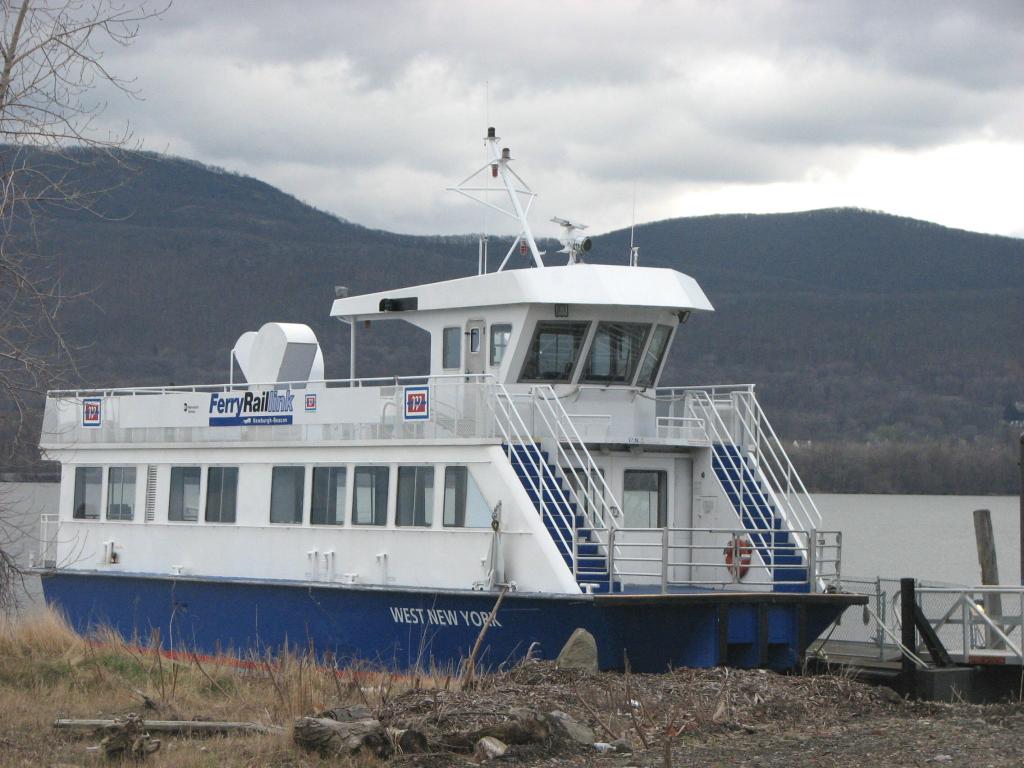
When the Newburgh-Beacon Ferry abruptly ended service last February, many on the Newburgh side of the river were shocked. A 220-year legacy of connecting Newburgh and Beacon was suddenly gone.
There was no grand announcement, no public engagement process and no real opportunity to explore optimization. In its place, commuters were offered a shuttle running along the Newburgh-Beacon Bridge, the most congested bridge crossing in the region, and along state Route 9D and Interstate 84, Beacon’s most congested and intractable bottleneck.
The MTA cited declining ridership and operating costs of roughly $2.1 million per year when opting to discontinue the ferry—a rounding error compared to its $20 billion operating budget. On the surface, that sounded like reasonable economic judgment, but a closer look reveals a service that was never fully optimized, integrated or valued as the vital link to support equitable economic, community and housing development in the Mid-Hudson Valley region.
Centering low ridership numbers is dangerously narrow framing and an unfair criterion for service that was not widely usable and thus set up to fail. This is not a simple failure of transportation planning, but of governmental imagination and responsibility.
The ferry ran on limited connections to peak-hour trains, the most expensive of the day, and ceased for the morning after an 8:01 a.m. departure from Newburgh before ferrying Metro-North commuters arriving on the 6:50 p.m. departure from Grand Central Station.
This is well before anyone would have finished a business dinner, afternoon classes, theater outing or anything more than a beeline from the office to the train.
Ferry service was not expanded in line with broadly changing demographics, a large population influx and evolving remote work schedules. Poor signage, little to no marketing or advertising campaigns and a crucial lack of weekend service for this critical east-west link ensured it never lived up to its potential for west shore users.
All the while, MTA and Metro-North have continued to upgrade service connections along the Hudson Line to answer ridership growth post-pandemic. One example is a more extensive and usable ferry schedule that was rolled out with fanfare by Gov. Hochul in 2024, strengthening the links between the Town of Ossining in Westchester County and the Town of Haverstraw in Rockland County. That service, under the same operator and vessel type as the Newburgh-Beacon Ferry, includes weekend routes outside of the winter season and has seen consistently rising ridership for commuters and visitors alike.
The discontinuation of a ferry further north in the Hudson Valley, but still within the Metropolitan Commuter Transportation District, exposes a troubling contradiction in the state’s transportation and pro-housing development policies that are so publicly championed.
On one hand, MTA has launched and defended congestion pricing in New York City—a bold, data-driven strategy that has successfully reduced traffic, cut emissions, boosted sales and generated funds for transit improvements—while on the other, the authority has shuttered this vital and dependable cross-Hudson River link with few alternatives for Mid-Hudson Valley commuters. Daily Metro-North riders now must drive themselves to Beacon or rely on chartered shuttle coaches, contributing to deepening congestion and pollution while bypassing small businesses.
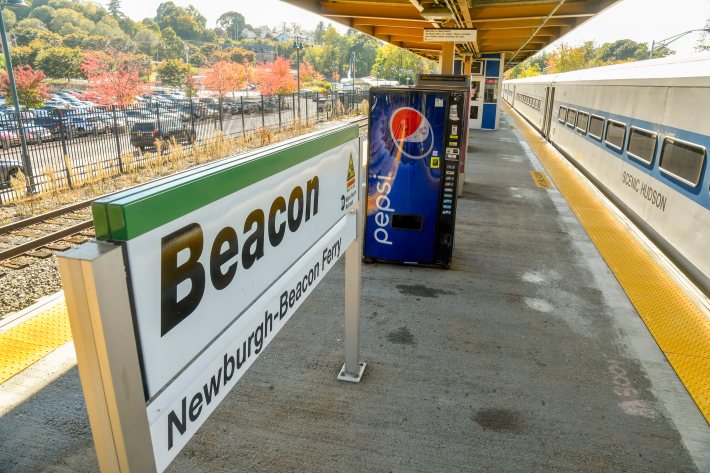
A lingering question is whose livelihoods are prioritized within the defined and taxed service area of this public transit agency. The issue also highlights the deeper role the ferry played, and could continue to play, in mobility justice, economic inclusion and thoughtful regional growth.
The new state Department of Transportation bus service, the Newburgh-Beacon Shuttle, was rolled out eight months after the ferry was discontinued and has merits, especially with recent enhancements expanding trips and connections to a majority of trains coming and going at Beacon station. What it crucially lacks is dependability, improved routing with local input from users in both cities and essential weekend service.
Let’s be honest about what this shuttle bus means for equity and access. A direct ferry trip takes 7 to 10 minutes across the river. A bus across the bridge, caught in congestion around state Route 9D or during peak commute hours, can take 20 to 45 minutes.
Traffic congestion around busy corridors underscores the need for modal diversity and timing dependability, not a singular dependence on bridges and buses.
For people without cars — an estimated 30 percent of Newburgh residents — that difference is a barrier to jobs, education and essential services. Car ownership alone in this region can cost roughly $12,000 a year, a heavy burden on households already stretched thin.
Moreover, the question of mobility isn’t separate from questions of development. Beacon is poised to continue its extraordinary growth, including new mixed-income transit-oriented development on the north parking lots of its train station. In Newburgh, building is underway or about to begin on eight large-scale infill and adaptive reuse projects set in a vibrant—but fragile—economic and cultural mix that deserves more connectivity, not less.
Inequitable transportation perpetuates and deepens inequality between the east and west shores of the Hudson River, with Newburgh’s poverty rate well above the regional average. Transportation options should not be contingent on car ownership, wealth or the ability to withstand long detours over a tolled bridge.
For transportation to be truly equitable, it must be reliable, integrated, visible and valued. If we want better mobility in our region, we must commit to planning with intention, listening to riders, and designing systems worthy of the communities they serve.
The river is treated as a barrier. Our choices about how we will cross it — equitably and reliably — have the enormous power to connect and transform us.


Read More:
Streetsblog has migrated to a new comment system. New commenters can register directly in the comments section of any article. Returning commenters: your previous comments and display name have been preserved, but you'll need to reclaim your account by clicking "Forgot your password?" on the sign-in form, entering your email, and following the verification link to set a new password — this is required because passwords could not be carried over during the migration. For questions, contact tips@streetsblog.org.