‘Lowballing Victims’: Crash Survivors Furious At Hochul’s Car Insurance Proposal
Affordability — but for whom?
Victims of car violence say that Gov. Hochul’s proposal to reduce car insurance premiums partly by reducing compensation to injured people would make it harder for victims to be made whole after catastrophic, life-changing crashes.
“The governor’s auto insurance agenda is going to make it worse, because it’s going to weaken protections for injured people like myself, and it’s giving insurance even more leverage to lowball people like me,” George Edwards told Streetsblog.
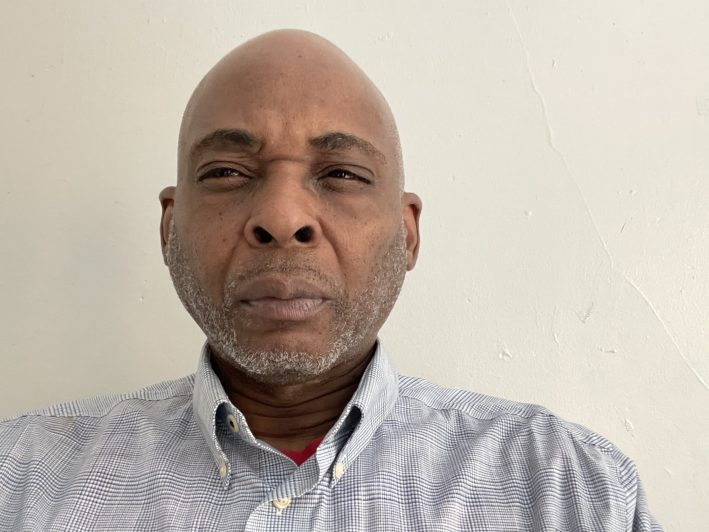
In 2023, while driving for Lyft in Rochester, Edwards was rear-ended by another driver. The crash left him needing neck and shoulder surgery, and he says he may never work again.
Neil Browne was a passenger in an Uber in 2021 when its driver collided with another driver at a White Plains intersection. The crash left him with spinal injuries that have prevented him from returning to work as an adjunct professor of English as a Second Language.
“Please don’t support a measure that limits a victim’s rights to seek full accountability through the courts,” Browne said, addressing lawmakers in Albany. “[Hochul’s] bill would have erased my case before I ever had the chance to be heard.”
Currently under New York’s no-fault insurance law, everyone involved in a crash is eligible to be compensated for medical bills and lost wages, up to $50,000. To get more compensation, crash victims must sue the responsible parties — but only if they can show they have suffered a “serious injury.”
But Hochul wants to change the definition of that term, which is currently defined as death, dismemberment, significant disfigurement, a fracture, loss of a fetus, loss or significant limitation of a body function or organ — or a non-permanent injury which prevents a person from daily activities for more than 90 days of the first 180 days following a crash.
Hochul would narrow the definition of a serious injury by removing some of the non-permanent injuries, such as concussions and soft-tissue injuries.
Additionally, it disqualifies victims from claiming damages if they are found to be even slightly more at fault than the driver who hit them.
Under Hochul’s proposal, the legal concept of joint and several liability, which holds multiple parties responsible for the harm done to crash victims, would be diminished, and if more than one of the negligent drivers did not have insurance, victims would not receive full compensation.
These changes would have vast ramifications say experts and victims.
“As somebody who’s lived the experience, I can tell you that all the medical bills, all of the treatment, is very expensive, and then when you’re not able to work, and you’re not bringing anything in, bills just accumulate, and it becomes very overwhelming,” said Alison Sirico, who was hit by a car driver in Queens last February while she had the right of way in the crosswalk. The car drove over her head with both tires.

Sirico was left with a fractured skull, traumatic brain injury, collapsed lungs, a broken set of bilateral orbital bones, a Le Fort fracture (a traumatic fracture of the mid face and upper jaw), spleen and renal injuries, a fractured shoulder blade, a break in all the small bones in her inner ear and nerve damage on the right side of her face.
She said that the governor’s proposal feels like a contradiction, since it is meant to make life more affordable for New Yorkers, but could make it easier for juries to dismiss cases.
Hochul’s proposal is backed by ride-share company Uber, but Assembly Insurance Committee Chair David Weprin (D-Queens) is also pleased that his attempts to combat auto fraud fit into Hochul’s calculus about lowering insurance premiums. But even he’s not fully support of the rest of the proposal.
“I’m very excited about … putting an emphasis on combating insurance fraud,” Weprin said. “But I’m not 100 percent behind the governor’s proposal.”

In 2019, Weprin and his state colleagues passed the so-called “Alice’s Law,” which made staging a fraud crash to commit insurance fraud a Class E felony and staging a crash that leads to death or injury a Class D felony. It was named after Alice Ross, who died after her car was hit by a driver staging a crash.
State lawmakers are still conferencing various parts of Hochul’s budget legislation and gathering testimony from stakeholders at a series of budget hearings. As they deliberate, crash victims are hoping they remember their constituents, not mammoth insurance companies, big tech or other voices who think Hochul’s proposal is the fix for expensive car.
Rochester area crash victim Vaughn Austin, who was T-boned by a driver as he was driving with his girlfriend last April and is still receiving cortisone shots for neck and back pain, hopes that lawmakers remember their purpose.
“If you were working for the people, you’ll be trying to make it easier for us, not harder for us as taxpayers, especially when we already pay for car insurance and stuff like that,” Austin said.

Read More:
Streetsblog has migrated to a new comment system. New commenters can register directly in the comments section of any article. Returning commenters: your previous comments and display name have been preserved, but you'll need to reclaim your account by clicking "Forgot your password?" on the sign-in form, entering your email, and following the verification link to set a new password — this is required because passwords could not be carried over during the migration. For questions, contact tips@streetsblog.org.