State Shuts I-81 Ramp — And Starts The Healing Of Syracuse
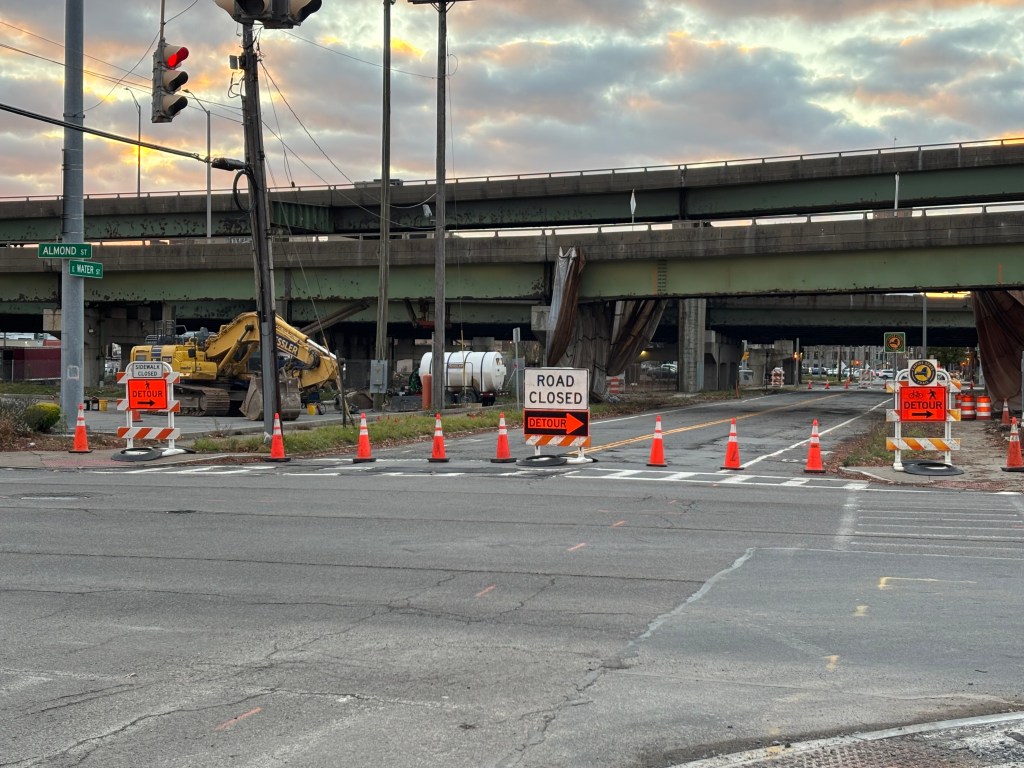
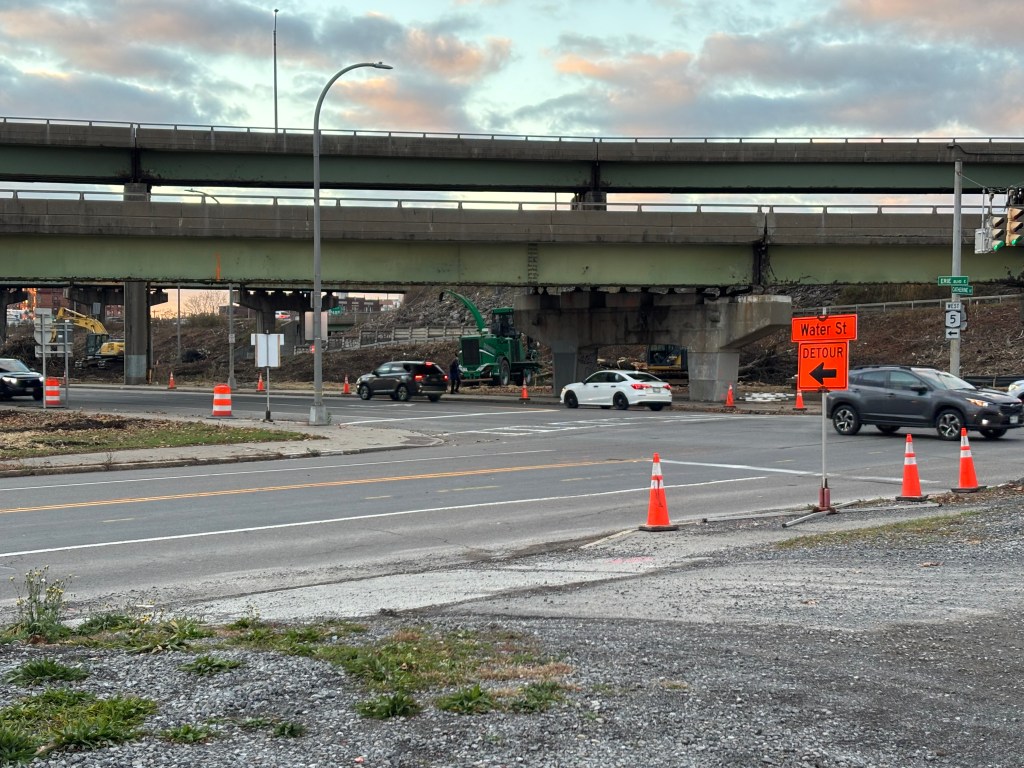
State officials on Monday permanently closed a ramp on an elevated stretch of Interstate 81 through Syracuse, the first segment to be removed as part of a teardown of the highway that ripped through a thriving Black neighborhood in the 1960s — and the beginning of an effort to heal the city it has divided for six decades.
The state Department of Transportation says it will take about six weeks to fully remove the ramp, which carried drivers from the northbound viaduct onto eastbound Interstate 690. It is the first of at least two ramps coming out of the spaghetti interchange in the heart of Syracuse.
The viaduct opened in stages between 1959 and 1969 and was a stake driven through the 15th Ward, a working-class neighborhood that was home to nearly 90 percent of the city’s Black residents. More than 1,300 families were displaced. The highway was so egregious for so long that the Congress for the New Urbanism in 2019 named I-81 one of the 10 U.S. highways most ripe for teardown.
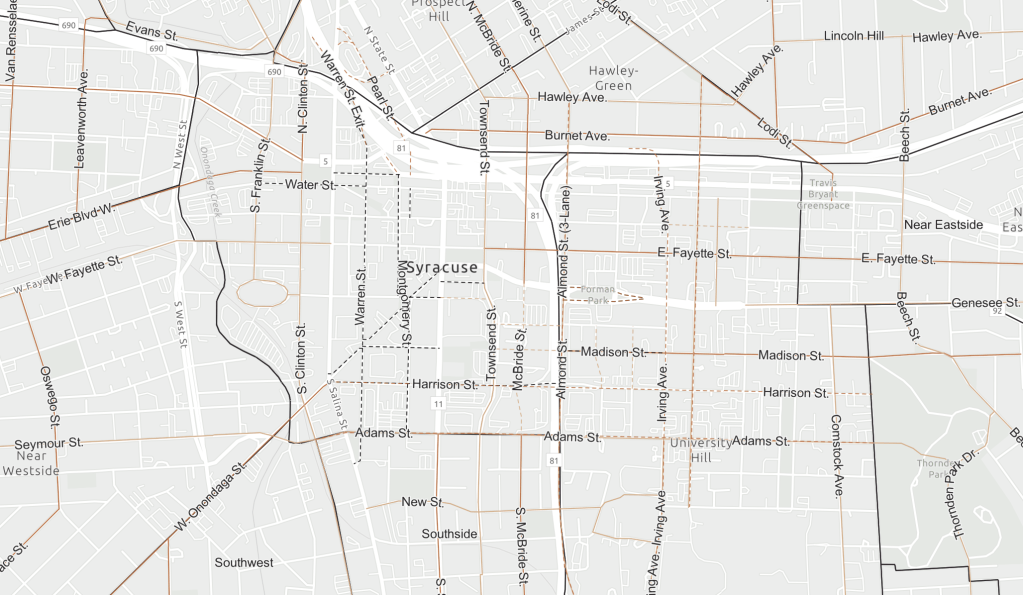
Monday’s closure is an early step in the long-delayed $2.25-billion I-81 Viaduct Project, which will remove the full 1.4-mile stretch of elevated I-81 — the viaduct itself, plus the ramps that feed it — and route through traffic around the city on Interstate 481, which is to the east of downtown. Federal officials approved redesignating that eastern bypass as the new Interstate 81 in September, and the old route through the city will become Business Loop 81.
Beyond merely removing and renaming highways, the plan’s centerpiece is the “community grid,” a street-level network that stitches together the divided neighborhoods and opens up land for more productive uses, as outlined in the city’s Community Grid Vision Plan. The first goal is maintaining housing for existing residents, who are sometimes displaced when property values rise to reflect the appeal of safer, more livable streets, a concern some residents have raised.
The aim is to repair the damage that highways caused to low-income communities of color in the 1960s, not repeat it.
“We’re getting a very good deal where we’re going to have a chance to make our community whole,” said Assembly Member-elect Mo Brown (D-Syracuse).
Removing the viaduct will free up scarce land for housing and health care institutions, and make way for better streetlights, sidewalks and bike lanes at street level, said Syracuse City Auditor Alex Marion, who said he attended his first public meeting about I-81 in 2008, when he was in high school.
“It’s about the physical structure being a divider in the city and being this wall in the city,” added Alex Lawson, a member of the Moving People Transportation Coalition.
Lawson said he remembers poring over early renderings of the community grid and thinking, “Oh my God, this is going to be incredible.” Seeing it start to happen, he said, is the true milestone from Monday’s ramp closure.
The community grid plan should be relatively seamless since most of the traffic using that ramp was local commuters, Lawson said, because drivers seeking to bypass Syracuse had already switched to Interstate 481 south of the city. State DOT estimates about 10,000 vehicles used the ramp each day. That makes it a natural first piece to remove: a slab of car infrastructure that mostly moved commuters past neighborhoods that have lived with the highway for six decades.
The remaining open question is about funding, Marion said. The city was supposed to receive about $30 million from the federal Neighborhood Access and Equity program for sidewalks, streetlights, trees and bike lanes on streets now buried beneath the viaduct. The Trump administration took back that funding, and the city has not identified a replacement. The state’s share was untouched.
Marion’s office recommended this fall that Congress replace the money, and he’s more optimistic now that Congress will have a Democratic majority.
Lawson, meanwhile, wants something else. On Monday, when crews started taking down the viaduct, there was no celebration or even any public event.
“I do hope that they have some sort of anti-groundbreaking event when they actually tear the viaduct down,” he said.