Advocates Urge Gov. Hochul To Order Outside Overhaul of Car-First State DOT
More than two dozen advocacy groups want Gov. Hochul to convene an outside panel to overhaul the state Department of Transportation, saying the agency’s highway-first approach to transportation planning and road design has left New York with unsafe, costly roads it can’t maintain and too few alternatives to driving.
“We are at an inflection point where the transportation policies and practices of the past do us great disservice. We must do better,” the transportation, environmental and disability justice groups wrote in their letter issued on Monday.
Advocates accused the state of expanding highways it already struggles to maintain, using financial formulas inherited from an era that prioritized building more roads over upkeep.
Nearly every county, town, village and city in the state has an under-funded backlog of deferred maintenance and safety work on local roads and bridges, the letter charged. The state’s five-year capital plans lack project-level funding for non-MTA transit, intercity passenger rail and aviation, while its Active Transportation Strategic Plan focuses on procedure over commitments. Upstate transit systems, meanwhile, face structural budget deficits, the groups said, noting that the Capital District Transportation Authority is in its third year of service cuts despite record ridership.
The letter thanked Hochul for suspending NYSDOT’s plans to widen Cross Bronx Expressway as part of the Five Bridges project, but said the flawed planning assumptions persist that led to that proposal happening in the first place. The groups listed several other projects they said reflect the agency’s car-first, approach to planning:
- The $1.5 billion widening of the Van Wyck Expressway to John F. Kennedy International Airport.
- Lane additions on the Belt Parkway and FDR Drive funded by the MTA capital program.
- A $1.4 billion proposal to widen Route 17 in the Catskills, which relies on flawed traffic forecasting.
- A botched environmental review of the proposed Kensington Expressway cap in Buffalo.
- The agency’s habit of blocking local requests for Complete Streets safety projects in places such as Amityville, Woodstock and Lewiston.
The next steps, the group’s said, are to address the practices that produced the highway widening proposal with an independent, transparent review of state DOT, followed by changes in how the agency plans, spends and delivers projects.
The groups want Hochul to establish a panel of outside experts to examine why and how the state expands highways and to recommend ways to speed up safe, affordable travel options regardless of where people live or their age, income or disability. The panel should include people who understand the need to reduce vehicle miles traveled and highway development, and someone with a background in turning around an underperforming agency or company.
Advocates likened their requests to similar overhauls at other struggling agencies, like the Office of Cannabis Management.
“I think this is an entirely realistic ask,” said Betsy Plum, executive director of Riders Alliance. Transportation belongs in the same conversation as housing, groceries and child care, Plum said, because when driving is someone’s only practical option, car payments, insurance, gas and repairs become bills they can’t escape. And people who can’t drive because they are too young, old or disabled still have important places to travel to.
A rep for Hochul’s office said she will review the letter. One important state lawmaker said he is open to discussion. “I will always review feedback from community advocates,” State Senate Transportation Chair Jeremy Cooney (D-Rochester) said in a statement, adding that he will continue to invest in solutions that serve all New Yorkers.
The groups acknowledged that New York has led the way in highway removals, citing the West Side Highway, the Sheridan Expressway, the Rochester Inner Loop and Interstate 81 in Syracuse, but said the removal policy is inconsistent as the agency simultenaously plans highway expansions elsewhere.
States including Virginia, Minnesota, Vermont and Massachusetts have all pursued policies that deprioritize cars and highways, the letter said, citing a Brookings Institution study that ranked New York 49th among the 50 states on transportation planning, investment and accountability practices.
Adie Tomer, a senior fellow at Brookings Metro and co-author of that study, said a panel is a fitting tool to repair NYSDOT because the structure of a state transportation agency evolves over decades and isn’t built for rapid decisions. Blue-ribbon commissions have led to governance reforms at other state transportation agencies, he said, pointing to Illinois. Whether a panel succeeds depends on political will, Tomer said, because the governor and legislators have to be willing to act on its recommendations.
The study found that state DOTs often fail to publicly justify how they select projects. “What’s often not transparent is how they decided on those projects,” Tomer said.
Case study: Rochester
Reconnect Rochester Co-Executive Director Cody Donahue said state DOT has been a long-running frustration for his group and the city’s Safe Streets Coalition. On Monroe Avenue, also known as Route 31, in Brighton, Donahue said NYSDOT proposed a road diet, but ignored hundreds of comments asking for bike lanes and lower speed limits.
Because the state must sign off on projects that need its funding or approval, Donahue said, designs proposed by consultants and localities often wind up blocked or diluted. State DOT sets priorities in regional transportation plans, including whether projects keep multimodal upgrades and whether money goes to highway expansion, he said.
Rochester has seen the best and worst of state DOT. Donahue said he’s glad DOT supports removing the Inner Loop urban highway, but wants the same support for lower speed limits, raised crosswalks and protected bike infrastructure.
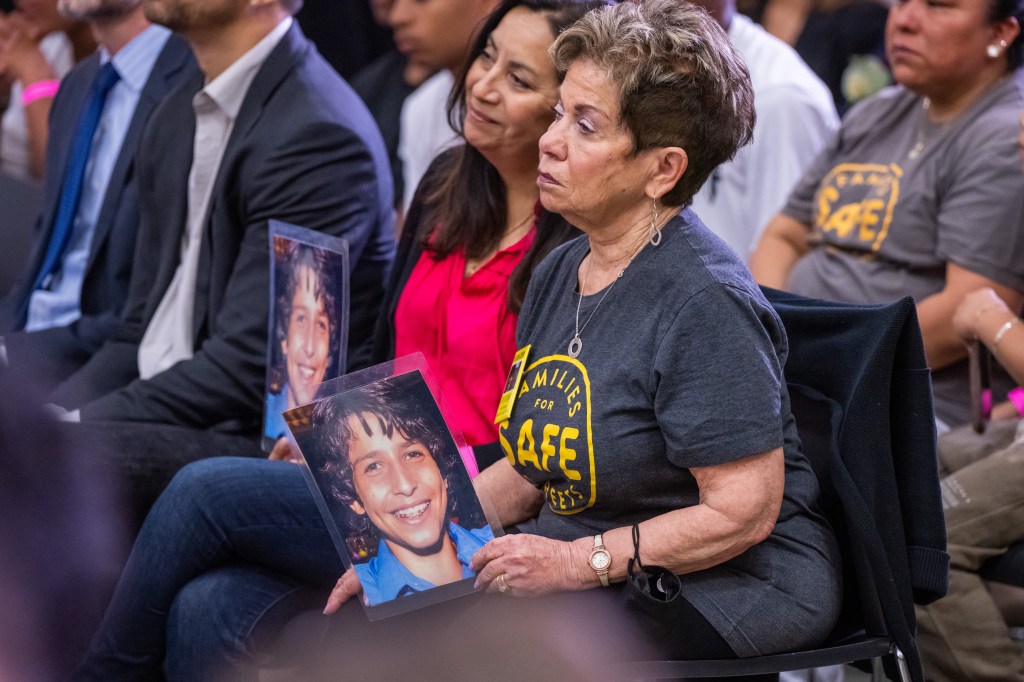
Rochester safe streets advocates marked this year’s World Day of Remembrance for Road Traffic Victims on Lake Avenue, by some measurements the deadliest road in New York. The stretch of the road owned by state DOT has seen eight deaths and 80 injuries in the past decade, but the city must go through the state to make any major changes there.
“We want them to be a partner in improving Lake Avenue, and not standing in the way of good ideas,” Donahue said.
Monday’s letter came as the state prepared its next five-year capital plan and state DOT works on a long-range “2050” planning documents.
Signatories included Transportation Alternatives, Riders Alliance, the Sierra Club’s Atlantic Chapter, the Center for Disability Rights of New York State and the New York Bicycling Coalition.
The coalition’s breadth shows how widely the problem is felt, from transit riders and disability rights advocates to environmental and street safety groups, Plum said.
“We want more time in our days. We want more money in our pockets, and we want a safe way to get where we need to go,” she said.