Increase In Car Costs Make the Case For Transit Funding: Report
Families that use public transit instead of owning a car save thousands of dollars a year, the American Public Transportation Association reveals in a new report timed to bolster the argument for more transit funding out of Albany and Washington.
Households in New York City save $18,394 a year, or $1,532 per month — far above the national urban average of $14,130 a year. New York was second only to San Francisco’s $18,437 among the 20 cities with the highest transit ridership. Boston was third at $17,521. New York was the only city in the state included in the association’s policy brief.
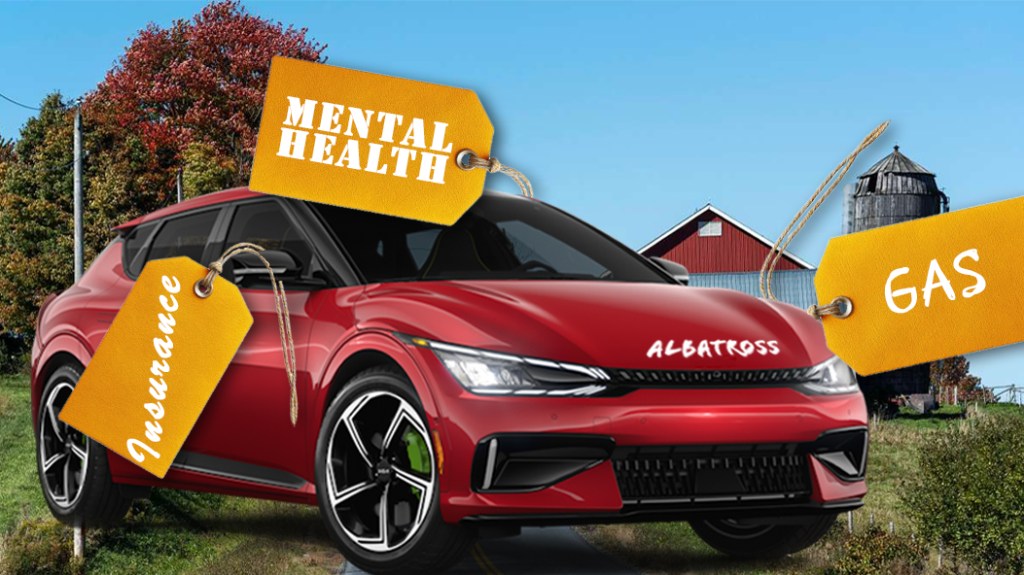
The onerous burden of car ownership is not simply about current events that are inflaming the fuel markets, but to such costs as parking, insurance, registration, time, debt service, maintenance, depreciation and, of course, the car itself.
“The cost of operating a car goes beyond just what’s happening with gas prices,” Matthew Dickens, the association’s senior director of policy development and research, told Streetsblog.
He added that public transit offers an affordable option for people in all kinds of places.
The association, which represents more than 1,700 transit agencies and related businesses and lobbies Congress for transit funding, calculated the savings by comparing transit fares with the full cost of owning and operating a car from the American Automobile Association’s 2026 driving cost report and downtown parking data.
The brief says the gap has widened as driving has become more expensive. It cites Kelley Blue Book data showing the average new vehicle sold for $50,089 in August, auto loan rates of roughly 7 percent for new vehicles and a national average gas price of $4.61 per gallon in late September. Monthly fares at most transit agencies have not increased since 2022, according to the association’s fare database, whereas car costs rose appreciably due to such disparate factors as a shortage of computing chips, inflation and higher financing costs from rising interest rates.
The case for transit looks different in upstate New York, said Miguel Velázquez, president of the New York Public Transit Association. In New York City, he said, many people ride transit because driving is costly and inconvenient. Upstate, he said, many residents cannot afford a car at all.
“We become their only lifeline in terms of transportation,” Velázquez said.
Meanwhile, upstate agencies are running short on money.
“Our expenses have been growing much faster than our revenues,” Velázquez said.
That has forced agencies to cut service hours or hold off on expansion even as demand rises, he said. His association is seeking a three-year plan to raise state operating aid for transit agencies by 60 percent, with 30 percent coming in the first year, he told Streetsblog, and the first-year increase would cost $112 million. Finding new money remains a hard sell.
“I realize that nobody wants to add any more fees or taxes at all,” he said.
He said it is up to elected officials to pay for transit, and the association has offered ideas, including a state Department of Motor Vehicles surcharge. In the coming year, he said, the association will argue that investing in transit lines up with Gov. Hochul’s priorities on economic development and affordability. Federal money famously only provides limited help because it can only be used for underlying infrastructure — also known as capital work — rather than day-to-day expenses, i.e. operating expenses.
Advance appropriations — pre-approved government funding available in future years — are also on a wish list the MTA sent to congressional Democrats this month, along with exempting new train and bus components from tariffs and increasing transit security funding. The agency is looking to the incoming Democratic majorities in Congress, which take office in January, to advance its priorities. The current federal funding extension expires Dec. 11, according to the MTA.
Dickens acknowledged that fighting for transit funding can feel like an uphill battle, but said he sees hope in the fact that ballot measures to increase transit funding won more than 80 percent of the time in the recent election, and that several states, including New York, have created new dedicated revenue streams in recent years.
Transit has also become part of the affordability debate in Albany, where some upstate lawmakers pushed this spring for a bigger increase in state operating aid than Gov. Hochul offered.
Assembly Member Sarahana Shrestha (D-Esopus) said in her election night speech that she wants to tax the wealthy to pay for public goods, including public transit, and called it unacceptable that taking Amtrak ends up costing more than driving.
“We need real trains in this country,” she said.