Snow-Filled Sidewalks Continue to Ice Out People with Disabilities
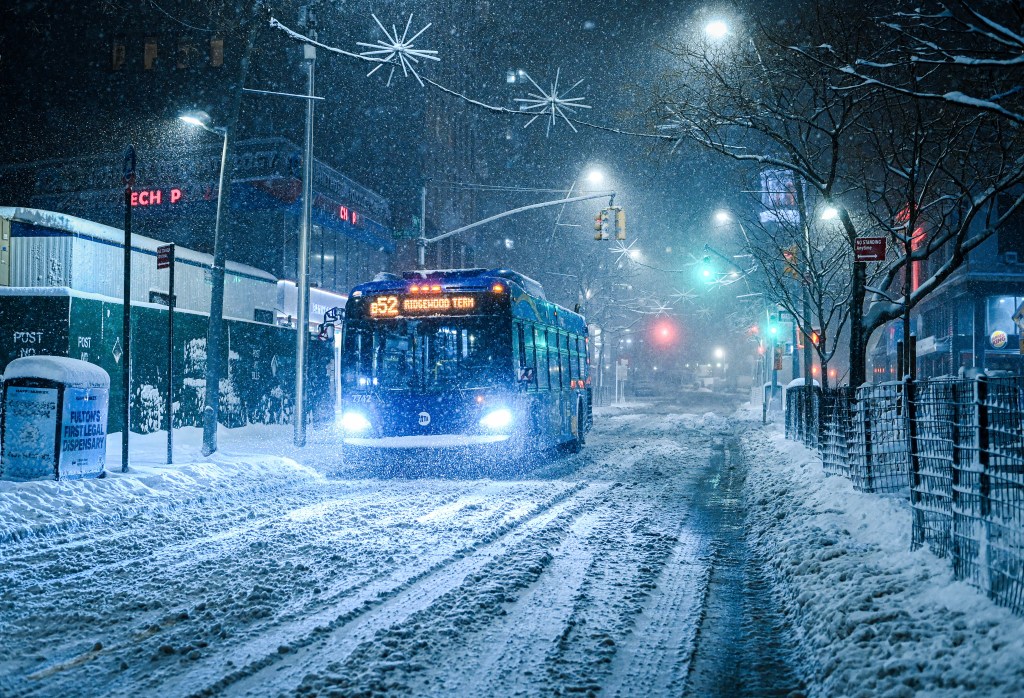
Property owners and municipalities are failing to manage snow-covered walkways across the state, and disability advocates say the current system isn’t working.
Many pedestrians don’t realize that what is a seasonal gripe for them can mean being forced indoors for many disabled New Yorkers.
“We received hundreds of calls from consumers, even board members, that were trapped in their apartments because of the snow,” said Sharon McLennon-Wier, executive director of the Center for Independence of the Disabled. “Maybe they had a little walkway from the door of their building, but they could not get to the curb. So if they needed to get into an accessorized vehicle or a taxi or Uber, they could not even get to the curb.
“They could not cross the street,” she continued, “and for people who are blind, like myself, we couldn’t even find the curb because the piles of snow, were covering up the curb cuts and the curb (too much) to even figure out where the end of the street was.”
Most cities require property owners to shovel the sidewalks in front of buildings, but that responsibility can sometimes shift back to municipalities if the land is public. Paths in front of abandoned and foreclosed buildings frequently go unshoveled, because there isn’t anyone immediately accountable for snow removal.
This tangle of unclear responsibility means that after snow falls — as it did twice in the past four weeks — pedestrians navigate slick walkways, blocked bus stops and slushy streets while trying to find solid footing while walking.
But disabled New Yorkers, like those with diminished mobility or blindness, rely on well-maintained sidewalks to get around. Wheelchairs aren’t designed to operate on the tundra, and the canes used by the blind can’t be operated properly if their owners hit mountains of snow when they should be hitting a curb. Unmaintained sidewalks directly endanger unsafe the disabled when they attempt to travel.
Remediating the issue is difficult in New York. Many municipalities rely on a mixture of complaints and inspectors to identify unshoveled walkways.
In Albany, for example, inspectors from the Department of General Services travel throughout the city, removing snow in the aftermath of a storm — but January’s snowfall took nearly a month to remove. The city imposes escalating fines on property owners who don’t clear their sidewalks within 24 hours of snowfall, starting at $100 plus the cost of labor for the first offense.
But advocates say that it isn’t enough to merely fine private owners and point out that public owners neglect to shovel, too. In New York City, residents often struggle to determine which person or agency is responsible for a particular stretch of a pavement.
“The city ordinance requires snow removal by the property owners. Then if it’s a city-owned property, the city will say, we’re going to get to that,” said Christina Asbee, a program director for Disability Rights New York. “And then it becomes like a question of resources. It also becomes a question of which agency is responsible for doing what, and to get through that red tape is so convoluted and complicated.”
New York City came under fire for its snow cleanup efforts, but as Asbee noted, there’s a shared responsibility between municipal departments and property owners that complicates the process.
But the deeper issue of absentee property owners isn’t one that can be blamed on bureaucracy, and there isn’t much appetite to make shoveling solely a municipal responsibility.
The state does have the power to let municipalities impose steeper fines and could even pass legislation to force them clear sidewalks proactively, but without funding, mandates like that can ruffle feathers in resource-strapped communities.
McLennon-Wier thinks that all of these fines the cities collect from snow clearance violations should go into an emergency shoveling fund so that sidewalks can be cleared faster by a recruited workforce.
Members of the disabled community are often among the first to note poor sidewalk conditions, but perhaps the onus shouldn’t be on them to make sure that they can participate in society. Given the issues New Yorkers with disabilities are running into, it could be time to question local laws across the state. Otherwise, the buck has to stop somewhere.
“Let’s just come together and hold the city accountable to remove the snow when it’s not being removed in a timely way,” Asbee said.

Read More:
Streetsblog has migrated to a new comment system. New commenters can register directly in the comments section of any article. Returning commenters: your previous comments and display name have been preserved, but you'll need to reclaim your account by clicking "Forgot your password?" on the sign-in form, entering your email, and following the verification link to set a new password — this is required because passwords could not be carried over during the migration. For questions, contact tips@streetsblog.org.