State AG Received Just One Illegal E-Moto Complaint After Threat to Sellers
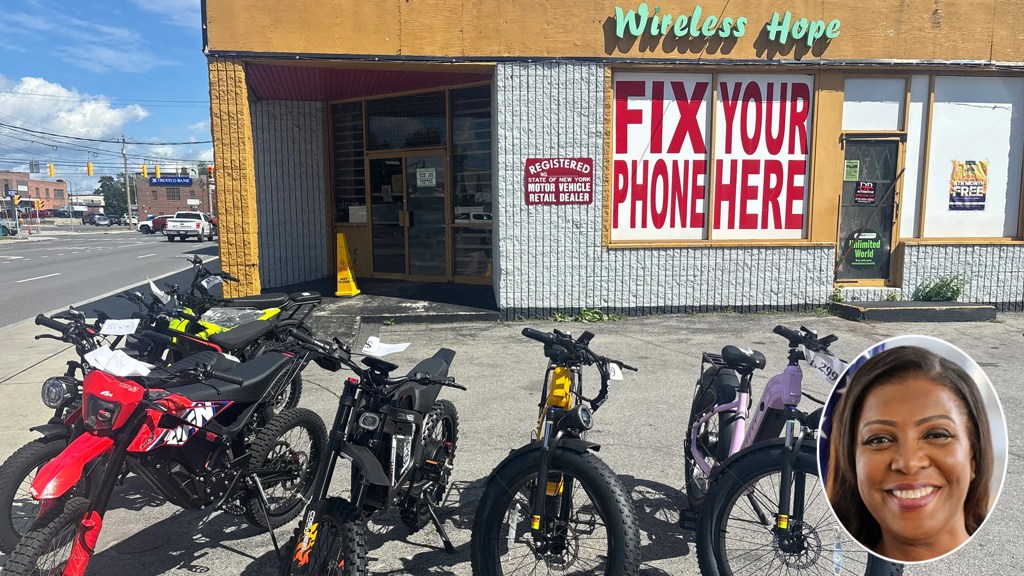
SCHENECTADY — Only one merchant has faced a complaint over sales of illegal e-motos, which can reach car-like speeds, after Attorney General Letitia James urged New Yorkers to rat out violators as part of a consumer advisory she issued against the contraband vehicles in July.
Wireless Hope, a Schenectady electronics store, received the complaint, the AG’s office said. A visit by Streetsblog to their shop on Thursday revealed that the store was, in fact, selling Class-3 e-bikes that are illegal to ride on New York streets outside of New York City.
Streetsblog could not verify whether e-motos — unregistered mopeds marketed as e-bikes — were also available for purchase at the shop.
Africa, a clerk at the store, told Streetsblog that the owner of Wireless Hope, Elvin Singh, was stuck in meetings and unavailable to speak about the store’s inventory. Africa later confirmed with Singh over the phone that the store sells class 1, 2 and 3 e-bikes.
Attempts to reach Singh were unsuccessful. On the store’s Facebook page, he advertises e-bikes with road-illegal voltage and speeds for “off-road” use, but also gives tips on how to unlock street-legal e-bikes to go as high as 42 mph (also allegedly for “off-road” use).
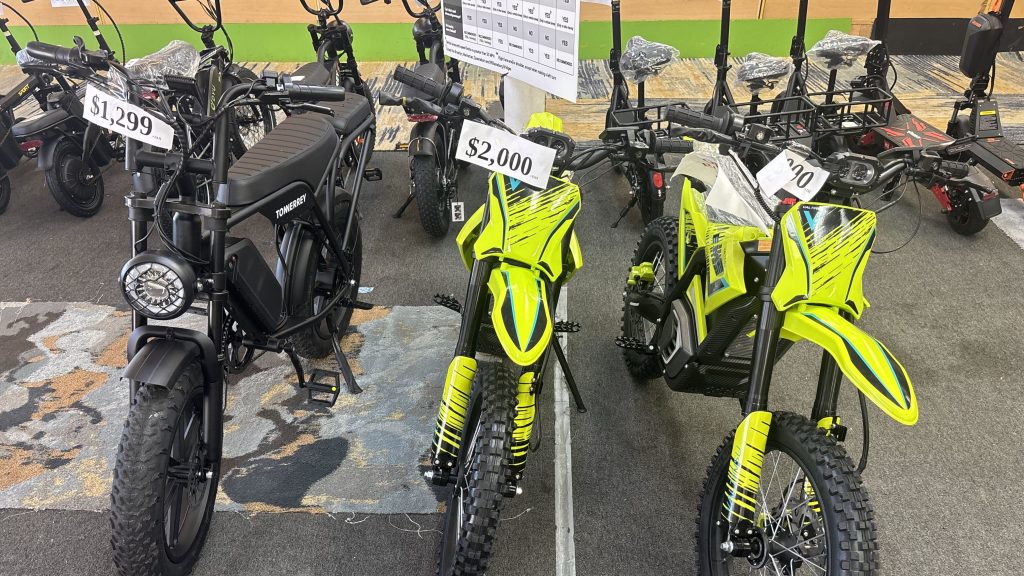
Illegal e-motos, meanwhile, are a common presence on Schenectady streets — cops there seized 18 electric dirt bikes and three e-bikes during an enforcement sting last month.
The single complaint from the entire state stands in contrast to the urgency that drove James to issue the advisory in the first place.
James’s July 31 consumer alert reminded businesses and consumers of the state’s e-bike and e-scooter classifications, just two days after 17-year-old Gabriel Nacato was killed in Manhattan while riding an illegal e-moto that could hit 30 mph. The vehicle manufacturer’s website, like Wireless Hope’s Facebook page, offered instructions on how to override its speed limiter entirely.
Nacato’s death followed two other deaths in the five boroughs involving illegal devices marketed as e-bikes: pedestrian Terri Valenti, killed by a rider on an illegal Movcan model with more than twice the legal wattage and cyclist Dmytro Stechenko, killed by a rider on an e-scooter capable of 50 mph.
New York law divides legal e-bikes into three classes, all capped under 750 watts. Class 1 and Class 2 bikes max out at 20 mph, while Class 3 bikes can assist up to 25 mph but are barred from operating anywhere in the state outside New York City.
Anything faster or more powerful is legally a moped, motorcycle or “e-moto” — vehicles that require registration, licensing and insurance the way a scooter or a car would.
James’s advisory emphasized that mislabeling one of those vehicles as an “e-bike” is illegal illegal, and encouraged New Yorkers to report violators to her office. New York City Hall followed with its own crackdown on illegal e-moto sellers, issuing cease-and-desist orders in August to 42 online retailers.
The mismatch between that rhetoric and the one-complaint tally in the two months since raises questions about how much the advisory alone can accomplish without more active enforcement or new legislation. As Streetsblog reported on Aug. 28, dozens of online retailers continue to ship illegal devices into the city even after Mamdani’s cease-and-desist effort. The New York City Council will take up the issue at a Sept. 30 hearing.
For now, the burden of catching violators appears to fall largely on word of mouth, or on reporters walking into shops. At Wireless Hope, the illegal Class 3 bikes sat in plain view — no undercover sting or subpoena required, just a visit to the sales floor.

Read More:
Streetsblog has migrated to a new comment system. New commenters can register directly in the comments section of any article. Returning commenters: your previous comments and display name have been preserved, but you'll need to reclaim your account by clicking "Forgot your password?" on the sign-in form, entering your email, and following the verification link to set a new password — this is required because passwords could not be carried over during the migration. For questions, contact tips@streetsblog.org.