Dutchess County Has A Lot of Dreams, But Little Will to Pay for Them
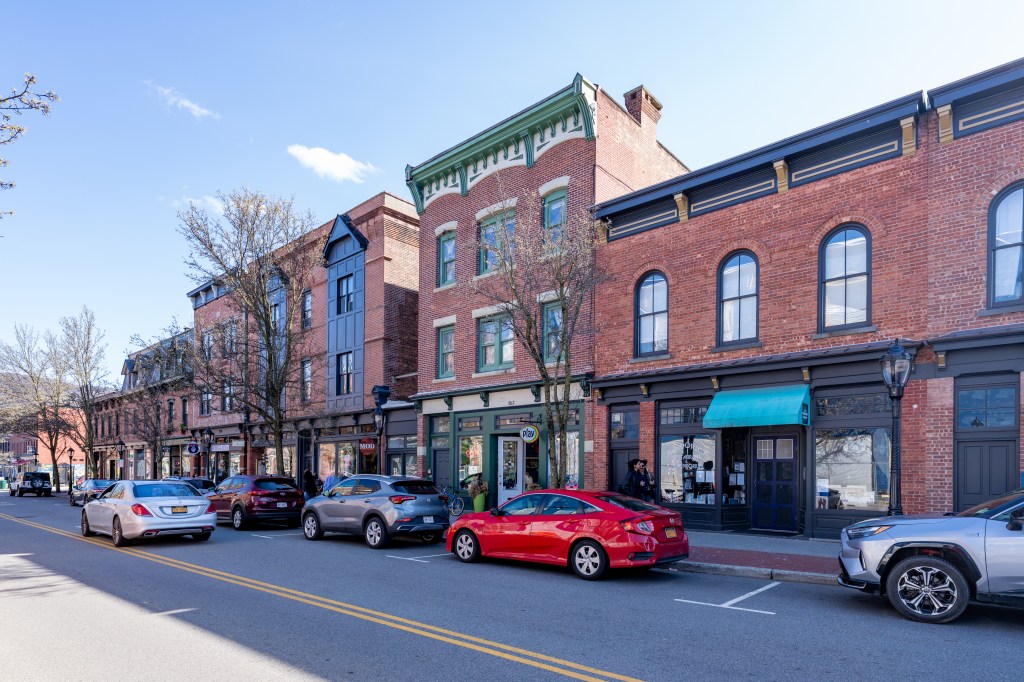
BEACON — A Hudson Valley county home to several cities and towns has little protected on-street bike infrastructure, despite a new planning document calling for a better-connected bicycle network.
That’s not just what activists think. It’s the county’s own count: Dutchess County’s transportation planners count just two miles of on-street bike lanes in the entire county at under two miles, none of them protected, in the very document meant to fix that.
“We have essentially none,” said Rob Cerrato, president of Bike Poughkeepsie, who has spent months reviewing the plan with staff at the Dutchess County Transportation Council.
The problem, Cerrato said, isn’t that the county doesn’t want to build more bike lanes and other non-auto transportation projects — but that it hasn’t demonstrated an interest in funding them.
“A lot of the funding for things like bike lanes and safe streets and complete streets doesn’t come from the federal funding so much as it comes from grants that are outside of this plan,” he said, describing what Dutchess County Transportation Council staff have told him directly. That’s the gap at the center of Moving Dutchess Forward, the county’s seventh long-range transportation plan: It names the problems in detail, and has a track record of not following through on its own diagnoses.
Recommendations from a 2011 county study of Myers Corners Road — sidewalks, bike infrastructure, school zone speed limits — still haven’t been built 15 years later, according to Thomas Dercks, a resident who raised the point in public comments this summer.
The scale of what’s missing is stark. Despite more than 570 linear miles of sidewalk countywide, coverage is a patchwork concentrated almost entirely in the city of Poughkeepsie and a handful of villages. Crash “hotspots” cluster in the same places, with the city of Poughkeepsie logging the most dangerous intersections and roadway segments in the county — a pattern that tracks with preliminary 2025 state crash data showing Dutchess leading its Hudson Valley neighbors in bicycle crashes. Transit riders fare no better: Train stations in Beacon and Poughkeepsie still lack secure bike parking, and towns like Dover go without frequent bus service altogether, per the council’s own equity analysis.
The Moving Dutchess Forward plan is, by design, “fiscally constrained” by federal laws governing long-range plans — meaning it only proposes projects for which the county has identified funding. A fiscally constrained plan can name 100 problems and commit dollars to almost none of them, and Dutchess County’s history suggests that’s exactly what will happen.
A thin comment period, a loud message
The Dutchess County Transportation Council received just 15 public comments on the draft plan this summer, according to an internal summary memo, but the comments — and the country’s responses — offer a key insight: Residents don’t think the plan goes far enough on safety, walkability or transit reliability, and the Dutchess County Transportation Council’s own written responses concede the tension without resolving it.
In one comment, Becky Fifield, of Fishkill, described a hostile environment for anyone on foot or a bike, and pushed for road diets and narrower travel lanes. Transportation Program Administrator Mark Debald didn’t dispute the diagnosis, but pointed to the plan’s federal straitjacket.
“This is where available funding clashes with our desire to go beyond maintenance,” he wrote in response, attributing the gap to a federally mandated requirement that the plan be “fiscally constrained” and focused on system upkeep.
That deferral repeats almost verbatim across the memo. Multiple commenters — Greg Basile, Eric Osborne and Thomas Dercks — flagged specific danger zones the plan already maps but hasn’t funded fixes for: Route 9 near Spackenkill Road, Route 52 in East Fishkill, and Myers Corners Road (County Route 93) in the Town of Wappinger.
Transit gaps in the northeast county drew similarly pointed comments from Dutchess County Legislator Chris Drago (D-Stanford), who said he wants the area formally designated a “zero-fixed-route zone” — the Dutchess County Transportation Council’s term for an area with no scheduled bus line — paired with a committed timeline for alternatives like “micro-transit” or expanded on-demand service.
County Executive Sue Serino, for her part, said the plan’s caution is realism, not indifference.
“Within the limitations of the available federal funding, it includes recommendations to improve sidewalks, crosswalks, multi-use trails and bicycle infrastructure, along with strategies to reduce traffic-related injuries,” Serino said in a statement, adding that the plan is “rooted in extensive data analysis and community engagement” and identifies specific needs in centers like Beacon, Poughkeepsie and Rhinebeck.
It’s an explanation some advocates and officials don’t entirely buy. They point to what Dutchess does with money that isn’t federally constrained: The county’s 2026 budget cut $511,000 in pandemic-era federal transit support without replacing it with local dollars, even as the county carried cash reserves north of $100 million and legislators found room that same year for a restored sales tax exemption, more tourism funding and other priorities, drawing an additional $7.2 million from the county’s balance to do it.
Neighboring Ulster County, meanwhile, made a different choice: When it switched to fare-free bus service in 2022, ridership rose 40 percent in the first year, according to Daniel Atonna, a Poughkeepsie Common Council member who cites the example when pushing Dutchess’s legislature to do the same.
“I think the biggest obstacle is County Executive Serino,” Atonna said.
The arterials everyone points to, and nobody fixes
Ask cycling advocates in Poughkeepsie what’s actually broken about the plan, and the conversation returns again and again to the arterial roads that ring their city’s downtown — Route 9 and the Route 44/55 corridor — which planners, advocates and the county itself all agree are the most dangerous stretches of pavement in Dutchess County.
“Anytime anyone from one side of Dutchess County wants to get to the trails, or at least in Poughkeepsie, they have to cross these dangerous three-lane, essentially highways, to get there,” said Cerrato. In his opinion, the arterials function almost like a freeway wrapped around downtown, discouraging investment and making short trips by bike or on foot feel dangerous by design.
A school crossing guard was struck and killed by a driver not far from that stretch. “Simply posting a 30-mile-an-hour speed limit is not enough. We need to have a road diet,” said Cerratto.
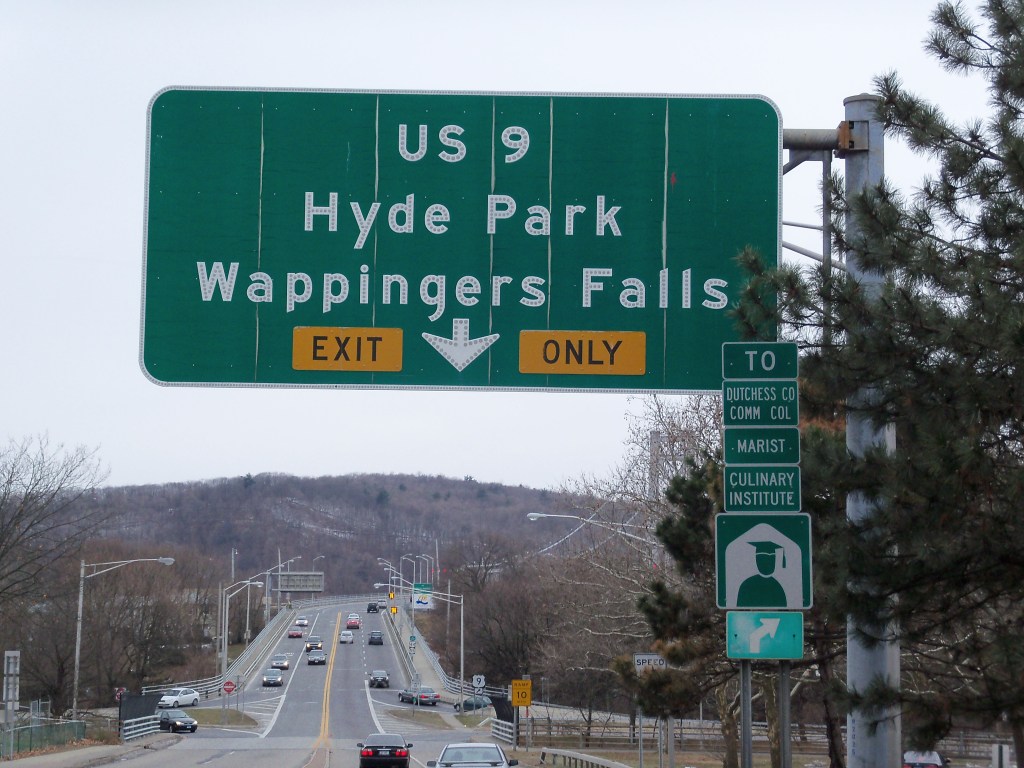
Cerratto credits the plan for correctly diagnosing the problem — Dutchess County Transportation Council has earmarked $30 million to $40 million toward redesigning the corridor — but says that until the arterials are actually rebuilt, any bike lane the county adds elsewhere effectively dead-ends at the edge of downtown.
“Meaningful safety change in Poughkeepsie specifically has to start with the arterial roads before you can build a meaningful network,” he said. “You’re always going to get stopped at the arterials.”
In Rhinebeck, Town Council Member Dana Colleen Peterson described a smaller-scale version of the same problem: a roughly one-mile gap between the village and the Rhinecliff train station that residents already walk and bike despite the absence of any dedicated path.
“I would not let my kids walk from the village to Brookmeade,” she said, citing drivers “rushing to the train station” on a road with no separated space for pedestrians or cyclists.
Rhinebeck had applied for a federal Transportation Alternatives Program grant to help fund that connection; Peterson said the application appears to have stalled amid the Trump administration’s rollback of bike and pedestrian infrastructure grants this year — a decision she called “a real shame” for a rural county trying to prove walkability isn’t just an urban proposition.
“Eventually the safety question becomes so compelling that we’ll have to do something,” Peterson said. “I would like us to do something before we have a horrible outcome.”
Transit’s missing half of the county
If the arterials are Poughkeepsie’s problem, the missing bus network is the eastern county’s.
Poughkeepsie Common Council Member Daniel Atonna, whose ward lost its independent city bus system when it merged into Dutchess County Public Transit years ago, said the county now bears sole responsibility for service the city itself can no longer control — and isn’t living up to it.
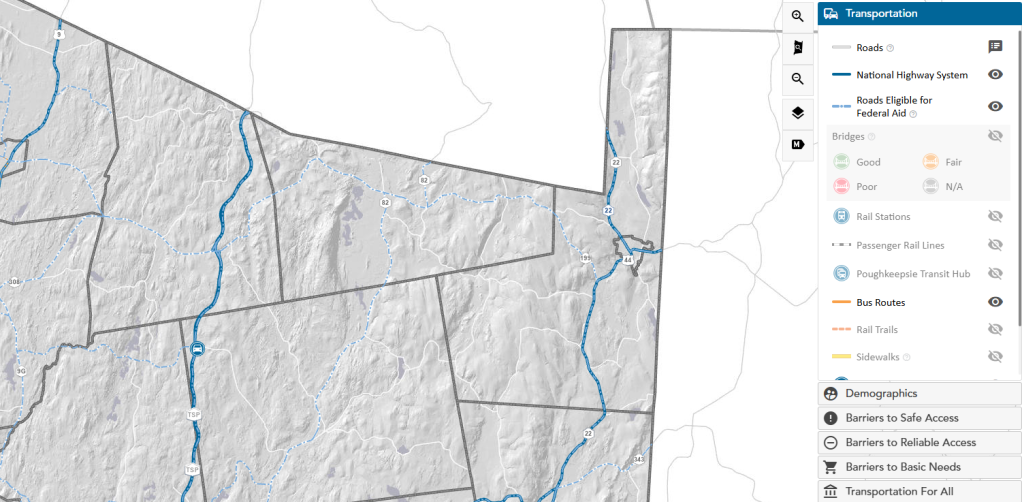
“If you look at a map of the county’s bus service, there’s basically no buses that go out to the eastern half of the county,” Atonna said, naming towns including Amenia, Dover, Pawling, Pine Plains, Stanford, Washington, Unionvale and Beekman as effectively unserved.
Only two routes cross the Taconic State Parkway, which bisects the county and leaves its rural eastern half largely dependent on cars or costly on-demand service, Atonna said.
The city councillor argued that the barrier isn’t primarily federal, which is why county officials have faced pressure campaigns from groups including Mid Hudson Valley DSA and For the Many for fare-free service and expanded routes. Atonna tied the stakes to affordability more broadly: With new car prices now averaging more than $50,000 and automakers largely abandoning sub-$20,000 models, reliable transit is becoming less a convenience than a necessity for working-class riders trying to reach jobs, medical appointments and community college classes, he said.
Serino’s statement points to a different set of priorities. She said public transit should be “addressed through efforts to expand service efficiency, strengthen connectivity between population centers and improve access for residents who rely on buses as a primary means of transportation.” Advocates called that language aspirational, not an actual plan — echoing the Dutchess County Transportation Council’s own comment-period admission that expanding service comes down to “available funding and capacity.”
Miles of trail, almost no lanes
Perhaps nowhere is the gap between the plan’s stated values and its funded reality more visible than in cycling infrastructure.
Dutchess County has an expanding rail-trail network — the 13-mile Dutchess Rail Trail, connections to the Walkway Over the Hudson, and a feasibility study underway for a Beacon-to-Hopewell trail — but almost no on-street bike lanes connecting people to it.
Cerrato estimated the county has fewer than two miles of bike lanes total, none of them protected, and said only about 6.5 percent of residents live within a half-mile of a rail trail, even counting the newest connections.
“There are no sidewalks or bike lanes to get there,” he said. “If you want to take advantage of the trail from a recreation standpoint, you have to drive to the trail.”
Yvonne Caruthers, co-founder of the Beacon Bicycle Coalition, said the plan’s own survey data undercuts its ambitions: Results characterized the county as heavily car-dependent, a framing she said doesn’t match what she sees in a city with a growing car-free population.
Caruthers cited research suggesting that roughly 30 percent of people who would like to bike don’t feel safe doing so — women and parents of young children, especially — and pointed to years of failed efforts to establish a bike-share program connecting the Beacon train station to Main Street, a roughly one-mile uphill walk many riders currently make on foot or by an irregular shuttle.
Removing car parking from Main Street to slow traffic and widen space for pedestrians and cyclists would help, Caruthers said.
“But I don’t see how it’s going to happen, because it would require a lot of political will,” she added.
Cerrato said the plan’s near-term flagship project, an expansion of bike infrastructure on Poughkeepsie’s Market Street, is good but doesn’t go far enough.
“Dutchess County is woefully short on bike lanes — we have essentially none,” he said, adding that the Dutchess County Transportation Council’s mandatory five-year federal revision cycle offers the clearest opening to force bigger commitments before the plan’s 25-year horizon plays out.
Until then, Caruthers said, the county’s cyclists plan to keep organizing, one group ride at a time.
“The fact that we’re not getting support at the federal level for bike lanes or bike infrastructure doesn’t mean that people are going to stop riding their bikes, because people do,” she said. “We have a really good bike community that is growing every month, and I take a lot of inspiration from that — because we’re not going away.”

Read More:
Streetsblog has migrated to a new comment system. New commenters can register directly in the comments section of any article. Returning commenters: your previous comments and display name have been preserved, but you'll need to reclaim your account by clicking "Forgot your password?" on the sign-in form, entering your email, and following the verification link to set a new password — this is required because passwords could not be carried over during the migration. For questions, contact tips@streetsblog.org.