GObike Buffalo’s New Director Talks E-Bikes, Mayor Ryan and Building Out the East Side
Streetsblog Empire State has been tracking Buffalo’s slow reckoning with its car-dominated streets for much of this year. In July, we reported on Mayor Sean Ryan’s plan to overhaul Niagara Square, the chaotic roundabout in front of City Hall that has long been dreaded by pedestrians, cyclists and drivers alike.
That square is just one front in a much larger fight over who Buffalo’s streets are built for. GObike Buffalo, the region’s leading walking-and-biking advocacy nonprofit, has spent years pushing the city toward safer, less car-centric design — from quick-build bike lanes on the East Side to bike-bus programs at local elementary schools. Now the organization has a new leader making the case that transportation access isn’t a side issue in Buffalo’s recovery, but the center of it.
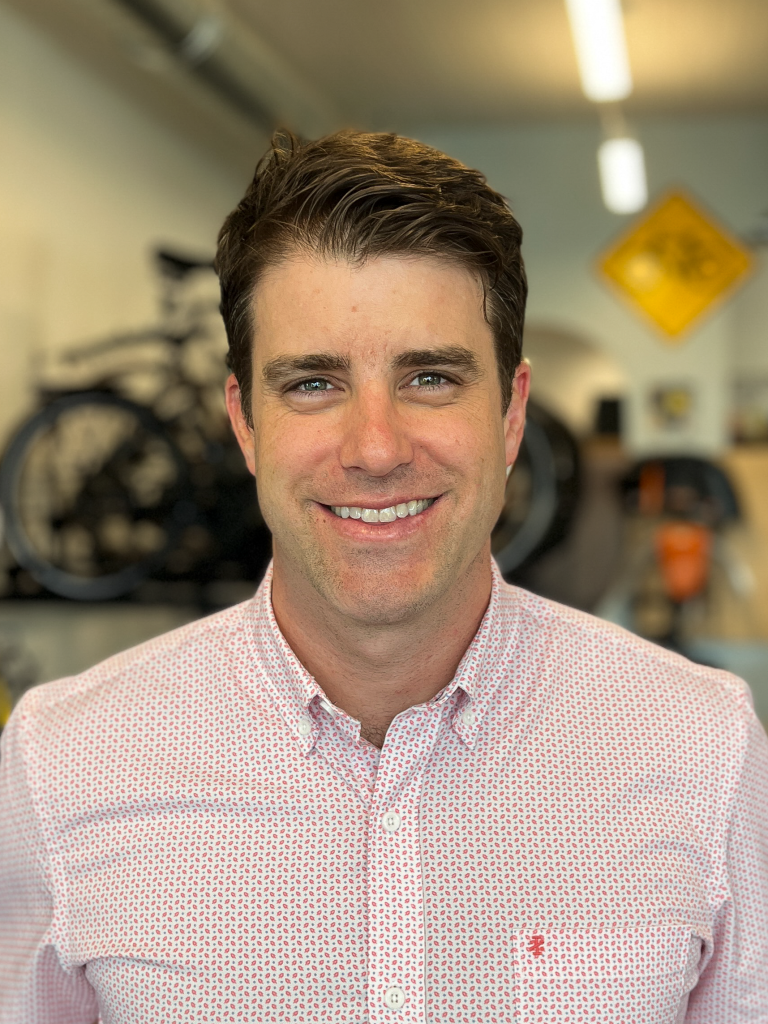
We caught up with Executive Director Kevin Heffernan to talk about the mayor’s new posture on transportation, the messy politics of e-bike regulation in Albany, GObike’s relationship with police and the ambitious East Side trail project the organization hopes to finally break ground on this fall.
This interview has been edited for length and clarity.
What’s the most pressing transportation issue facing Buffalo right now?
Buffalo is the third-poorest city in the nation, and we’re a segregated city in terms of where transportation investment has gone. Citywide, one in four households doesn’t have a car; on the East Side, which is predominantly African-American, that number spikes to one in three. So it’s twofold: One, it’s a workforce development challenge — people can’t access the jobs they qualify for, so they end up taking a second job just to afford the car to get to the first one. Two, in those same East Side neighborhoods, we tore out an Olmsted parkway to put in a six-lane highway, which is a direct contributor to the 99th-percentile rate of heart and lung disease in the nation, right in those neighborhoods. It’s an economic development challenge and a public health disaster. GObike exists to make it more accessible, easy and safe to walk and bike — to get to jobs, grocery stores, medical care. We can’t climb out of being the third-poorest city while forcing car ownership on everyone, when cars are what’s keeping so many people sick.
What has Mayor Ryan gotten right so far, and where does he still need to step up?
His office has given us more support than we’ve ever seen in our existence — and we go back to around 2010. Right now we’re redesigning two major East Side thoroughfares, Kensington Avenue and East Delevan Avenue — a mix of shoulder lanes and protected cycle tracks, using paint, rubber form and bollards to put in temporarily. We survey the neighborhood beforehand, collect data on car speeds and how many people are walking and biking, put the installation in, then redo those same observations. We consistently see car speeds drop to safe levels and increases in people walking and biking, and after it’s been in for a couple of weeks, people’s attitudes improve — folks who told us they hated it when it went in end up using it themselves. In the past, if a project went extremely well, the city was happy; if it was just okay, they washed their hands of it. Now, with the Ryan administration, they’re arm in arm with us — planning press events, touting the benefits themselves: safe space for kids to walk and bike with slower traffic nearby, and how a bike facility like this, once it connects to three others, gives you more access to opportunity whether you’re riding a standard bike or an e-bike. We just haven’t had a mayoral administration talk this frankly about transportation being a challenge before, and now we do.
You mentioned e-bikes. What’s your take on how they’re being regulated?
It’s the bane of our existence, but it’s also the greatest thing that’s happened to cycling in so long. The crashes caused by e-bikes are far less than 1 percent of the crashes happening on our roadways — the injuries and deaths cars and trucks cause is a public health crisis on its own, yet everyone wants to turn e-bikes into the problem that needs an immediate fix. When I praise e-bikes, I’m talking about Class 1 and Class 2 — pedal-assist, or pedal-assist plus throttle up to 20 miles an hour. Nothing else should be on the roadway. Those are an excellent invention: they let someone say, “I could bike there” when before they couldn’t or wouldn’t have considered it — the older adult who wants to keep riding, the commuter who couldn’t afford a car or didn’t want to drive every day. That’s an economic development tool, because it gives you the freedom to say maybe you don’t need your car.
Where the state has really fallen behind is once you’re bordering on emoto — electric motorcycle. First, enforce the laws we already have rather than creating new ones that punish legal riders. Second, police and our Assembly and Senate members need to understand what these laws actually are, because when there’s a crash and somebody was doing 35 on an e-moto, the police call it an e-bike, the media calls it an e-bike, and then the whole town says we’ve got to do something about e-bikes. And third — bikes that go 20-plus miles an hour are still legal to sell to kids, even though it’s illegal for those kids to ride them. The quickest fix at the state level: Amazon and Target can’t sell these things anymore. There’s also a leftover law, basically copy-pasted from old Segway regulations, that says you can’t ride an e-bike on any road with a 30-mile-an-hour-plus speed limit throughout upstate New York — meaning if you’re riding an e-bike in the suburbs, you’re technically breaking the law on every road you’re on.
Do you think there’s enough transit access to the new Bills stadium?
I’ve ridden the bus to Bills games — not this year, but in the past — and it was incredibly convenient. It dropped me off three blocks from my house, and I walked home after the game. They get out of there quickly, they move quickly. On a systems level, I’d want to hear from the NFTA [Niagara Frontier Transportation Authority] about ridership — the day I rode, every seat was filled on the way in, and filled with standing room on the way out. If it’s overloaded, they’ll add a bus; if that bus is overloaded, too, then it’s a bigger conversation about whether it’s solved by 10 or 12 buses, or a rail line — though I think a rail line would be hard to justify for eight Sundays a year to the Southtowns, which are pretty sparsely populated. There’s a lot of drunk driving tied to where the stadium is and our tailgate culture, but there are already future plans to do pedestrian safe-space overhauls around the stadium, which is good news.
What will it take for GObike, the police and City Hall to be in better sync?
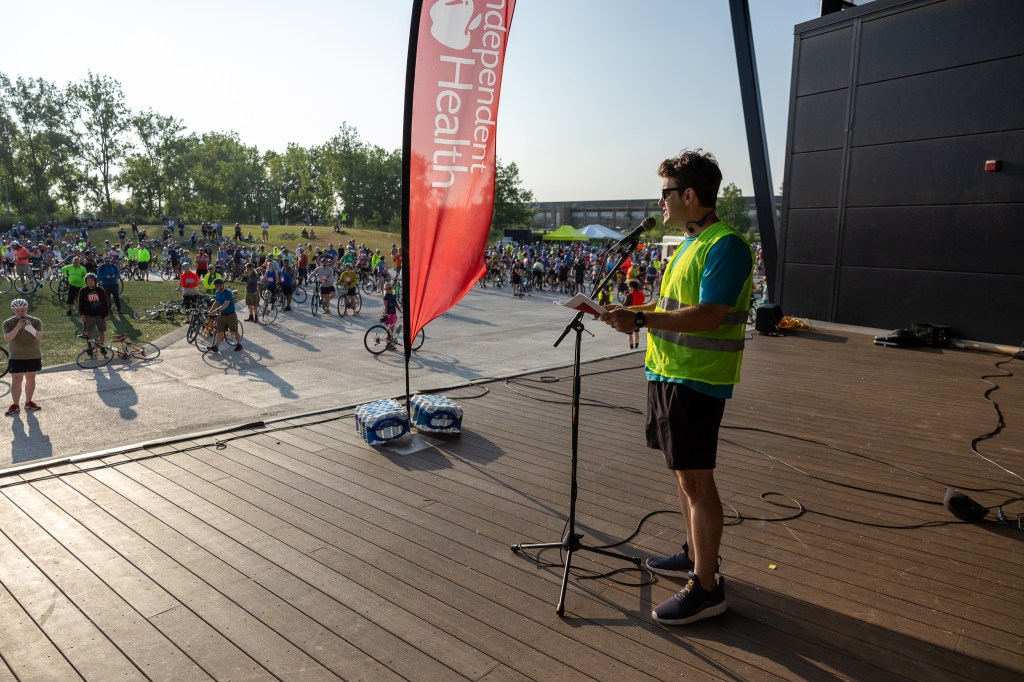
On the ground, we’ve had great partnerships with police — different departments, the Police Athletic League — handing out education materials, doing bike, helmet and light-block giveaways with kids. We also do events where we close down whole areas — on the 26th we’re closing Niagara Square for bikes, rollerblades and roller skates, and the police we’ve worked with on things like that have been excited about it, really accommodating, getting us documents we need in advance. There’s a police union negotiation going on right now, and it’s their leadership’s job to fight hard and find items to highlight to strengthen their position at the table — I think that’s a lot of what’s been playing out on social media. But every officer we’ve actually worked with on an event has been solid; a lot of them bike themselves, and when you talk to someone in person, it’s “yeah, I get it, it’s crazy out there” — you realize you share the same concerns. We try to step aside from the social media battle and keep the door open for police to work with us on safety. We err on the side of not demanding more enforcement, mostly because it’s not effective policy — a squad car shows up on a corner for a couple days, hands out tickets, then once it’s gone people start blowing that stop sign again. You can’t have a squad car on every corner. Instead, you put in a roundabout, and every car has to slow down — you’ve taken away the need for enforcement. That’s what we want to work on with police: get behind redesigning the roadway with us.
What’s ahead for you as GObike’s new executive director?
I’ve been interim since the end of December, so it’s been a long nine months of some uncertainty. First order of business: we’re hiring a project manager for our planning team. We’ve also launched an LLC to do the road-striping and bollard work ourselves — work we’d previously only been able to do as a grant deliverable. Now we can do it fee-for-service, which lets municipalities that outsource that work get it done faster, and it can become a revenue source for us as donations get tighter.
But the biggest thing: for the first time in our history, we’re taking a feasibility study into actual construction. It’s called East Side Trails — extending the North Buffalo to Tonawanda Rails to Trails, which had always stopped at Main Street, the dividing line of our city, out into the East Side. We’ve been working with the same stakeholders for five years. The city’s construction RFP is out, and we’ll know final costs Oct. 7. The timeline has shifted many times, but we’re building it.
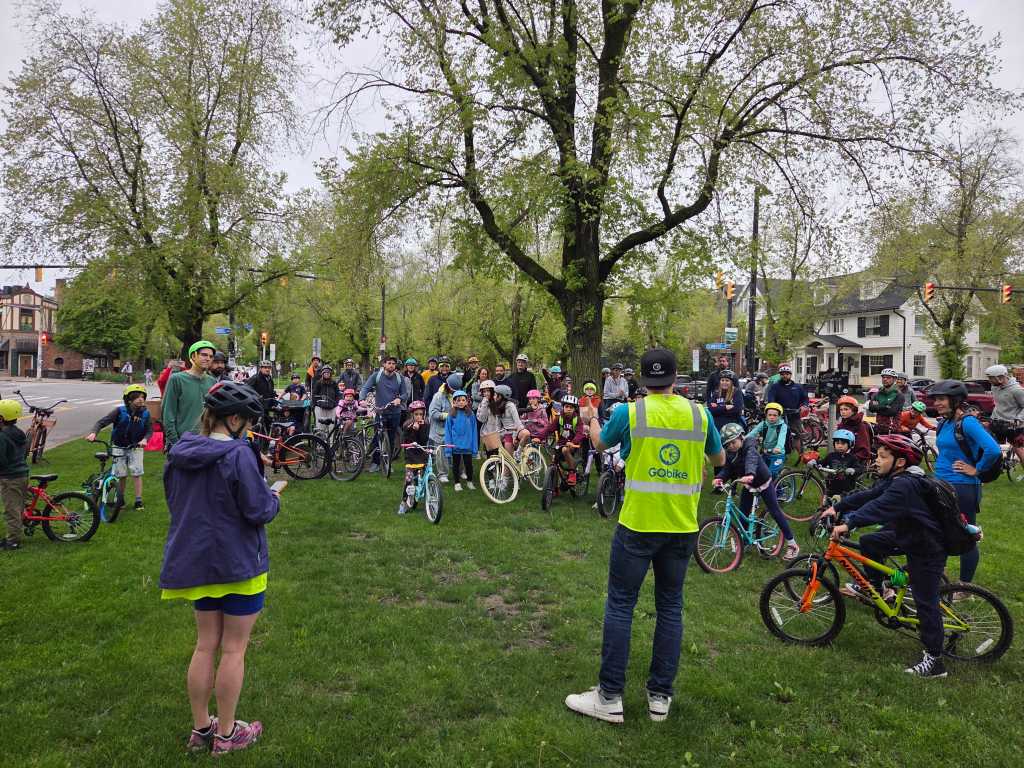
You have to build the infrastructure, but you also have to change the culture so people use it. The bike bus revolution is one of the most massive culture changes we’ve seen in this country in decades — usually elementary-school kids, and when they move up to middle school and then high school, they keep riding. We lead it directly in three schools, and we’ve gotten a county grant to train parents and school administrators in rural, suburban and city schools.

Read More:
Streetsblog has migrated to a new comment system. New commenters can register directly in the comments section of any article. Returning commenters: your previous comments and display name have been preserved, but you'll need to reclaim your account by clicking "Forgot your password?" on the sign-in form, entering your email, and following the verification link to set a new password — this is required because passwords could not be carried over during the migration. For questions, contact tips@streetsblog.org.