Hamstrung! Congestion Pricing ‘Pause’ Screws Over the Next MTA Capital Plan: Report
Gov. Hochul’s congestion pricing pause will eat into the MTA’s execution of its next capital plan and push the start of work on that plan back by years, a new report argues.
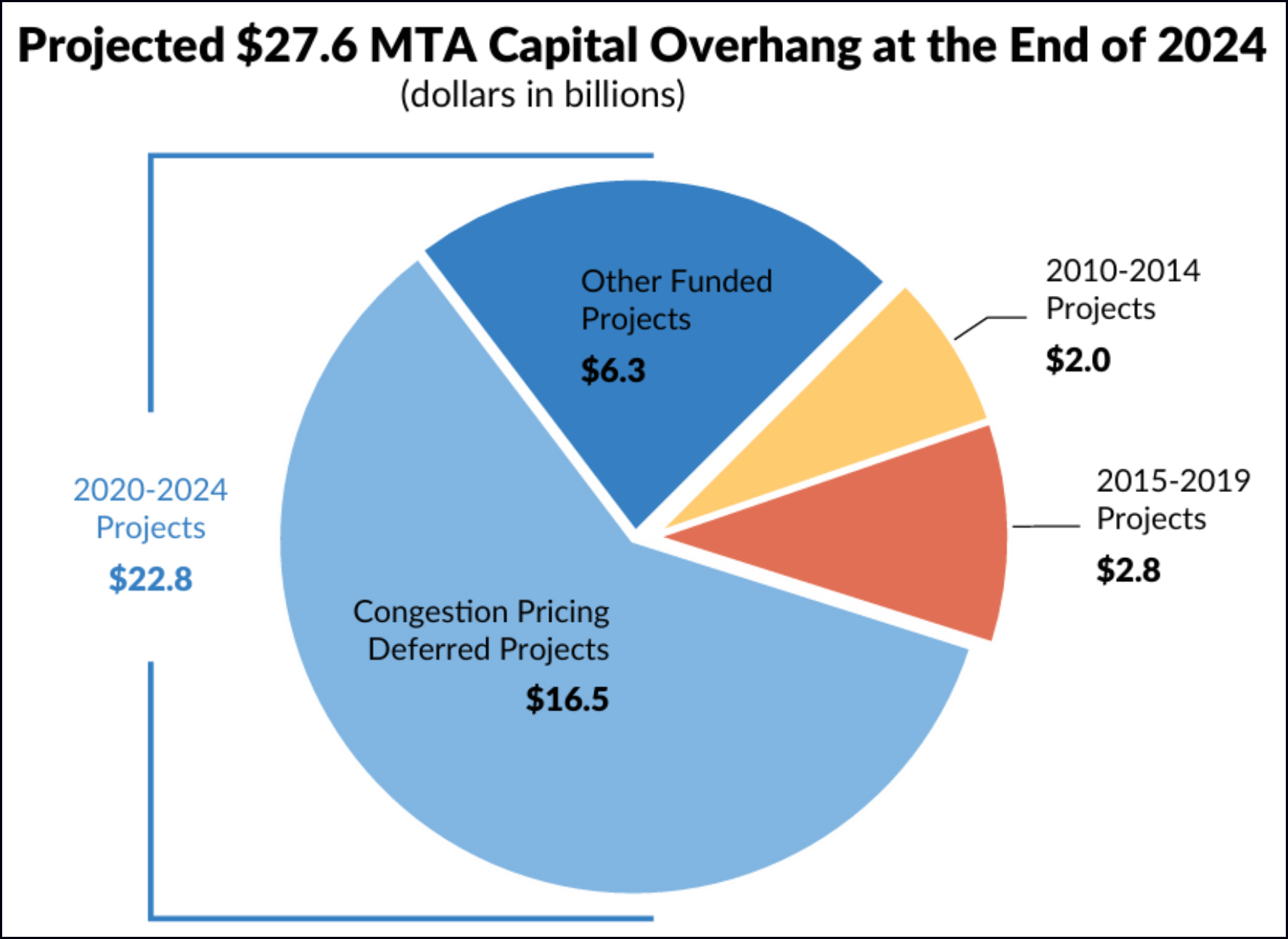
The transit agency has a $27.6-billion “overhang” of work from the last three capital plans, according to the Citizens Budget Commission — and more than half of it, $16.5 billion, stems from the failure of the governor to implement the central business district toll plan.
An overhang itself isn’t cause for alarm because every five-year capital plan takes longer than five years to fully execute, not the least of which because some large renovation projects take longer than five years from initial planning to the allocation of funding to the work itself to the actual ribbon-cutting.
But an overhang is alarming when it’s this big — and the next capital plan will have to take on the $16.5 billion of capital work that the MTA deferred after the gridlock governor announced in June that she wouldn’t implement congestion pricing. Not only that, but she has so far refused to say if and when she would end her pause and carry out the state law creating the tolling system.
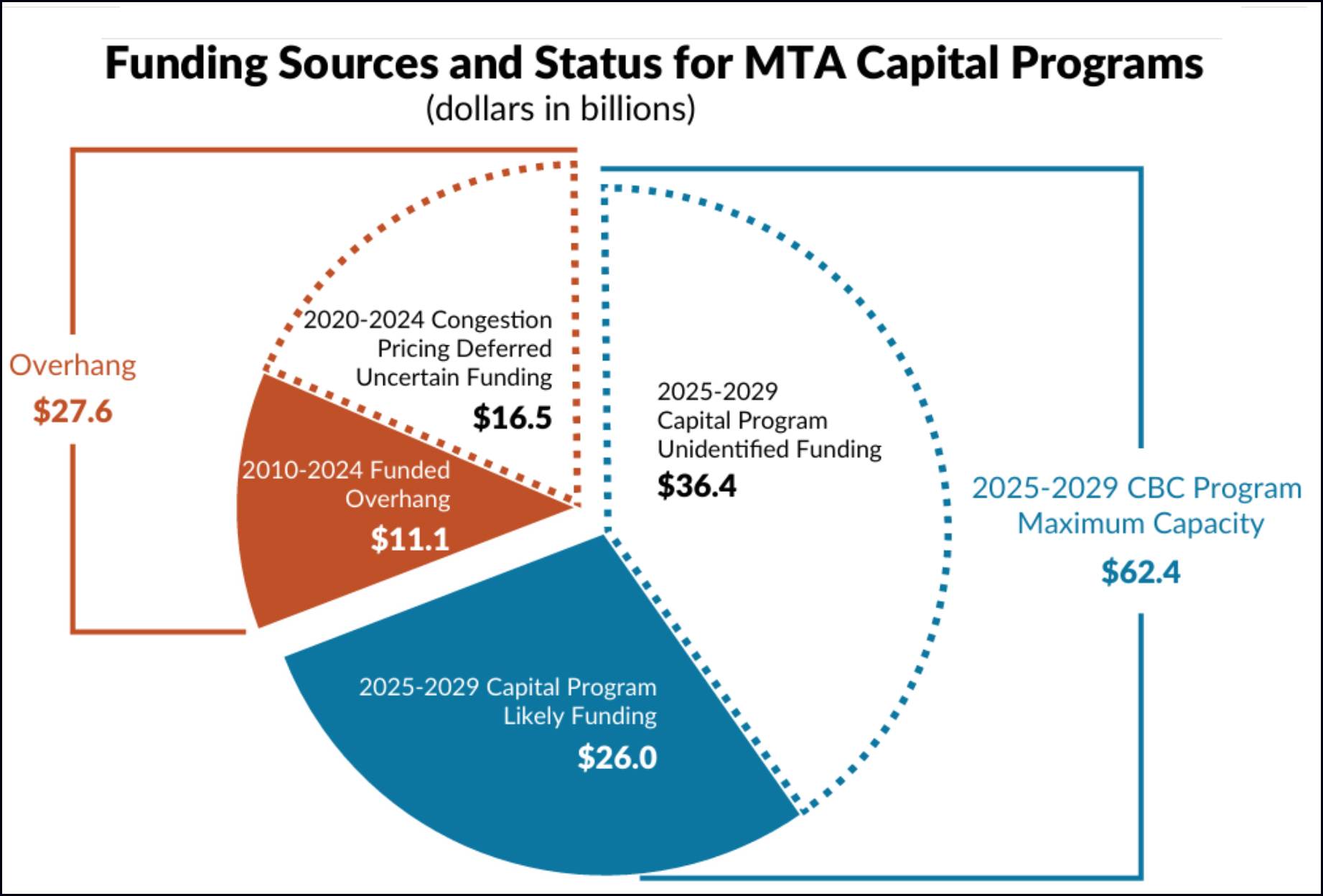
The CBC’s number crunchers argue that even if the MTA begins to commit an average of $15 billion in capital spending each year over the life of the 2025-2029 plan, the congestion pricing pause ensures it wouldn’t even start those new projects until the end of 2026.
“Assuming the ambitious capacity to commit $15 billion annually, the funded overhang would consume the MTAs capacity through the third quarter of 2025, or the fourth quarter of 2026 if the projects deferred due to the congestion pricing pause were added,” they wrote. “Absent schedule changes, this would leave commitments for new projects identified in the upcoming 2025-2029 capital program to start roughly two years into the five-year program period.”
If the MTA hadn’t had to delay and defer commitments in this last year of the 2020-2024 capital plan, the agency would have been able to do more projects in the upcoming capital plan for less money, since delays make projects more expensive.
“The MTA would have been able to do more projects, and that would have been a good thing,” said CBC President Andrew Rein. “They would have gotten more out the door, more completed. They would have been a little cheaper.”
The CBC also makes the case that the next capital plan should be funded to the tune of $62 billion, which is again based on the potential for the MTA to commit to $15 billion in capital spending each year. Combined with the remaining work the MTA needs to do, the agency would have $90 billion of work to do over the next six years, which Rein said would allow the agency to keep working if the 2030-2034 capital plan had its own implementation hiccup.
“It makes sense to size it for what is possible over six years, in case there is some gap between plans,” he said. “If they were perfectly aligned and there was any delay in adopting a new plan, the MTA would have to stop work. Sizing the plan to be what could be ambitiously accomplished over six years gives that bridge, in case there is a gap.”
But as Streetsblog has pointed out, the CBC is also warning that even at just $62 billion, the next five-year plan will start with a so any effort to fill the congestion pricing gap with another funding source will actually eat into the ways to pay for the 2025-2029 plan.
“If we look for alternatives to congestion pricing, we’re going to dip into the same well that we need to fund the next capital plan, and that’s going to make it harder to fund new projects,” said Rein.
The report is just the latest to pull a LeBron James over the gaping environmental, transit funding and economic damage the governor has done with her decision to pause congestion pricing. Among those are:
- A report from the Permanent Citizens Advisory Committee to the MTA that showed only congestion pricing raises money for the MTA, cuts traffic and cleans up regional air quality.
- State Comptroller Tom DiNapoli’s argument that the MTA has over $100 billion in capital needs in its upcoming capital plan because it needs to account for how to do the work it hasn’t done due to the pause.
- Another DiNapoli report that noted the congestion pricing pause was putting regular degular system upkeep at risk, and possibly overloading the MTA’s ability to borrow and still run acceptable levels of service.
- Reinvent Albany’s report showing that New York State companies are going to lose $12 billion in MTA-funded work without the projects congestion pricing is supposed to pay for.

Read More:
Streetsblog has migrated to a new comment system. New commenters can register directly in the comments section of any article. Returning commenters: your previous comments and display name have been preserved, but you'll need to reclaim your account by clicking "Forgot your password?" on the sign-in form, entering your email, and following the verification link to set a new password — this is required because passwords could not be carried over during the migration. For questions, contact tips@streetsblog.org.