MTA: We’re Not Counting on Albany to Help Pay for Capital Program

The City Council transportation committee today passed bills to lower the city’s speed limit and give hundreds of thousands of New Yorkers a transit-related tax benefit. But most of this afternoon’s hearing was dedicated to the next MTA capital plan.
Here are the highlights.
- In a joint vote, the committee unanimously approved a bill to set the city’s default speed limit at 25 miles per hour, and another bill to require companies with a full-time staff of 20 or more to make the federal transit tax benefit available to employees. The latter measure would extend the tax break to 450,000 people whose employers currently don’t participate in the program, according to Council Member Dan Garodnick, the bill’s primary sponsor. Companies would also save because the benefit would reduce payroll taxes, Garodnick said. If passed by the full council, the law would take effect in 2016, to give businesses time to prepare. A Riders Alliance report issued earlier this year said the tax losses to the city and state would be offset by injecting the money into the economy elsewhere.
- Council Member Mark Weprin reiterated some of what he said last week about lowering the city speed limit, arguing again that sections of Northern Boulevard and Union Turnpike should not be set at 25 mph because there are no businesses or homes around and higher speeds would be safe. Weprin said today that Transportation Commissioner Polly Trottenberg was amenable to his suggestions.
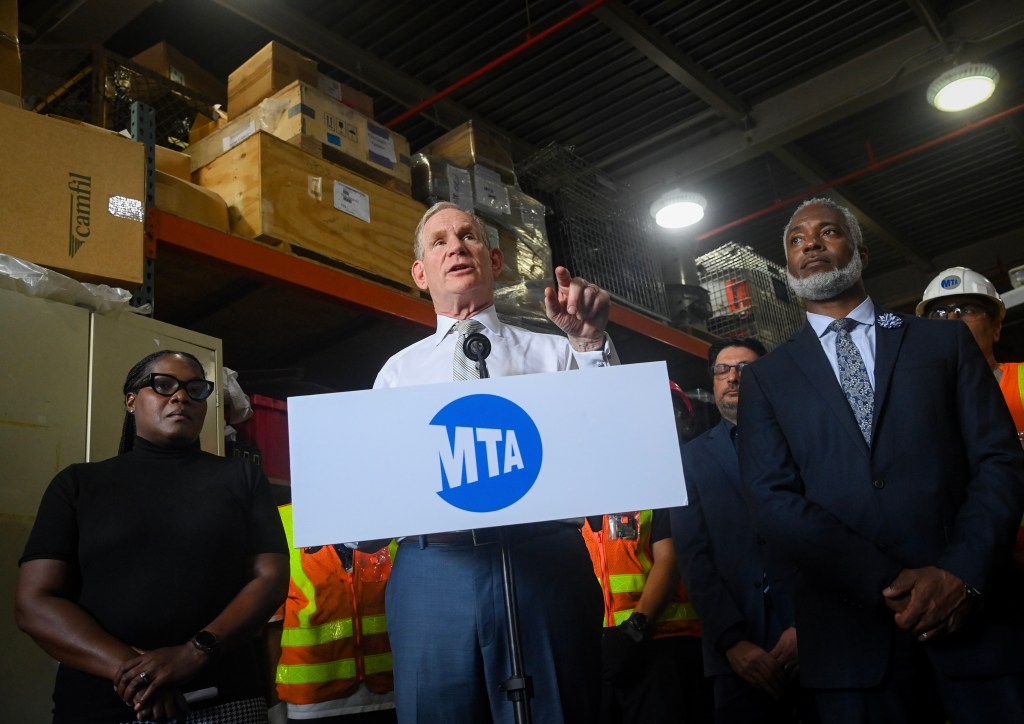
- MTA representatives rattled off a long list of projects slated for funding in the 2015-2019 Capital Program, with big ticket items including East Side Access (to be completed), phase two of the Second Avenue Subway (no completion date), and Penn Station Access (beginning work). Also in the program is the implementation of a new fare box system, which reps said would allow for payments online and via phone, as well as hundreds of new subway cars, over 1,000 buses, and track and signal upgrades.
- There is currently a $15 billion gap between the capital program price tag and available revenues. Biennial fare increases figure into the capital plan’s revenue projections, and MTA expects to receive $125 million a year from the city — a princely sum compared to the anticipated contribution from the state, which at this point, reps said, is zero.
- Council members had lists of their own, with asks including rail service to LaGuardia, Select Bus Service on Staten Island, subway countdown clocks on lettered lines, and improved access for the disabled. On the revenue side, congestion pricing foe Weprin asked if the MTA had considered the Sam Schwartz Move New York bridge toll reform plan. MTA reps said they’ve seen the proposal but have not spoken to Schwartz about it. Committee chair Ydanis Rodriguez said the council wants to help MTA raise money, and asked that council members be included in early discussions on “creative” revenue sources. “We’ll take ideas from just about anyone,” was the reply.
- There is some question as to whether — or how — old Second Avenue Subway tunnels, bored during the project’s previous false starts, will be used. MTA reps said they could be used for something, but maybe not running trains.
- Rodriguez said omitting rail to LaGuardia from the capital plan was “not a good move,” and asked that MTA reconsider. New express bus service to the airport is an improvement, Rodriguez said, but no substitute for rail links like those found in other world cities, namely London.
- Passing on a question from Twitter, Rodriguez asked about wheel guards for buses. Repeating what she said last March, MTA spokesperson Lois Tendler said wheel guards like the ones used in other cities were considered, but the agency decided against them because, Tendler said, “We didn’t think it was effective.” MTA bus drivers have killed at least four pedestrians and one cyclist this year, with an average of at least one fatality every six weeks since January 2013.

Read More:
Streetsblog has migrated to a new comment system. New commenters can register directly in the comments section of any article. Returning commenters: your previous comments and display name have been preserved, but you'll need to reclaim your account by clicking "Forgot your password?" on the sign-in form, entering your email, and following the verification link to set a new password — this is required because passwords could not be carried over during the migration. For questions, contact tips@streetsblog.org.