Rochester Mothers Call For Automated Speed And Red-Light Enforcement
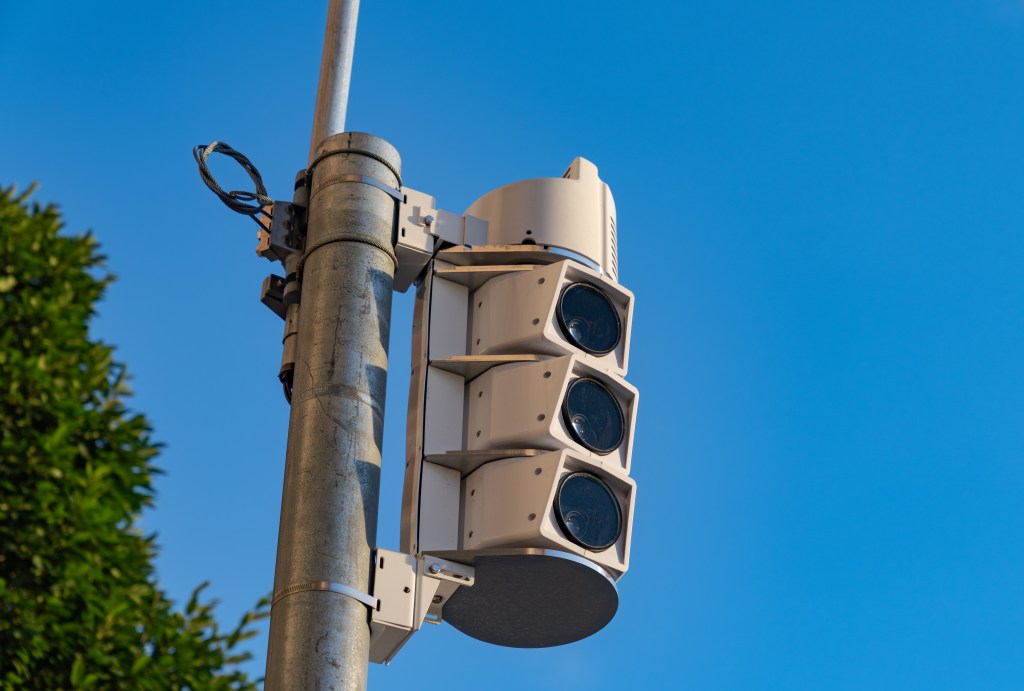
Rochester residents are crying out for automated enforcement.
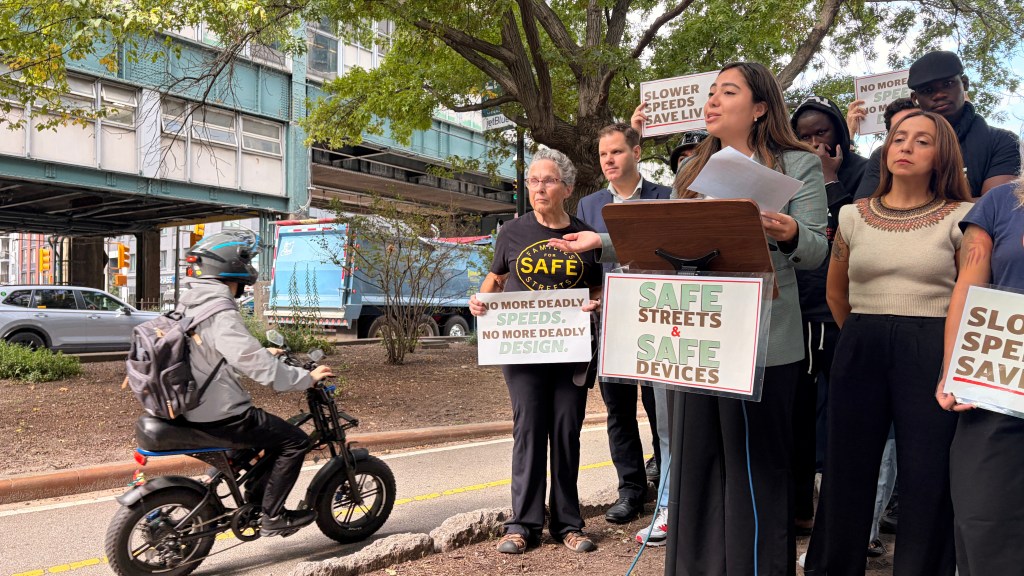
Mothers of children who have been killed or seriously injured by reckless drivers in Kodak City say the introduction of red-light and speed cameras is a no-brainer that could save lives from traffic violence.
Farasa Brown’s 6-year-old son Ryan Grantham Jr. was killed by a truck driver while crossing Thurston Avenue to get a snack in 2023. Brown called for and got a crosswalk on the road to help provide order, but told Streetsblog that drivers still speed through it after its installation, leaving automated traffic enforcement as a necessary deterrent.
“There’s still no safety,” she said. “So at the crosswalk, there’s a button for the blinking hazard lights to let people know that people are crossing the street. In that area, it’s a lot of older people. We’ve watched them press the button, and people are still just zipping back and forth up and down Thurston.”
The area is busy with businesses and other destinations, including a YMCA and post office, but drivers continue to speed through the neighborhood, which Brown attributed to the lack of enforcement to provide accountability.
Rochester City Councilor Bridget Monroe’s then-17-year-old son Ronan was hit by a speeding car driver while getting off the school bus on Dewey Avenue in 2021. Monroe said her son dragged himself to the curb to avoid oncoming cars and underwent several surgeries during his recovery.
Monroe said she and law enforcement suspected the identity of the driver, but investigators could not positively identify the motorist in a photo lineup. The district attorney did not pursue the case, even though police recovered the vehicle and investigators found Ronan’s hair and blood on the cracked windshield.
Ronan suffered extensive road burns, required a skin graft and later underwent surgery to drain a hematoma in his leg, Monroe said. The pavement also left permanent marks in his skin.
External wounds can heal. Others, the deeper ones, cannot.
“He’s very, very scared and nervous,” Monroe said. “He also decided he doesn’t want to drive, so he takes a bus. It takes him like an hour and a half to get to work because our busing system here is so anemic, and certainly parking lots, things like that, where cars are roaming around more freely. It makes him very anxious.”
Automated enforcement technology was developed in the 1980s. In San Francisco, speeding dropped by 72 percent at key locations after cameras were installed last year. Boulder Springs, Colorado reduced red light-running violations by the same percentage in its first year of enforcement. In New York City, which has the largest automated camera system, collisions declined by 30 percent and injuries by 16 percent in the the seven months following the introduction of a camera, the local Department of Transportation reported.
Rochester has already tried automated traffic enforcement once. The city’s red-light camera program, which eventually operated at 32 intersections, was discontinued at the end of 2016 after becoming deeply unpopular. A subsequent analysis found that crashes involving red-light violations fell by more than half at camera intersections and injury crashes fell by 60 percent, although then-Mayor Lovely Warren characterized the results as inconclusive and raised concerns about the program’s impact on poorer ZIP codes.
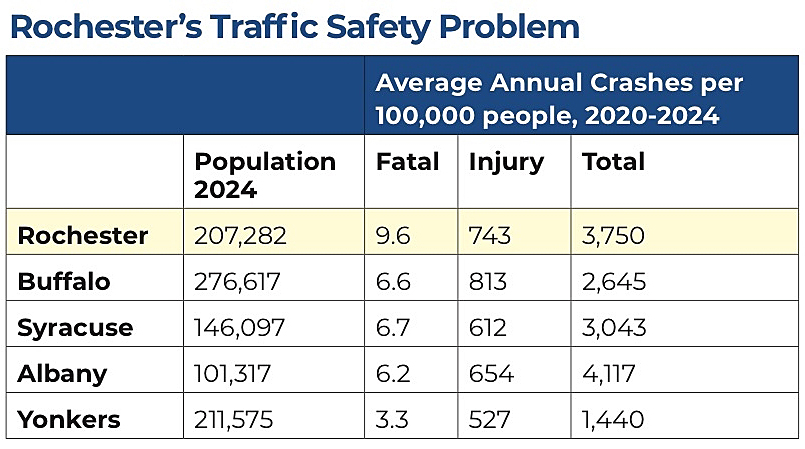
Now, the city is taking another look at automated enforcement. And for good reason. Rochester is a place where dangerous driving has become commonplace — and the consequences of it profound. The city’s Vision Zero report found that Rochester had the highest rate of fatal crashes among mid-size upstate New York cities — and is far less safe than New York City, where cameras have been reining in the most reckless drivers for more than a decade.
Monroe said she attended two of the city’s recent public-feedback sessions on traffic enforcement. At one, she said, nearly everyone at her table knew someone who had died in a traffic crash.
She said Rochester could begin with a narrowly focused program, such as speed enforcement around schools, before expanding automated enforcement more broadly. She pointed to New York City’s use of automated speed enforcement around schools as a possible model.
“I’m hoping that that can be a first start in making things safer in Rochester,” she said.
Rochester resident Evan Lowenstein, a mobility advocate, has experienced traffic violence himself. A cyclist for more than three decades, Lowenstein said he was doored while riding on a Rochester boulevard and suffered a small hip fracture. He also lost his friend Edgar Santa Cruz and Santa Cruz’s dog, Rosey, who were struck and killed by a driver who ran a red light while they were crossing South Goodman Street at Park Avenue in 2022.
Such those experiences convinced Lowenstein that Rochester needs automated enforcement.
“I am absolutely convinced that it would make a profound difference,” he said.
Lowenstein is aware that Rochester’s previous attempt at automated enforcement colors the debate, but that public attitudes may be changing as traffic violence worsens. He said the city’s Vision Zero effort has helped put automated enforcement back on the agenda.
He also said the Rochester PD, whose headcount is roughly 100 officers short (out of a current force of 611) of its pre-COVID staffing, needs to do more, though, like many cities, Rochester has a long and painful history of controversial police stops, which has made some police agencies reluctant to stop drivers.
Any expansion of automated traffic enforcement beyond the school bus program, however, would require action from Albany. That puts Rochester’s state delegation in a critical position.
State Senate Transportation Chair Jeremy Cooney (D-Rochester), who has advocated for automated enforcement in work zones, said he remains open to the idea once local Rochester officials make a formal request for home rule.
“Automated traffic enforcement is about protecting drivers, preventing injuries and saving lives,” Cooney said in a statement. “I’m grateful for Vision Zero’s efforts to reduce traffic incidents and ensure community input is received. I look forward to supporting any legislation in Albany that is needed to move the Mayor and City Council’s recommendations forward.”
For advocates and families who have experienced traffic violence, the question now is whether Rochester’s renewed interest in automated enforcement will translate into action. Brown said she is not confident.
“We all have to cross the street at some point in our day,” she said. “We don’t want another fatality. Nobody else wants to go through what other people have went through with these fatalities — broken legs, broken arms — that’s still something people have to deal with later on in life.”
Read More:
Streetsblog has migrated to a new comment system. New commenters can register directly in the comments section of any article. Returning commenters: your previous comments and display name have been preserved, but you'll need to reclaim your account by clicking "Forgot your password?" on the sign-in form, entering your email, and following the verification link to set a new password — this is required because passwords could not be carried over during the migration. For questions, contact tips@streetsblog.org.