With Legislators’ Push, Cuomo Agrees to 460 More Speed Cams Than He Wanted
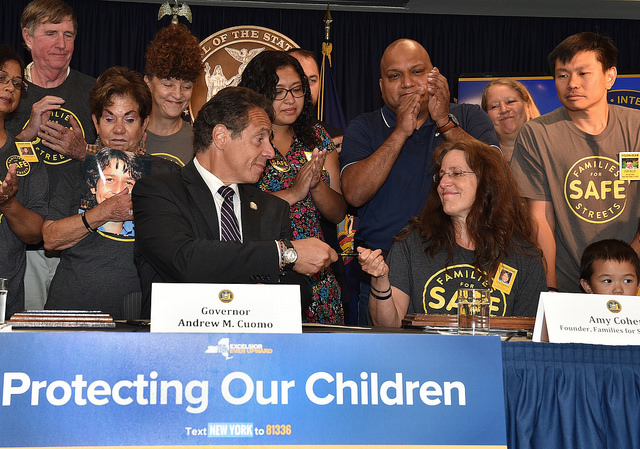
The legislature dared Governor Cuomo to be bold — and the governor said OK.
Cuomo said he plans to sign legislation, approved overwhelmingly by state legislators on Tuesday, that would expand the city’s automated speed enforcement program to 750 school zones, 460 more zones than the governor proposed in his executive budget earlier this year, and roughly 600 more than currently in operation.
“I support speed cameras,” the governor told reporters after the legislature acted, pointing to an executive order he signed in August allowing the city to operate its camera program without state authorization. “I support the speed cameras, and I will sign it.”
Speeding is down 63 percent at locations with cameras, which were introduced in 2013, but the impact has been stifled due to restrictions on when and where the technology can operate: city stats show that 85 percent of traffic fatalities and severe injuries occur at times or locations that cameras aren’t permitted.
The camera systems are especially popular with safety advocates because of the reduced likelihood that drivers will get a second one, but also because of their efficiency; in the first four full years of operation, even the small number of camera systems issued more than four million speeding tickets. The tens of thousands of NYPD officers, who operate all over the city all day and night, issued one-tenth that amount in the same period.
The bill that passed on Tuesday greatly expands the number of speed cameras, which automatically send car owners a $50 ticket when the car speeds passed a camera at more than 10 miles per hour over the posted speed limit. In addition to their sheer numbers, the newly expanded gauntlet of cameras will be more effective because their hours of operation will expand to between 6 a.m. and 10 p.m., as opposed to school hours, plus a half hour on each side. And now the cameras can be placed anywhere within a quarter-mile radius of the school, as opposed to within a quarter mile from the school entrance itself.
Both houses of the legislators also voted on Tuesday to establish a pilot camera program in Buffalo, another New York State city.
“These protections should not be limited to just New York City,” Assembly Speaker Carl Heastie said. “These two bills will help keep our students, families, and school staff, and other pedestrians safe around the schools — and hopefully pave the way for more of these programs across the state.”
The assembly bill, which passed 95 to 44, was sponsored by Deborah Glick of Manhattan, who carried it for many years along with the late Senator Jose Peralta. The senate bill, sponsored by freshman Senator Andrew Gounardes, approved the proposal by a vote of 43 to 18.
When Glick first introduced the bill, she and advocates hoped to install cameras at every single school in the city. To win the support of perennial speed camera obstructionist Marty Golden and the Republican conference, she and Peralta scaled back the number of authorized school zones to 290 — the same number proposed in Governor Cuomo’s FY 2020 executive budget.
Even then, Golden and then-Senate Majority Leader John Flanagan refused to bring the bill to a vote last year.
“When I think about how this bill failed to get passed last year, it angers me,” said Gounardes, who defeated Golden in November’s general election — partly because of the former senator’s opposition to speed cameras and other street safety initiatives.
Once it’s signed by the governor, the legislation will supersede a series of legislative maneuvers taken by the city council, mayor, and governor after authorization for the previous camera program expired last summer. That bill permitted the city to operate an unlimited number of cameras without state approval, but put the program at risk of legal challenges.
Since then, the city has increased the number of cameras slightly. Speaking to reporters in Albany, DOT Commissioner Polly Trottenberg said it will take two to three years roll out the full 750 camera arsenal.
Advocates on Tuesday welcomed the new state authorization.
“We have been fighting for years to protect more New Yorkers from reckless drivers, so we’re pleased to finally see this new state legislature approve a dramatic expansion of the life-saving speed safety camera program,” Families for Safe Streets founder Amy Cohen said in a statement.

Read More:
Streetsblog has migrated to a new comment system. New commenters can register directly in the comments section of any article. Returning commenters: your previous comments and display name have been preserved, but you'll need to reclaim your account by clicking "Forgot your password?" on the sign-in form, entering your email, and following the verification link to set a new password — this is required because passwords could not be carried over during the migration. For questions, contact tips@streetsblog.org.