Heastie Undecided On Gov. Hochul’s Uber-Backed Push to Lower Car Insurance Rates
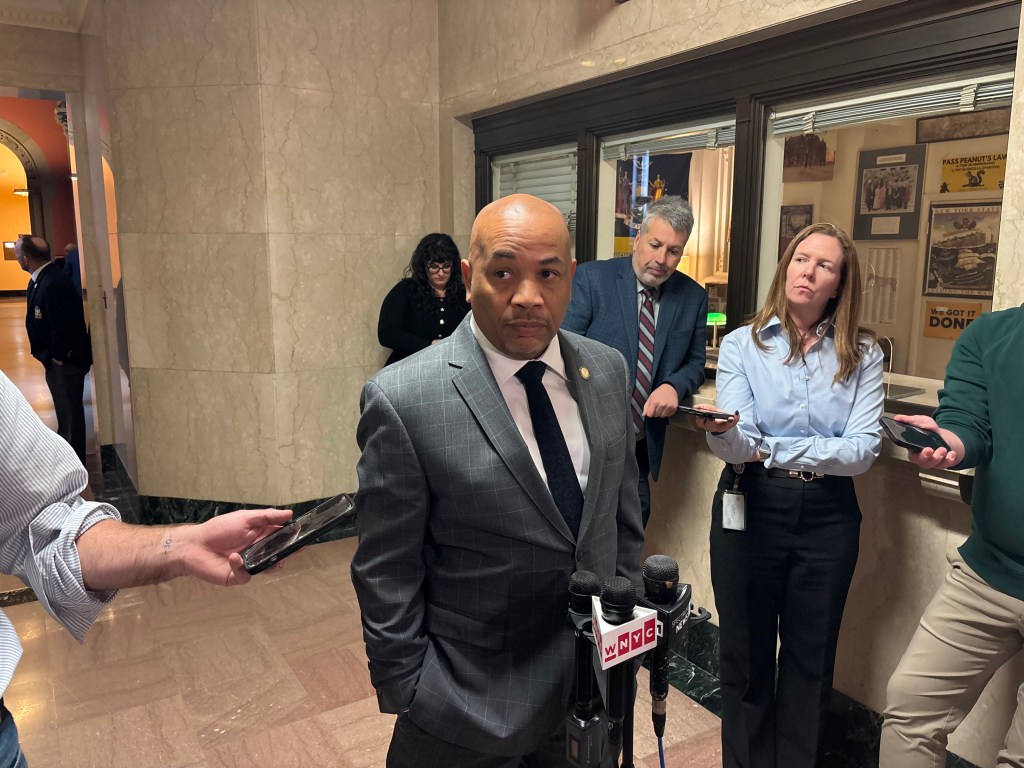
ALBANY — The most powerful man in the state legislature said he’s not yet sold on Gov. Hochul’s bid to reduce auto insurance costs for drivers because it is likely to be achieved by lowering the compensation paid out to victims of road violence.
Assembly Speaker Carl Heastie (D-Bronx) said on Wednesday that the governor’s Uber-backed proposal — which advocates and legal professionals have already panned as an unconscionable attempt to shift the cost of insurance onto crash victims — is certainly not dead on arrival, but also certainly needs extensive debate.
“I do agree that insurance rates are very high, but we have to figure this out, because I do think victims of accidents [sic] need to have their settlements and their days in court,” he told reporters. “And maybe we’ll find something that works for everybody. The government is trying to deal with a problem, but I also know that we don’t want to leave victims of accidents [sic] without being compensated.”
It’s the first comments to the press corps from top Albany leadership since the governor made the proposal in her State of the State address. State Senate Majority Leader Andrea Stewart-Cousins said on NY1’s Inside City Hall last week only that her chamber would “take a look and see what the governor is proposing and see what we can actually do that could be helpful in this affordability crisis.”
Hochul believes that auto insurance premiums are too high in New York State in part because the definition of “serious injury” is too vague and is resulting in sky-high payouts. Currently, the term covers death, dismemberment, significant disfigurement, a fracture, loss of a fetus, loss or significant limitation of a body function or organ, or a non-permanent injury which prevents a person from daily activities for more than 90 days after the crash.
In reality, these payouts already require a fair amount of verification before a settlement can be rendered.
Both Heastie and Hochul have pinpointed the car-driver cost-reduction agenda as one of the more contentious issues that lie ahead during the state budget’s negotiations.
“I think [it’s] going to probably be, if you ask me, the policy thing that’ll have the most conversation,” said Heastie. “[From] my, like, 800-foot view of the governor’s executive budget.”

Read More:
Streetsblog has migrated to a new comment system. New commenters can register directly in the comments section of any article. Returning commenters: your previous comments and display name have been preserved, but you'll need to reclaim your account by clicking "Forgot your password?" on the sign-in form, entering your email, and following the verification link to set a new password — this is required because passwords could not be carried over during the migration. For questions, contact tips@streetsblog.org.