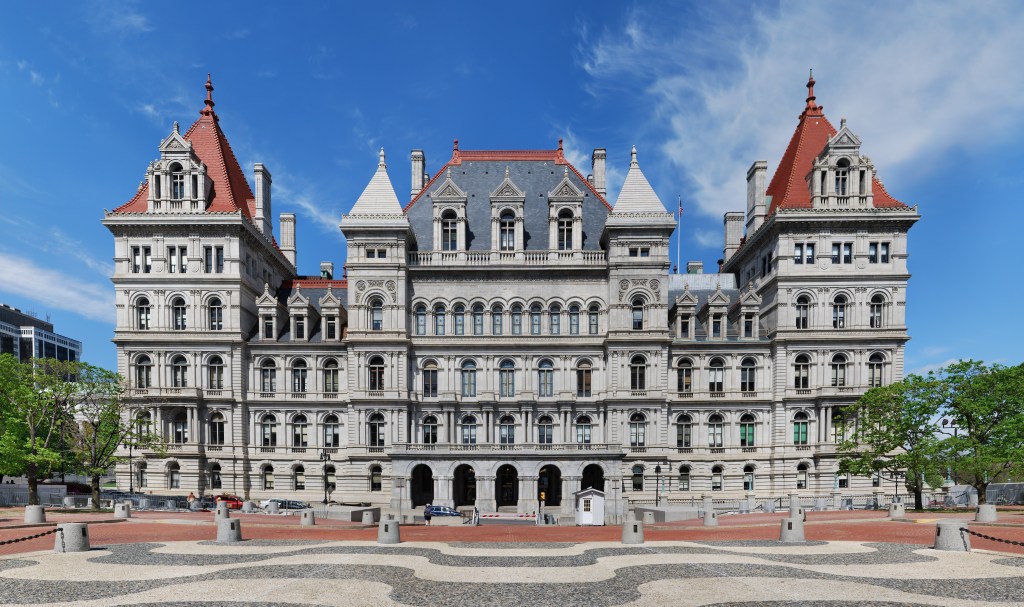
Lisa Kaul Talks Mid-Hudson Transit, Robotaxis and Safer Roads
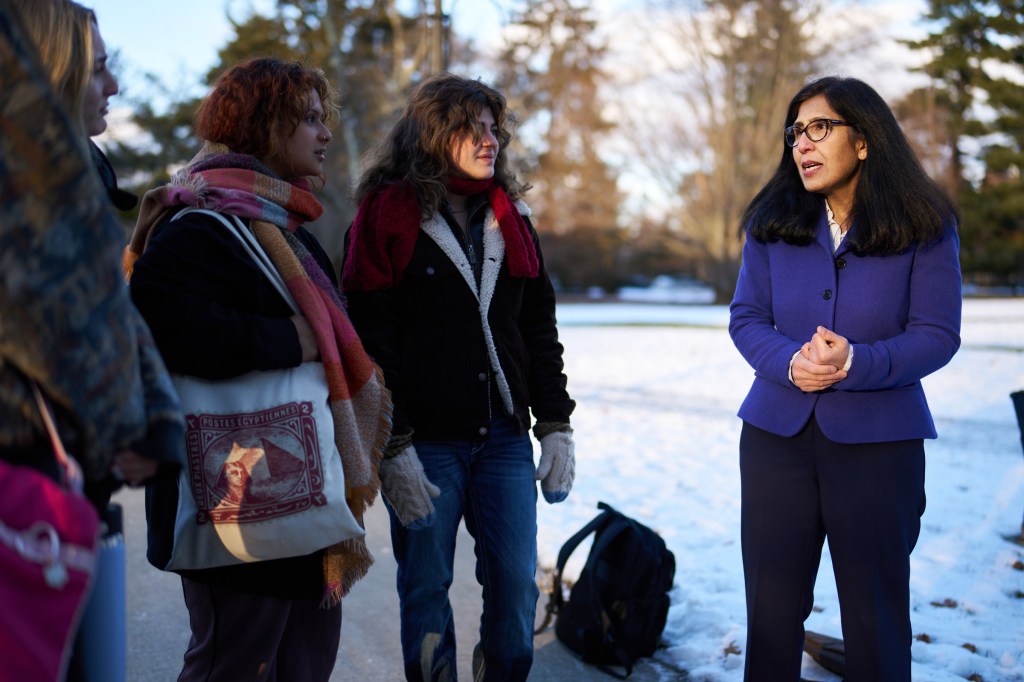
Dutchess County Legislator Lisa Kaul is taking her push for safer, less car-dependent streets from the county Legislature to Albany.
On Oct. 13, the Legislature approved her bill requiring drivers to leave at least three feet when passing cyclists, pedestrians and other vulnerable road users, a measure advocates in Beacon cited when we reported on the city’s push for a connected bike network.
Now Kaul, who won a three-way Democratic primary in June, is challenging state Sen. Rob Rolison (R-Poughkeepsie) on Nov. 3 in a Hudson Valley district that covers parts of Dutchess, Orange and Putnam counties. If she wins, she would inherit transportation fights we have followed closely, including the Get Around NY Act, which would cut vehicle miles traveled 20 percent by 2050 but had stalled as of January, and the robotaxi expansion Gov. Hochul pulled from her budget in February.
We spoke with Kaul about why transit in the mid-Hudson is so hard to rely on, how she would change the way state DOT approaches road projects, whether robotaxis belong in upstate New York and what it took to pass her three-foot law.
This interview has been edited for length and clarity.
How is the mid-Hudson region falling short on public transit, and what is the best way to address it?
The public transit that exists isn’t meeting people’s needs for two simple reasons: It’s not frequent enough, and it’s not reliable. Transit only works if it’s frequent and reliable, and it has to go where people need to go.
I learned to drive only after I came to this country 20-some years ago, so I walked or biked everywhere. With gas prices where they are, it seems obscene that we don’t have an alternative way of getting around. I would want to see much more mass transit.
I’m seeing a lot of conversation around microtransit, which sounds exciting, especially for last-mile connectivity. But we end up relying more on Ubers or taxis, which is the same model of putting another vehicle on the road instead of one vehicle that serves multiple people. As we think about highway expansion, what can we do first to put more money into mass rail transit, and within the districts into buses, shuttles, park-and-rides and bike lanes? We have a wonderful rail trail system, but everybody has to drive to it. We need connectivity from neighborhoods to the trailheads.
Should policymakers prioritize infrastructure, or incentives like rebates that give people more options?
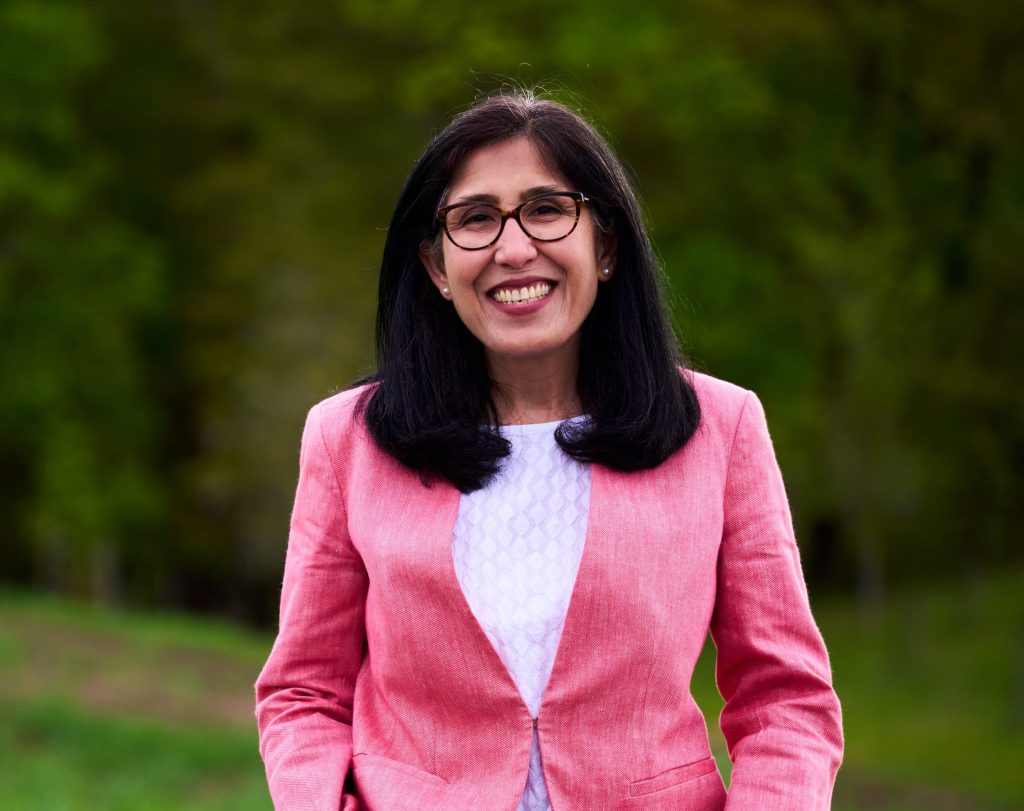
In the short term, I would make sure municipalities and counties have enough money to run more shuttle services, where people ride together instead of in multiple individual taxis. Could we have a shuttle from the city of Poughkeepsie to a workplace like the iPark, so everybody isn’t driving their own car to the train station? Could we have more park-and-rides?
Infrastructure takes a long time. Roads in New York are owned by different entities, including the state, counties, towns and cities, so getting everybody on the same page takes time, and then there are easements.
We should also remember that other people use the road. It is so difficult to get a crosswalk. Sidewalks take years, but just a crosswalk makes things a little safer. Making that easier would be a first order of business for me.
Do you worry state DOT is too insular for a bill to reduce vehicle miles traveled, or complete streets guidelines, to be effective?
None of this can happen without a serious conversation with state DOT about current policies, which are located in the 1950s and ’60s, when the sole goal was the speed and efficiency of the motor vehicle. That needs to change. A system where everybody rides in their own automobile is not good for our democracy, and it’s not good for the climate, even if you’re driving an electric vehicle.
When the department repaves a street, the first consideration should be whether we can put in a sidewalk and prepare the area for bikeability. Near my house, repaving was done, and a group of us advocated for sidewalks and bike paths because cyclists use that area a lot. The response was, “What’s the point?” because it would only be a half-mile or one-mile path. There was no sense that we could put something in as a placeholder and build on it the next year. They just dumped more asphalt. That thinking has to change.
How do you view robotaxis like Waymo, especially in upstate New York?
I’m a little conflicted. I could see a use for them in really rural areas, but I still think the work we put in should employ human beings, because we need jobs. Drivers need jobs, and people are struggling. I’m also not a big proponent of putting more individual vehicles on the road, so I’m not a huge proponent of this.
In a place like Beacon, there isn’t enough density late at night to get a rideshare. Could robotaxis fill that gap?
Beacon is a place where you could, but then why wouldn’t you get an Uber with a driver in it? Then you’re replacing a human being’s work. What value is Waymo bringing us? If something brought additional value, I would be curious about it, and I would want studies on things like crash rates. I know they’re relatively okay, but I’d want to know how much it takes away from people who have a job or are driving for a second job.
How big a lift was passing the county’s safe-passing law?
I started talking about this in February. We’re (Democrats) in the majority in the Dutchess Legislature, but I wanted to talk to the Civil Service Employees Association, the sheriff’s office and a bunch of other people. A local bicycle advocacy group was also running a petition, so we had lots of signatures and letters. I bike, so I was completely invested. It wasn’t much of a lift.
The big question was about enforcement, but we can’t be fixated on that, because these laws are also educational. It’s important for people to have a clear sense of what a safe passing distance is, both for the cyclist and for the person in the motor vehicle. It’s also useful retroactively if you’re trying to assign blame.
Is there anything else you’d like to add?
I entered this race because I’m concerned about climate change, and I see transportation, the way we live, as a big piece of the puzzle. Housing is a big issue, but to solve for housing, we have to solve for transportation. Everybody wants more housing, but nobody wants an additional unit built, which basically means they don’t want another car on the road because they don’t like congestion. Complete streets, mass transit and public transit are what we need to solve a big piece of our affordability issue.
Read More:
Streetsblog has migrated to a new comment system. New commenters can register directly in the comments section of any article. Returning commenters: your previous comments and display name have been preserved, but you'll need to reclaim your account by clicking "Forgot your password?" on the sign-in form, entering your email, and following the verification link to set a new password — this is required because passwords could not be carried over during the migration. For questions, contact tips@streetsblog.org.