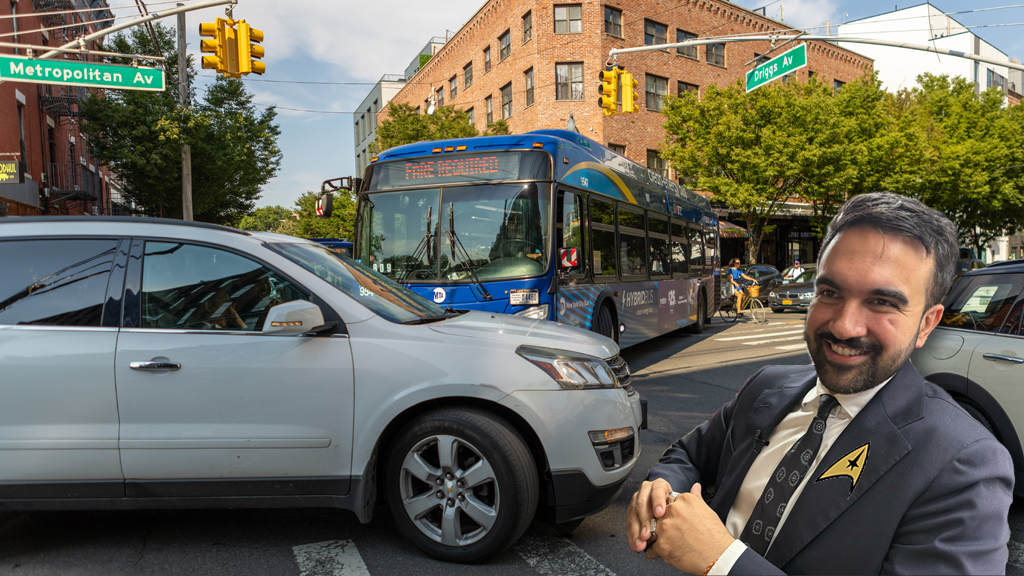
Uber and Waymo Have Spent More Than $15M This Year Lobbying New York Pols
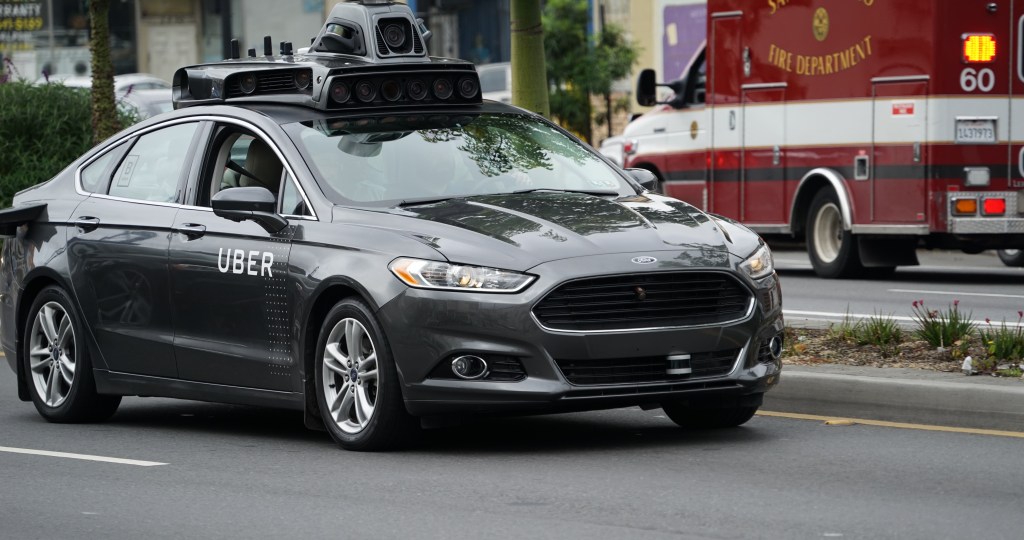
Uber and Waymo spent more than $15 million combined to lobby New York state officials in the first half of 2026 as Gov. Hochul backed both companies’ legislative priorities — but the tech titans didn’t get everything they asked for.
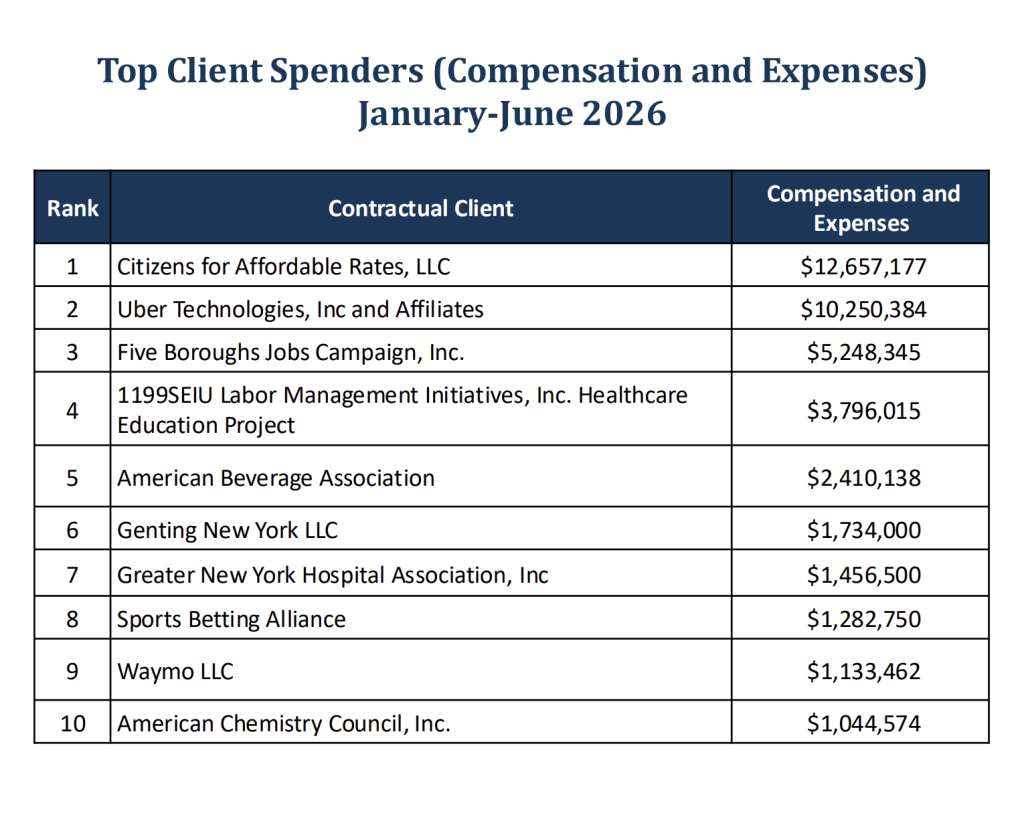
Citizens for Affordable Rates, the Uber-backed group that pushed Hochul’s insurance overhaul, reported $12.7 million in lobbying spending between January and June — more than any other special interest in the state, according to preliminary data released this week by the state’s Commission on Ethics and Lobbying in Government.
Uber ranked second among all lobbying clients statewide at $10.3 million, with $9.1 million funneled to Citizens For Affordable Rates. Waymo, which wants to bring driverless robotaxis to New York state and city, ranked ninth at a comparatively small $1.1 million. That difference in spending correlated with each company’s outcome: Hochul and the legislature passed Uber’s desired insurance “reforms,” but the governor abandoned her push to bring Waymo to the Empire State early in the legislative process.
The $13.8 million figure that Uber and Citizens for Affordable Rates reported to lobbying regulators doesn’t include the money that Citizens for Affordable Rates’ political committee poured directly into Hochul’s re-election campaign. State Board of Elections filings show the committee made $11.97 million in independent expenditures supporting Hochul’s primary bid between January and June — nearly matching what the group spent on lobbying.
In Albany, the side willing to spend the most, and spend it earliest, tends to keep winning, according to a top state government watchdog.
“Uber spent as much as it had to spend in order to win,” said Blair Horner, senior policy advisor at the New York Public Interest Research Group. “Big money talks, and the public is reduced to often just an observer of the battles at the state capital.
According to its filing, Citizens for Affordable Rates allocated nearly all of its lobbying money — $12.6 million of $12.7 million — into expenses like marketing and advertising, rather than directly paying lobbyists to pressure lawmakers. Uber’s numbers show a similar split at a much smaller scale: $219,373 in lobbyist compensation against $953,903 in expenses, mostly ad buys placed in outlets like the New York Times, Politico, City & State and local papers around the state, plus digital spending on Meta and LinkedIn. The combined outlay makes it the state’s largest lobbying client in the transportation-sector for the period.
“Uber is proud to advocate for policies that lower costs for New Yorkers, protect drivers’ jobs, and improve access to reliable transportation,” said spokesperson Josh Gold. “This year’s progress on insurance reform was an important step toward addressing New York’s extraordinarily high insurance costs, and we’ll continue working with policymakers and other stakeholders on further reforms.”
The $12.7 million that Citizens for Affordable Rates reported to lobbying regulators doesn’t include the money the group’s political committee poured directly into Hochul’s re-election campaign. State Board of Elections filings show the committee made $11.97 million in independent expenditures supporting Hochul between January and June — nearly matching what it spent on lobbying. A City & State roundup of super PAC activity in the primary found Citizens for Affordable Rates was the only outside group of any real size boosting Hochul’s campaign, and that all of its money traced back to Uber.
In comparison, New York State Trial Lawyers Association, which Hochul cast as a ne’er-do-well “special interest” in the insurance policy battle, spent just $715,000 paid to three retained lobbying firms over the same six months.
Campaign finance law is designed to prevent bribery, but Uber’s financial support for Hochul can’t be disentangled from her support for its policy goals, another watchdog said.
“You can think of it as legal bribery,” said John Kaehny, executive director of the good government group Reinvent Albany. He pointed out that a business can let its lobbyists make the ask on the same issue it’s separately funding a campaign around — without ever directly connecting the contribution to the request.
Hochul’s office essentially confirmed the connection in January, when her press office forwarded Streetsblog a set of talking points defending her insurance plan — with an Uber spokesperson still copied on the email thread. It was Hochul’s proposal on paper, but its messaging came from Uber.
What actually changed
Hochul’s January proposal had three pieces: narrowing the legal definition of “serious injury,” barring any driver found more than half at fault from recovering damages, and changing the state’s “joint and several liability” rule.
Two of the three pieces survived the budget. Lawmakers narrowed “serious injury” by eliminating the roughly 90-day disability standard that advocates say hits people with brain injuries or soft-tissue damage hardest, meaning those victims can no longer sue for pain and suffering beyond the $50,000 no-fault minimum. They also adopted the 50-percent fault bar, replacing a sliding scale that had reduced, but never eliminated, a victim’s award.
Only joint-and-several liability didn’t survive the legislature, with Hochul dropping her push in final negotiations. In exchange, insurers agreed to stop automatic 5-percent premium hikes without regulator approval and to drop ZIP code and education level as rate factors.
“The only thing that the governor considers when making decisions is what is best for New Yorkers,” Hochul spokesperson Sean Butler said in a statement. “Gov. Hochul heard from residents of every region of this state about the affordability crisis only made worse by skyrocketing auto insurance costs and she took action, securing historic reforms that root out waste and abuse, crack down on law-breaking drivers, and will put money back in families’ pockets. New Yorkers asked for relief and the governor delivered for them.”
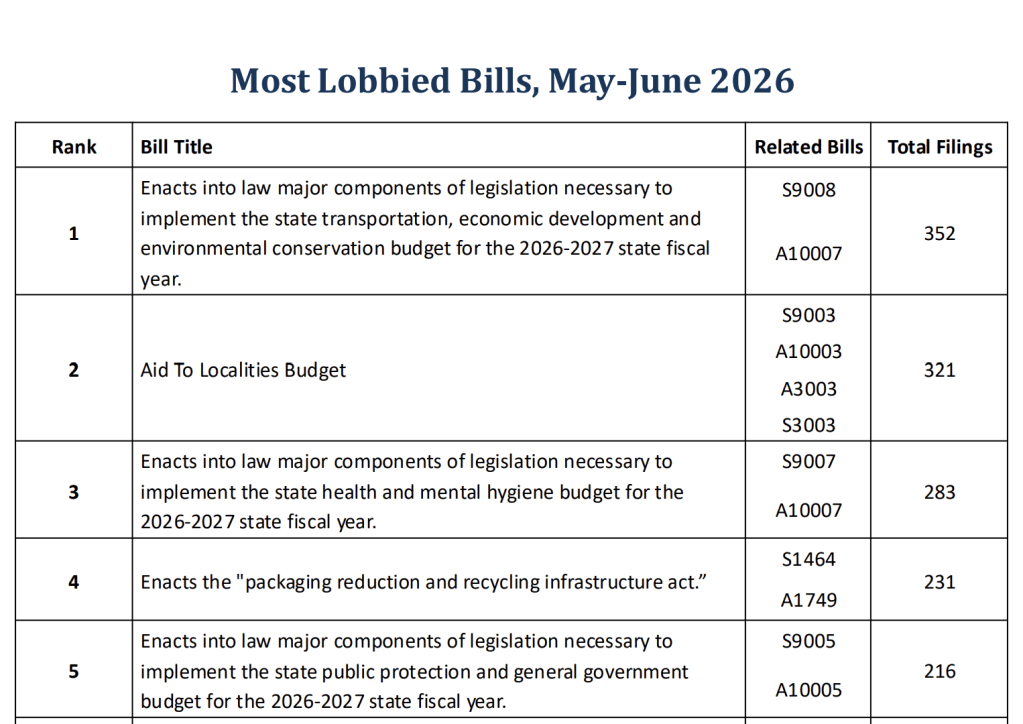
Lobbying was only half of it
Roughly $7.8 million of Citizens for Affordable Rates’ campaign spending went to television ads, about $2.9 million to digital ads and roughly $362,000 to phone and email outreach — all urging support for or praising Hochul’s insurance plan. Print ads accounted for about $614,000, with $43,500 on polling and around $272,000 more on consulting, production and other costs.
The campaign extended beyond those reported advertising buys. Citizens for Affordable Rates’ TV spots featured actors giving “testimonials” about their insurance woes — at least five of the six people in one widely shared ad turned out to have professional acting credits, not personal insurance bills. The group and Uber also bought sponsored content in Politico’s New York Playbook, amNY and City & State’s morning newsletter, parked a mobile billboard truck outside the Capitol warning that “staged crashes cost us all,” and Uber separately emailed its riders and drivers directly, warning that fares could rise if the insurance system wasn’t fixed and urging them to contact their state lawmakers.
The effort unfolded on two fronts: lobbying Albany while simultaneously financing a public advocacy campaign through Citizens for Affordable Rates, with sponsored content helping bridge the two. It’s a strategy tobacco, oil and pharmaceutical companies have used for decades: an industry group with a reassuring name does the messaging work that would draw more scrutiny if it came directly from the company itself. Streetsblog reported in April that lawmakers had received a wave of form emails supporting Hochul’s plan that were signed by people who hadn’t sent them — including some who were dead.
The trial lawyers’ campaign contributions were modest by comparison. During the same six-month period, they gave $207,750 to candidates statewide — a fraction of what Uber and Citizens for Affordable Rates spent backing Hochul’s insurance proposal alone.
What Waymo actually won — and lost
Waymo wanted something else entirely: to persuade New York to allow robotaxis. Hochul’s original proposal, folded into her January budget, would have let municipalities outside New York City — like Buffalo and Albany — opt in to driverless, fully autonomous ride-hail pilots.
But the plan never made it to the final stages. Hochul withdrew it in February, before budget negotiations were even underway, citing a lack of legislative support. That leaves New York’s existing rules in place: autonomous vehicle testing only with a human safety driver, hands on the wheel, with no legal path to run a commercial driverless service anywhere in the state. Waymo’s own New York City testing permit, issued under the Adams administration, has since expired.
The problem wasn’t just disparate interests like organized labor and gaming outspending Waymo — it included Uber’s own side of the business. The Independent Drivers Guild, an advocacy group backed by Uber, publicly cheered the reversal and vowed to fight robotaxi expansion, framing driverless cars as a threat to its members’ jobs. Assembly Member Karines Reyes, who sponsored legislation to ban robotaxis outright in February, said opposition had been building inside and outside the legislature, even though lawmakers hadn’t formally conferenced on Hochul’s specific proposal.
“Dropping your own initiative in the budget amendments seems almost unprecedented to me,” political strategist Jack O’Donnell told Streetsblog at the time.
Waymo has little to show for its $1.1 million in the budget that just passed. But it isn’t starting from zero: state Senate Transportation Chair Jeremy Cooney publicly lamented the reversal, and business groups pushed back on it, too.
Kevin Schwab of the upstate economic development nonprofit Center State CEO argued driverless service could help fill transit gaps outside of the city’s dense, well-served core. That suggests Waymo has a coalition it can grow, not just a fight it simply lost.
Horner noted that money spent on lobbying for a bill that ultimately fails isn’t necessarily wasted: it can function as seed money for a fight that takes years to win, in much the same way advocates spent a decade building support for the state’s medical aid-in-dying legislation before they found a path to Hochul’s desk. Uber, notably, spent money to build power on two fronts at once — and only came up empty on one of them.
“Waymo is engaging with people throughout New York to understand their communities’ transportation opportunities,” said Waymo spokesperson Ethan Teicher. “We believe our technology can help improve road safety and accessibility in the Empire State, and we continue to advocate for a rigorous framework for deploying fully autonomous vehicles.”
What the money bought, and what it signals ahead
Back in January, Assembly Insurance Committee Chair David Weprin predicted that lobbyists would turn out to be the real winners of the budget fight over insurance. He was right about the industry side: Uber and Citizens for Affordable Rates spent the most and got most of what they wanted, while Waymo’s smaller bet bought influence it’s still waiting to spend.
Both companies made the same basic argument to lawmakers: what’s good for their industry is good for the public, too. Cheaper insurance and fewer human errors behind the wheel are goals to which most legislators would never openly object. Only one proposal became law. The difference wasn’t the sales pitch — it was the years of political spending and relationship-building behind it.
That has implications beyond this year’s budget. New York’s campaign finance rules place essentially no cap on independent expenditures or party-committee giving, and there’s no dollar limit on lobbying spending at all. That leaves little reason for a well-funded interest group not to invest heavily in both at the same time. “There’s no legal barrier to spending an infinite amount on lobbying,” Kaehny said, arguing that the combination amounts to a legal form of bribery.
Big lobbying spikes in Albany have tracked the governor’s priorities before. In 2012, Exxon Mobil ranked as the state’s second-largest lobbying spender, behind a pro-Cuomo business group, as it pushed to lift New York’s ban on high-volume hydraulic fracturing, or fracking. Cuomo ultimately declined to allow fracking in New York. “It’s usually the big blips in spending, or when something is happening that dominates the session,” Horner said. That means whichever issue Hochul makes a priority during her re-election year is likely to become Albany’s next high-dollar lobbying fight, regardless of the policy itself.
Whether the insurance changes ultimately deliver the lower premiums that Hochul and Uber promised remains an open question. Kaehny compared the imbalance between Citizens for Affordable Rates’ war chest and the trial lawyers’ far smaller budget to “King Kong versus Godzilla.”
An Albany insider who spoke anonymously to protect their clients said that average New Yorkers still can affect change in the statehouse; it often just depends on the issue and the timing.
“On issues that are harder to understand and have a direct effect on people, like the Uber thing, I think that’s not a public opinion thing per se, right?” the insider said. “But on things that are tangible, like data centers, or … teen regulation on social media, I think the public still has the upper hand.”

Read More:
Streetsblog has migrated to a new comment system. New commenters can register directly in the comments section of any article. Returning commenters: your previous comments and display name have been preserved, but you'll need to reclaim your account by clicking "Forgot your password?" on the sign-in form, entering your email, and following the verification link to set a new password — this is required because passwords could not be carried over during the migration. For questions, contact tips@streetsblog.org.