Bill Watch: Bronx Pols Push To Kill Waymo Before It Can Grow

They want to put the driver back in driver-less.
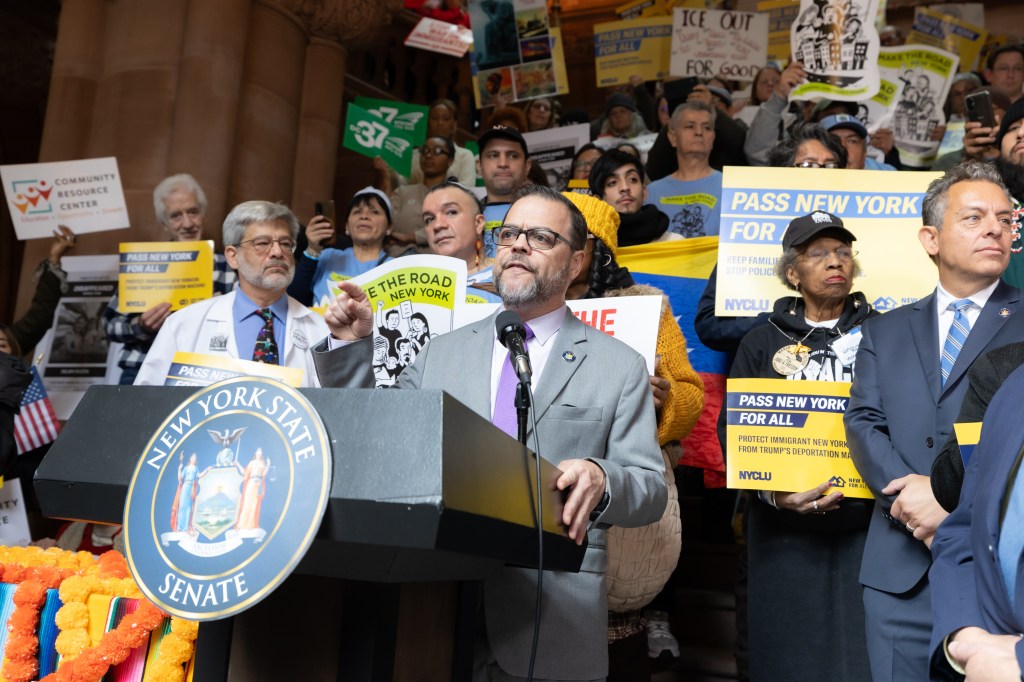
Bronx Democrats State Sen. Luis Sepulveda and Assembly Member Karines Reyes want to stop the spread of robo-taxis in New York with a bill (S9038/A10087) that would require a human driver to always be at the wheel of taxis, a shot across the bow at Gov. Hochul’s bid to expand the testing of autonomous cabs across the state.
“I’m not against the technology, but I can’t support something that’s going to leave that many people without a way of making an income,” Sepulveda told Streetsblog, echoing many who appreciate the possible safety gains from AV technology, but fear the human cost to flesh-and-blood taxi and rideshare drivers.
But the pair’s effort to block robotaxis faces an uphill battle, given tha Hochul included language in her executive budget that would allow municipalities outside of New York City to pilot the use of driverless cabs. There are exceptions, but items inserted by a governor into the budget process generally become law in some form.
Sepulveda said that he’d be open to a job-training arrangement for drivers who lose work due to a Waymo expansion, but otherwise can’t support the concept. He recalled the promises made by app-based companies such as Uber that would not adversely affect the existing workforce.
“Ultimately, Waymo’s going to want to expand, and they’re going to want to dominate the industry,” Sepulveda said. “It makes business sense for them. So I don’t know if you can have that compromise.”
Waymo insists that its robo-cab is safe and that it creates jobs wherever its fleet is active.
“This proposal overlooks these benefits and ignores the communities seeking a safer, more accessible alternative to the status quo,” the company said in a statement.
Reyes said that she was looking forward to fighting the governor’s proposal, even if the lobbying offensive is well underway.
“Big Tech has a lot of resources, a lot of power, a lot of influence. Sometimes it seems innocuous, but they’ve really had their tentacles everywhere. And clearly, it appears like they have been having conversations on the second floor about this,” she said, referring to the location of the governor’s office in the state Capitol.
To some New Yorkers, driverless cabs come as welcome news, even as the federal government investigates Waymo’s safety record. Rodney Stanford, president of The American Council of the Blind of New York, said, “We’re all in.”
Stanford’s position reflects the feeling among blind New Yorkers, as well as those who live in areas with poor paratransit, that more options are better. He said members of his community with service dogs aren’t always let in by rideshare drivers when they travel, and a robot would be less likely to decline a ride at the last minute.
“Robot taxis will obey the laws, the human element, not so much,” he said. “But we are [also] hopeful that the competition is going to improve pricing, or at least stabilize pricing.”
Like Sepulveda, Reyes is worried about the impact on labor, especially as Uber and Lyft remain popular side hustles during an affordability crisis. But she questions the safety of Waymo and other robotaxi companies.
“There are some things that should be left to human judgment. Driving should definitely be one of those, particularly because they’re not going to be the only vehicle on the road, you still have buses, pedestrians [and] other people driving cars, whether they drive safely or erratically,” Reyes said. “It’s very difficult, and it’s difficult to trust machines to make those judgments.”

Read More:
Streetsblog has migrated to a new comment system. New commenters can register directly in the comments section of any article. Returning commenters: your previous comments and display name have been preserved, but you'll need to reclaim your account by clicking "Forgot your password?" on the sign-in form, entering your email, and following the verification link to set a new password — this is required because passwords could not be carried over during the migration. For questions, contact tips@streetsblog.org.