State Bill Seeks to Alter Environmental Review So it Doesn’t Only Care About Drivers
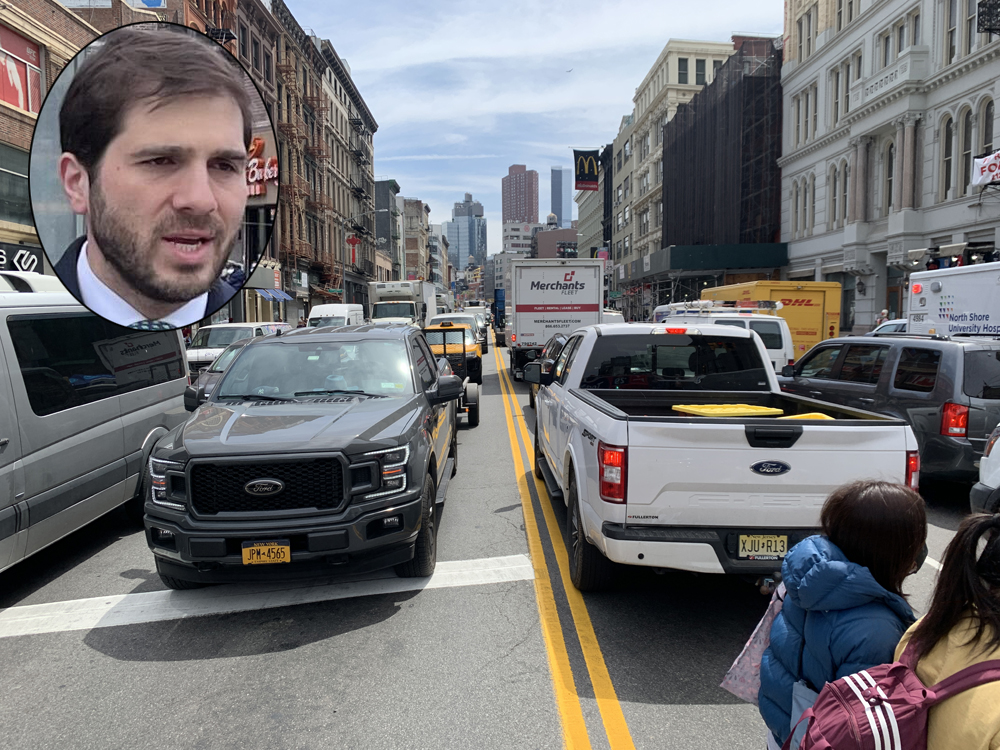
Shouldn’t environmental review take into account the effect of cars on the environment rather than the other way around?
That basic question informs a new piece of legislation by state Sen. Andrew Gounardes, which proposes the ultimate no-brainer of environmental assessment in a rapidly warming world: Instead of judging the impact of a project on whether it would make conditions worse for drivers, Gounardes’s bill would encourage environmental impact statements to no longer focus “on a project’s effect on automobile delay” or level of service and instead focus on reducing overall vehicles miles traveled.
“By eliminating the relevance of level of service as a metric and utilizing vehicle miles traveled reduction instead, we can provide a new criteria for determining the significance of transportation impacts to promote: (1) a reduction in greenhouse gas emissions; (2) development of multimodal transportation networks; and (3) a diversity of land uses that will reduce greenhouse gas emissions from the transportation sector,” the bill summary states.
As a legislative matter, the bill would only require the state to set its goal of “reducing the annual total of vehicle miles traveled within the state by 15 percent by 2050.” But the question of how you get there could directly be answered by fixing the way environmental review is currently done — altering the assessment of projects from their impact on car drivers’ level of service to a project’s ability to reduce driving.
“We have to actually go about changing the paradigm by which we are evaluating projects and addressing one of the largest sources of carbon emissions in our state, which is transportation, which is automobiles,” Gounardes told Streetsblog.
New York’s effort would follow a similar measure that passed a decade ago in the California state legislature and was signed by then-Gov. Jerry Brown in 2013, but only just took effect on the eve of the pandemic. Cities such as Santa Rosa and Berkeley have begun using the new VMT standard, as Streetsblog CAL has reported, but it is too early to judge its success.
Nonetheless, advocates hailed Gounardes’s approach.
“It is high time that we redefine the criteria for a good or effective project,” said Sara Lind, the co-executive director of Open Plans. “Plans that would greatly enhance people’s experience of the street often can’t move ahead because they lack the explicit goal of reducing car congestion. And yet, we know that the current ‘Level of Service standard’ actually worsens congestion. A 21st-century mindset would evaluate projects based on their ability to enhance safety, climate resilience, mobility, and joy. This bill could get us there.”
Former city Department of Transportation official Jon Orcutt has long championed the idea of fixing environmental reviews so that they don’t always recommend widening roadways to mitigate the increase in traffic created by the project itself. Orcutt, now with Bike New York, added that current environmental impact statements don’t really admit that the road system itself influences and encourages people to drive. As such, he supports Gounardes’s effort.
“This change would be a great and long overdue update to the state’s environmental review law,” he said. “Hopefully other states and ultimately the feds would take similar reforms up once New York leads the way.”
Will it work? Early evidence shows that the level of service performance metric is a poor one in urban areas because any project, even an “infill” project that will have many benefits for the community will still reduce level of service for drivers.
Such urban areas might want to consider a different metric, according to the planning firm Dudek, because the “elimination of LOS can save money, result in a focus on VMT reduction, and speed up the environmental review process for some projects that trigger LOS impacts due to their location in congested areas.”
For the senator, the bill is not only about honesty in environmental review, but also a deeper discussion about how we use public space.
“We know what we have to do to protect the climate, which is significantly reduce personal vehicle usage, but we also have to be much more transformative in how we think about and plan for transportation infrastructure to the next generation,” he said.
“Look at the conversations we’re having about the Brooklyn-Queens Expressway right now — about what we need in the future,” he added. “If we can stop designing roadways to handle the greatest volume of vehicles, and actually reduce the number of cars, then there’s no need to have this conversation in the first place.”

Read More:
Streetsblog has migrated to a new comment system. New commenters can register directly in the comments section of any article. Returning commenters: your previous comments and display name have been preserved, but you'll need to reclaim your account by clicking "Forgot your password?" on the sign-in form, entering your email, and following the verification link to set a new password — this is required because passwords could not be carried over during the migration. For questions, contact tips@streetsblog.org.