Budget Deal: Hochul Gets A Lot Of What She Wanted On Insurance
Legislative leaders have reached a broad agreement on car insurance reforms that strip some crash victims of their legal rights to compensation after crashes while only asking insurance companies to make minor concessions on rate increases and data use.
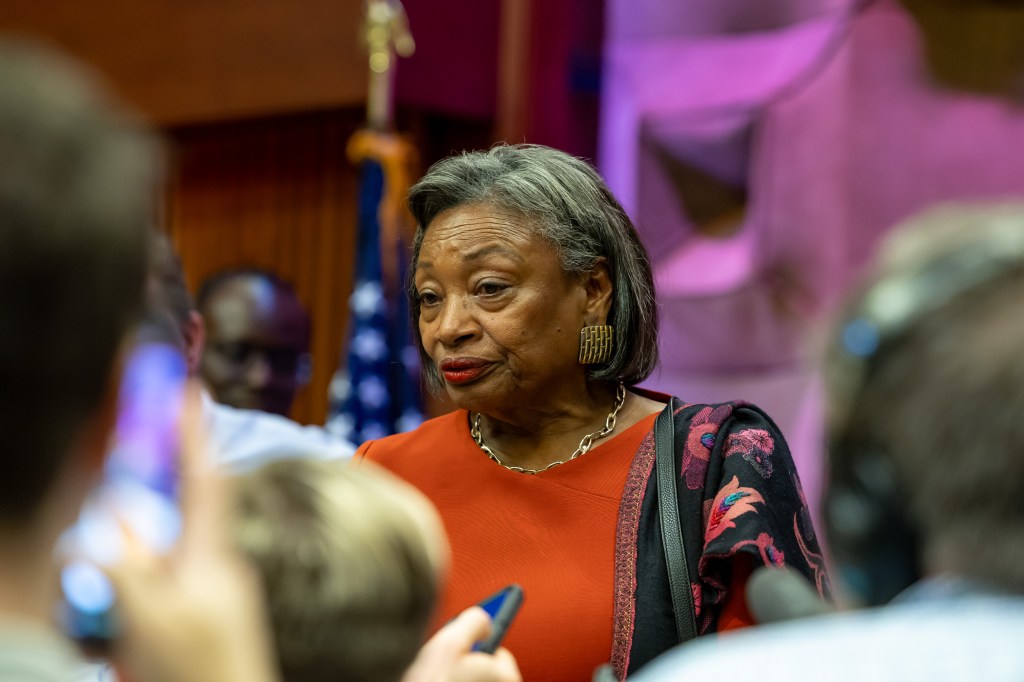
Senate Majority Leader Andrea Stewart-Cousins told reporters on Tuesday that Gov. Hochul’s proposed effort to lower car insurance premiums will be in the final budget largely in the form that the governor initially proposed it — save for tweaking joint and several liability. She hoped to end the practice of parties covering the entire payout when they don’t share a majority of responsibility for a crash.
The current system, which allows parties that are less than 50 percent responsible to still be held financially liable — called joint and several liability — was created to make sure that victims are able to collect full compensation, even if one responsible party can’t pay its share.
“There will be opportunities for a whole readjustment, and we are hoping that there indeed will be benefits and rebates for those of us who are paying way too much for car insurance,” said Stewart-Cousins.
Stewart-Cousins had previously questioned many aspects of the governor’s plan, which even Hochul says will save drivers only about $25 a month and has the backing of a multi-million-dollar lobbying effort by Uber. Meanwhile the societal cost of crashes is $135 billion a year, according to the National Highway Traffic Safety Administration.
Stewart-Cousins added that votes on budget bills are possible late next week after significant progress has been made on the non-fiscal policy items that had been sticking points on Gov. Hochul’s executive budget proposal — climate, immigration and infrastructure development beyond insurance. But this week, language hasn’t been submitted as leaders haven’t quite reached a handshake agreement on a budget.
Stewart-Cousins also said that limits will be placed on what data (ZIP codes, credit scores, etc.) insurers can use to set rates for policyholders; companies also won’t be able to automatically increase rates 5 percent each year anymore, and they will need to explain why they want an increase to the state Department of Financial Services (though they are already required, at least on paper, to do so currently; the agency approved a 21-percent increase in insurance premiums as recently as 2024).
Hochul’s other main proposed change to insurance made it to the finish line, according to Stewart-Cousins, leaving crash victims with diminished ability to pursue damages.
That includes narrowing the state’s definition of “serious injury,” which entitles victims to seek damages for pain and suffering beyond the $50,000 covered by no-fault insurance. Currently, the term “serious injury” includes fractures, permanent loss of an organ or member, loss of a fetus, or a medically determined non-permanent injury that keeps one out of work or struggling to go through their day-to-day lives for more than 90 days.
Hochul’s plan will disqualify people in that last category — which would have a dramatic effect on crash victims with traumatic brain injuries or soft tissue injuries because they don’t neatly fit the remaining definitions, according to the New York State Trial Lawyers Association.
It was on joint and several liability, that the governor had to cave. She hoped to change the system so that drivers who are found at least 51 percent responsible for a crash would get no compensation beyond automatic no-fault insurance. And drivers who had less than 50 percent responsibility would not be forced to cover the compensation if the most-responsible driver could not pay.
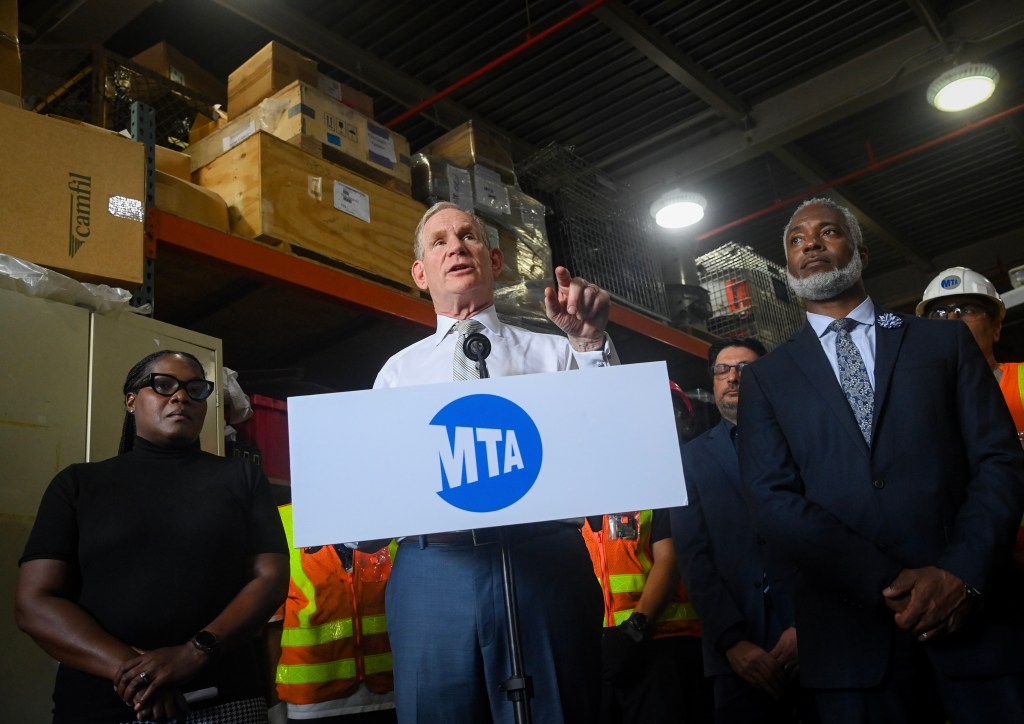
Joint and several liability was under attack from the governor on the grounds that major agencies such as the MTA end up paying “jackpot payouts” even if, say, a bus driver is found to have had only single-digit responsibility for a crash. MTA CEO Janno Lieber even wrote an op-ed in Streetsblog outlining why the law needed to be changed to protect public entities — yet it does not appear that the governor made this a red-line issue. (Streetsblog later debunked part of the MTA argument.)
The governor has maintained that auto insurance fraud is an issue even as a review of Department of Financial Services statistics revealed that cases were not nearly as prevalent as Hochul has suggested. In any event, it’s unclear how the legislative deal tackles what Hochul had called the main contributing factor to rising insurance premiums.
State lawmakers had been grappling with how to best protect crash victims and also bring down car insurance prices for drivers. Hochul has claimed that her changes will reduce rates, even as data and industry experts have suggested otherwise. She rests her argument on the idea that these changes would save insurance companies money, and then the state could use the never-enforced “Excess Profits Law” to force companies to return profits to policyholders.
Lawmakers viewed this argument as a joke because “profits” only count as excess after they hit 21 percent and are calculated using a complex multiyear formula.
On the scale of universally disappointing compromises in Albany, the governor got most of what she wanted, and politicians can say they took action on behalf of New Yorkers’ pocketbooks. While the finer details of the agreement will need to be hashed out, crash victims did not get the protection they expected from the government.
The governor’s office did not make any public comment on the supposed deal. And Assembly Speaker Carl Heastie, who was long cool to the governor’s Uber-backed proposals, also has not commented.
This is a breaking story. We’ll have more coverage.

Read More:
Streetsblog has migrated to a new comment system. New commenters can register directly in the comments section of any article. Returning commenters: your previous comments and display name have been preserved, but you'll need to reclaim your account by clicking "Forgot your password?" on the sign-in form, entering your email, and following the verification link to set a new password — this is required because passwords could not be carried over during the migration. For questions, contact tips@streetsblog.org.